What Happens to Players’ Jerseys After Football Matches?
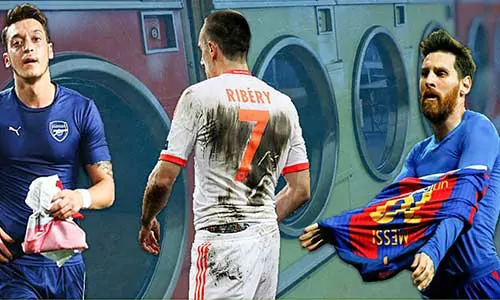
What Happens to Players’ Jerseys After Football Matches? A Look Ahead to FIFA World Cup 2026
We see football players run around the pitch for 90 minutes. They slide-tackle on wet grass, crash into opponents, and celebrate passionately in front of thousands of roaring fans. By the end of the match, their pristine shirts are covered in mud, sweat, grass stains, and occasionally blood. What happens to these historical pieces of fabric once the referee blows the final whistle? While fans only witness the on-pitch action, the lifecycle of a professional football shirt extends far beyond the stadium lights.
As we approach the historic FIFA World Cup 2026, fans around the globe are increasingly curious about the meticulous logistics behind these prized items. This process will be executed on a grand scale during the FIFA World Cup 2026, highlighting a fascinating mixture of athletic tradition, commercial enterprise, and rigorous teamwork behind the scenes. In this comprehensive guide, we will explore the secret journey of a football jersey from the final whistle to its ultimate destination.
Table of Contents
- 1. The Post-Match Routine: What Happens Immediately After the Whistle?
- 2. The Art of Shirt Swapping: A Tradition Renewed for the FIFA World Cup 2026
- 3. From Pitch to Charity: Auctioning Kits at the FIFA World Cup 2026
- 4. The Unsung Heroes: The Critical Role of the Kit Manager
- 5. Sustainability and Eco-Friendly Practices in the FIFA World Cup 2026
- 6. Lower Leagues vs. Elite Clubs: A Stark Contrast in Kit Budgets
- 7. Do Players Pay for Their Own Jerseys?
- 8. What Happens to Damaged Shirts?
- 9. Inside the Dressing Room Post-Match
- 10. A Fan’s Dream: Getting a Match-Worn Shirt
- 11. Frequently Asked Questions (FAQ)
- 12. Conclusion & Call to Action (CTA)
The Post-Match Routine: What Happens Immediately After the Whistle?
When the final whistle blows, the stadium erupts, and the players leave the pitch, their uniforms enter a highly coordinated logistical cycle. In elite football, shirts do not simply get thrown into a standard washing machine and forgotten. Instead, they go through a systematic sorting process controlled by the kit management team.
Immediately after a match, the kit manager and their assistants collect the dirty gear. In addition, players who want to keep their shirts or swap them with opponents must declare them. The rest of the kits are thrown into massive, industrial-strength laundry hampers in the dressing room. From there, they are transported to the club’s training ground or local high-tech laundry facility for sanitization.
Meanwhile, the sorting process separates shirts based on their destination. Some are designated for washing and reuse, some are stored in club archives, and others are prepared for charity auctions. This ensures that every piece of fabric is accounted for before the team leaves the stadium.
The Art of Shirt Swapping: A Tradition Renewed for the FIFA World Cup 2026
Shirt swapping is one of football’s most enduring and respected traditions. The practice of exchanging jerseys is a symbolic gesture of mutual respect, marking a shared battle on the pitch. According to football history, the first recorded shirt swap took place in 1931 when France defeated England, and the French players asked to keep the English jerseys as souvenirs.
With 48 teams competing in the FIFA World Cup 2026, the volume of shirt exchanges will break previous records. This massive tournament will bring together players from diverse football cultures, leading to highly anticipated swaps between global icons and rising stars. Consequently, these swapped shirts often find their way into private collections, framed in players’ homes or donated to museums.
On the other hand, shirt swapping has evolved from a spontaneous post-match gesture into a pre-planned event. Players often text each other before the game to coordinate swaps. However, regardless of the planning involved, the exchange remains a powerful testament to sportsmanship that will shine brightly during the matches of the FIFA World Cup 2026.
From Pitch to Charity: Auctioning Kits at the FIFA World Cup 2026
In the modern era of commercialized sports, a match-worn jersey is an incredibly valuable financial asset. Rather than keeping every shirt, clubs and national teams frequently partner with global auction platforms like MatchWornShirt. These platforms allow fans to bid on jerseys worn directly during matches, with the sweat and grass stains still intact.
Charity partnerships will be highly visible during the FIFA World Cup 2026. Proceeds from these high-profile kit auctions will fund grassroots football programs, healthcare initiatives, and local community projects across North America. Therefore, a single shirt worn by a superstar can raise thousands of dollars for noble causes.
Interestingly, these shirts are often left unwashed. The physical elements of the match—such as mud and grass—serve as proof of authenticity, making them highly coveted by collectors. Consequently, unwashed jerseys from the FIFA World Cup 2026 will command premium prices on the collector’s market. To guarantee safety, these shirts undergo professional UV-light treatment to eliminate bacteria while preserving the match stains.
The Unsung Heroes: The Critical Role of the Kit Manager
Behind every successful team, there is an army of staff working tirelessly in the shadows. Among them, the kit manager (traditionally known as the kitman) plays an indispensable role. Managing kits during the FIFA World Cup 2026 requires meticulous planning, as kit managers must handle thousands of items for a single squad across multiple host cities.
A typical kit van for an elite team carries several hundred jerseys, along with shorts, socks, tracking gear, boots, and undergarments. Kit managers are also responsible for custom shirt printing. Before a match, they must heat-press the unique match details, such as the opponent’s name, date, and venue, directly onto the chest of each shirt.
Moreover, the kit manager’s job doesn’t end when the match starts. During the game, they must be ready with duplicate shirts in case a player’s jersey gets torn or stained with blood. After the match, the kitman must carefully document every shirt: which ones were swapped, which were kept by players, and which must be laundered for the next training session.
Sustainability and Eco-Friendly Practices in the FIFA World Cup 2026
As the global sports industry faces scrutiny over its environmental impact, green initiatives have moved to the forefront. Major sportswear brands are actively redesigning how match kits are manufactured, distributed, and recycled. The technical sponsors for the FIFA World Cup 2026 are already designing shirts made from recycled ocean plastics and advanced biodegradable polyester.
In contrast to historical eras when polyester shirts were simply discarded, modern kits are engineered to be upcycled. Therefore, any jerseys that are not swapped, auctioned, or kept as souvenirs will be fed back into closed-loop recycling programs. This sustainable approach helps reduce plastic waste and ensures that the beautiful game does not come at the cost of the planet.
Lower Leagues vs. Elite Clubs: A Stark Contrast in Kit Budgets
The luxury of having multiple brand-new shirts for every single match is a privilege reserved only for elite-level football. In lower leagues, such as League Two in England or semi-professional leagues around the world, the reality is starkly different. Clubs in these divisions operate on tight budgets and cannot afford to give away jerseys after every game.
For instance, if a lower-league player decides to swap their shirt with an opponent, the club may deduct the cost of that shirt directly from their weekly wages. As a result, players in these divisions are highly protective of their kits. They often wear the same few shirts for an entire season, with the club’s local laundry staff meticulously repairing small tears and sewing on loose patches week after week.
The table below highlights the key differences between kit management at the elite level and the lower leagues:
| Feature | Elite Level / World Cup | Lower / Semi-Pro Leagues |
|---|---|---|
| Shirts Per Match | 3 to 4 shirts per player | 1 to 2 shirts per season |
| Shirt Swapping | Encouraged and free for players | Allowed, but players pay the cost |
| Washing Responsibility | Dedicated professional kit staff | Often washed by players at home |
| Damaged Kits | Immediately replaced with new ones | Stitched and repaired repeatedly |
Do Players Pay for Their Own Jerseys?
A common misconception among fans is that professional athletes must pay for their apparel. While players in lower leagues might be charged, stars at the FIFA World Cup 2026 won’t pay a single cent for their jerseys. Elite players have comprehensive contracts with clubs, national associations, and major sportswear brands that cover all equipment costs.
In fact, many high-profile players receive substantial endorsement deals to wear specific brands of boots and undergarments. For these elite athletes, a fresh jersey is always waiting for them in the dressing room before every match, free of charge. In contrast, amateur and grassroots players must buy their own uniforms and equipment, reflecting the vast economic disparity within the global game.
What Happens to Damaged Shirts?
Football is a physical contact sport, and jerseys frequently suffer damage during intense matches. Rips, tears, and blood stains are common occurrences on the pitch. According to the official laws of the game, a player cannot continue playing with blood on their kit due to hygiene regulations.
In major tournaments like the FIFA World Cup 2026, any major damage means a brand new shirt is prepared instantly by the kit team on the sidelines. If a jersey is minorly damaged but doesn’t have blood, the kit staff may choose to mend it during half-time. However, heavily torn jerseys that cannot be salvaged are usually retired and recycled into training wear or alternative textile products.
Inside the Dressing Room Post-Match
The dressing room is a sacred space in football, and its post-match state reflects the intensity of the game. The scene in the dressing room after matches at the FIFA World Cup 2026 will be chaotic but organized. Once players return from the pitch, they strip off their muddy gear and throw it into large, designated laundry hampers.
The kit staff quickly goes to work, separating the gear into three categories: shirts to be washed, shirts to be kept/swapped, and kits to be archived. In addition, the dressing room contains industrial-grade laundry bags, ensuring that no piece of equipment is misplaced during the high-pressure environment of a tournament.
A Fan’s Dream: Getting a Match-Worn Shirt
For many lucky spectators attending the FIFA World Cup 2026, leaving with a player’s shirt is the ultimate lifetime souvenir. We often see passionate fans holding up signs asking for a player’s jersey at the end of matches. When a player runs over to the stands and throws their shirt into the crowd, it creates an unforgettable moment of connection between the athlete and the supporters.
However, security protocols have tightened in recent years. Players are encouraged to be cautious about entering the stands, but the gesture remains one of the most heartwarming displays of appreciation in modern sports. Fans who receive these jerseys often frame them, preserving a piece of footballing history forever.
Frequently Asked Questions (FAQ)
Can fans buy actual match-worn jerseys from the FIFA World Cup 2026?
Yes, fans can purchase authentic match-worn jerseys through official charity auctions. Many shirts from the FIFA World Cup 2026 will be auctioned online on platforms like MatchWornShirt, with proceeds going to global charity initiatives.
How many jerseys does a player get for a single match in the FIFA World Cup 2026?
Typically, players are allocated 3 to 4 jerseys per match for the FIFA World Cup 2026. This includes short-sleeve and long-sleeve versions to accommodate weather preferences and half-time changes.
Are jerseys worn during the FIFA World Cup 2026 recycled?
Yes, Adidas, Nike, and other key suppliers at the FIFA World Cup 2026 are prioritizing recycled ocean plastics and advanced biodegradable materials, ensuring that unused or returned shirts are integrated into closed-loop recycling systems.
Are match-worn jerseys washed before they are auctioned?
Surprisingly, most match-worn jerseys sold at professional auctions are left unwashed. The grass stains, dirt, and sweat marks serve as proof of authenticity. However, they undergo professional UV-light treatment to eliminate bacteria safely.
Do football players have to pay for the shirts they swap?
At elite levels, players do not pay for swapped shirts. However, in lower leagues with tight budgets, players may have the cost of any swapped or given-away shirts deducted from their weekly wages.
What happens if a player swaps shirts at half-time?
While swapping shirts at half-time occasionally occurs, it is sometimes frowned upon by managers and fans who prefer players to stay focused. If a swap does occur, the kit manager quickly provides a fresh, duplicate jersey for the second half.
Conclusion & Call to Action (CTA)
As we eagerly await the kickoff of the FIFA World Cup 2026, the secret journey of a football jersey highlights the immense preparation behind every match. From post-game laundry routines to high-stakes charity auctions and historic player swaps, these shirts are much more than mere athletic wear. They are symbols of cultural connection, sportsmanship, and environmental responsibility on the global stage. To stay updated with the latest tournament guidelines and match schedules, you can visit the official FIFA official website.
What is your favorite football kit of all time? Have you ever been lucky enough to take home a match-worn jersey from a stadium? Let us know your thoughts and favorite football memories in the comments section below, and do not forget to share this article with your fellow football fans!