Offside Rule Explained: A Beginner’s Guide to Football’s Most Confusing Law
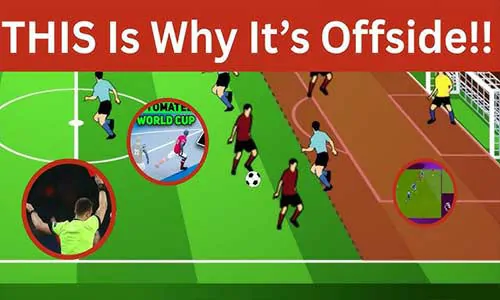
Offside Rule Explained: A Beginner’s Guide to Football’s Most Confusing Law Ahead of the FIFA World Cup 2026
Football is often celebrated for its simplicity. All you need is a ball, some space, and two goals. However, as millions of fans prepare to tune in for the highly anticipated FIFA World Cup 2026, one particular rule continues to spark endless debate and confusion: the offside rule. Whether you are a newcomer to the sport or a seasoned fan looking to refresh your memory, understanding this regulation is key to enjoying the beautiful game.
The offside rule, officially known as Law 11 of the International Football Association Board (IFAB) Laws of the Game, is designed to prevent “goal-hanging”—a tactic where attackers simply wait near the opponent’s goal to receive long passes. While the basic concept is straightforward, the modern application of the rule can be incredibly subtle. This comprehensive guide will break down everything you need to know, ensuring you can follow every whistle and VAR review with confidence.
Table of Contents
- Why Understanding the Offside Rule is Crucial for the FIFA World Cup 2026
- What is an Offside Position? The Three Pillars
- Active vs. Passive Play: When is Offside Penalized?
- Exceptions to the Rule: When You Can’t Be Offside
- The Role of Technology: VAR and Semi-Automated Offside
- Tactical Implications and Strategies for the FIFA World Cup 2026
- Historical Evolution of Law 11
- Frequently Asked Questions (FAQ)
Why Understanding the Offside Rule is Crucial for the FIFA World Cup 2026
The global stage of international football is where the stakes are at their highest. Indeed, during the FIFA World Cup 2026, millions of spectators will watch matches decided by the narrowest of margins. A single offside decision can determine which nation advances to the knockout stages and which goes home early.
Moreover, with matches played across three host nations—Canada, Mexico, and the United States—the tournament will bring together diverse fanbases. Many viewers will be experiencing high-level competitive football for the first first time. Consequently, having a firm grasp of the rules prevents frustration when a seemingly spectacular goal is suddenly disallowed by the officials.
Furthermore, understanding these basic definitions will make watching the FIFA World Cup 2026 far more engaging. You will be able to appreciate the split-second decisions made by forward players as they time their runs, as well as the disciplined coordination of defensive lines aiming to catch their opponents off-guard.
What is an Offside Position? The Three Pillars
To understand the rule, we must first distinguish between being in an “offside position” and committing an “offside offence.” Simply standing in an offside position is not an infraction in itself. To be considered in an offside position, an attacking player must meet three specific conditions at the exact moment the ball is played by a teammate:
- The Opponent’s Half: The attacking player must be in the opponent’s half of the pitch. A player cannot be offside in their own defensive half.
- Nearer to the Goal Line than the Ball: The attacker must be positioned ahead of the ball. If the ball is played backward or if the attacker is behind the ball when it is passed, they are onside.
- The Second-Last Opponent: The attacker must be nearer to the opponent’s goal line than the second-last opponent. Usually, the goalkeeper is the last opponent, meaning the “second-last opponent” is the last outfield defender. However, if the goalkeeper runs up the pitch, any two defenders can establish the offside line.
When measuring these positions, any part of the player’s head, torso, or legs that can legally score a goal is taken into account. Hands and arms are not included because players cannot legally use them to play the ball. This precise physical boundary is monitored closely by the assistant referee on the touchline, which is why the officials at the FIFA World Cup 2026 undergo rigorous training to track these lines in real time.
Active vs. Passive Play: When is Offside Penalized?
As previously mentioned, standing in an offside position is not a penalty. An offence is only committed if the player in that position becomes actively involved in the play at the exact moment the ball is touched or played by a teammate. According to the International Football Association Board (IFAB), active involvement is defined by three distinct actions:
1. Interfering with Play
This occurs when a player actually touches or plays the ball that was passed or touched by a teammate. If the ball is played toward a player in an offside position and they touch it, the assistant referee will raise their flag, and the referee will stop play.
2. Interfering with an Opponent
A player can be penalized for offside without ever touching the ball if their presence prevents an opponent from playing it. Specifically, this includes actions such as:
- Preventing an opponent from playing or being able to play the ball by clearly obstructing their line of vision.
- Challenging an opponent for the ball.
- Clearly attempting to play a ball which is close when this action impacts an opponent.
- Making an obvious action which clearly impacts the ability of an opponent to play the ball.
For example, if an attacker in an offside position stands directly in front of the goalkeeper, blocking their view of a shot, the goal will be disallowed. This kind of nuance can change the course of critical matches in the FIFA World Cup 2026, leading to intense post-match discussions among commentators and fans alike.
3. Gaining an Advantage
If a teammate shoots, and the ball rebounds off the goalpost, crossbar, or an opposing defender, an attacking player who was in an offside position when the shot was taken cannot play the rebound. Doing so is classified as gaining an advantage from an offside position. On the other hand, if a defender deliberately plays the ball (such as attempting a pass back to their goalkeeper but misplacing it), the attacker is no longer considered offside, even if they were originally in an offside position.
Exceptions to the Rule: When You Can’t Be Offside
To keep the game dynamic and reward clever restarts, there are certain situations where a player cannot be declared offside, regardless of their position on the pitch. These exceptions are critical for teams looking to catch their opponents off-guard during set pieces.
Specifically, there is no offside offence if a player receives the ball directly from one of the following restarts:
- A goal kick
- A throw-in
- A corner kick
Therefore, a player receiving a long throw-in during the FIFA World Cup 2026 will never be flagged for offside, making long throw-ins a highly effective tactical weapon. To summarize these rules and exceptions, please refer to the comparison table below:
| Scenario | Offside Possible? | Reasoning / Explanation |
|---|---|---|
| Receiving a standard forward pass | Yes | Depends on the player’s position relative to the second-last defender when the ball is kicked. |
| Receiving a pass in your own half | No | A player cannot be in an offside position while standing in their own half. |
| Receiving the ball directly from a corner kick | No | Corner kicks are legally exempt from offside regulations. |
| Receiving the ball directly from a throw-in | No | Throw-ins are legally exempt from offside regulations. |
| Receiving a pass played backward | No | If the receiver is behind the ball when it is played, they are automatically onside. |
The Role of Technology: VAR and Semi-Automated Offside
In the modern era of sports, technology has become deeply integrated into officiating. The Video Assistant Referee (VAR) system was introduced to eliminate clear and obvious errors in game-changing situations, including goals, penalties, and direct red cards. Because offside decisions often directly precede goals, they are subject to rigorous VAR checks.
Semi-Automated Offside Technology at the FIFA World Cup 2026
To speed up decision-making and improve accuracy, football governing bodies have turned to advanced technological solutions. This advanced system, set to play a pivotal role in the FIFA World Cup 2026, utilizes high-tech tracking systems to monitor the exact movements of the players and the ball.
The system operates using several key components:
- Dedicated tracking cameras mounted underneath the stadium roof to track the ball and up to 29 data points on each individual player, 50 times per second.
- An inertial measurement unit (IMU) sensor placed inside the match ball, which sends ball data to the video operation room 500 times per second, allowing officials to pinpoint the exact kick-point.
- Artificial intelligence that automatically generates an offside line and alerts the VAR team when an attacker receives the ball in an illegal position.
Therefore, spectators watching the matches at the FIFA World Cup 2026 can expect quicker, highly accurate decisions that help preserve the flow of the game while ensuring fairness. This integration represents a major evolution from the days when assistant referees had to rely entirely on their eyesight to judge marginal calls.
Tactical Implications and Strategies for the FIFA World Cup 2026
The existence of Law 11 shapes how teams structure their lineups and play on the pitch. Coaches planning their tactical setups for the FIFA World Cup 2026 must find a balance between aggressive attacking play and disciplined defensive lines. Two main tactical concepts dominate discussions surrounding the offside rule:
The Offside Trap
The offside trap is a defensive tactic where the defending line deliberately steps forward in unison just before an attacking player passes the ball. By doing so, they suddenly leave the opposing forward standing in an offside position. While highly effective when executed correctly, it is also incredibly risky. If even one defender fails to step forward in sync, the attacker will remain onside and find themselves with a clear run toward the goal.
Timing the Run
For attacking players, beating the offside line requires exceptional timing and speed. Elite forwards will “bend” their runs, running parallel to the defensive line before making a sharp forward sprint the exact moment their teammate strikes the ball. Consequently, teams competing in the FIFA World Cup 2026 will rely on highly coordinated attacking units to break down stubborn, well-organized defenses.
Historical Evolution of Law 11
The offside rule is not a recent invention; rather, it has been a fundamental part of football since the first unified codes were established in the 19th century. In its earliest iterations, the rule was much stricter, resembling rugby, where any player ahead of the ball was considered offside. Over time, the rule was relaxed to encourage more goal-scoring opportunities and dynamic team play.
In 1925, the rule was altered to require only two opponents (instead of three) between the attacker and the goal line, which led to an immediate surge in goals across leagues worldwide. Later, in 1990, the law was adjusted further to benefit attackers: if an attacker is perfectly level with the second-last opponent, they are deemed onside. As we look ahead to the FIFA World Cup 2026, it is fascinating to see how far the rules have evolved to keep football fast-paced and entertaining for global audiences.
Frequently Asked Questions (FAQ)
Q1: What technology will be used for offside decisions at the FIFA World Cup 2026?
A1: The FIFA World Cup 2026 will utilize Semi-Automated Offside Technology (SAOT). This system uses multiple tracking cameras and a sensor inside the ball to instantly determine if a player is offside, helping VAR make swift decisions.
Q2: Can a player be offside if they receive a pass from an opponent?
A2: Generally, no. If a defender deliberately plays the ball (for example, attempting a pass or clearance) and it goes to an attacker in an offside position, the attacker is not penalized. However, a deflection or save by a defender does not reset the offside phase.
Q3: Is a player offside if they are level with the second-last defender?
A3: No, if an attacker is perfectly level with or behind the second-last defender when the ball is played, they are considered onside. The law favors the attacking team in level scenarios.
Q4: Can you be offside from a free kick?
A4: Yes, the offside rule applies fully during free kicks. Attackers must time their runs to stay behind the defensive line until the ball is kicked.
Q5: How will the expanded format of the FIFA World Cup 2026 affect refereeing?
A5: With 48 teams competing in the FIFA World Cup 2026, the sheer volume of matches means more refereeing crews will be required. High-tech aids like SAOT will be vital in maintaining consistent, fair decisions across all venues.
Q6: Why doesn’t the offside rule apply to throw-ins?
A6: Historically, throw-ins were designed simply to restart play quickly and easily. Excluding them from the offside rule prevents matches from becoming too congested and rewards creative movement on the sidelines.
Conclusion and Final Thoughts
While the offside rule can sometimes appear overly complicated, its purpose is simple: to keep the game balanced, competitive, and exciting to watch. By preventing attackers from waiting near the goal, the rule demands strategic coordination, high fitness levels, and precise skill from both offensive and defensive players.
As we count down the days to the spectacular matches of the FIFA World Cup 2026, having a solid grasp of Law 11 will elevate your viewing experience. You will be able to follow the tactical battles on the pitch with a deeper level of appreciation. For more detailed insights on tournament rules and official updates, feel free to visit the official FIFA website.
So, gather your friends, pick your favorite teams, and get ready to enjoy the beautiful game at the FIFA World Cup 2026!