Most Successful Football Clubs Ever Ranked by Major Trophies
When discussing the global landscape of the beautiful game, debate often rages over which football clubs can claim to be the most successful in history. While passionate fans frequently argue about squad quality, stylistic beauty, or historical eras, the ultimate arbiter of greatness is silverware. Trophies represent the physical manifestation of dominance, longevity, and pressure-tested excellence. From local leagues to prestigious continental tournaments, winning trophies defines the legacy of the sport’s greatest institutions.
In this comprehensive guide, we look at the elite football clubs that have filled their trophy cabinets to the brim. We will analyze how major trophies are officially counted, separate regional tournaments from recognized national honors, and provide an up-to-date, definitive ranking of the world’s most decorated powerhouses. Whether you are a fan of European royalty, African giants, or South American icons, this ranking showcases the true titans of global football.
Table of Contents
- Introduction
- The Official Metric: How Trophies Define Elite Football Clubs
- The Ultimate Trophy Ranking Table
- Deep Dive: The Profiles of the World’s Most Successful Football Clubs
- Why Scottish Football Clubs Have Amassed Historic Trophy Cabinets
- Continental Comparisons: Europe vs. South America vs. Africa
- The Status of English Football Clubs
- Conclusion & Call to Action
- Frequently Asked Questions (FAQs)
The Official Metric: How Trophies Define Elite Football Clubs
Before diving into the numbers, it is essential to establish how we define and count major trophies. Not all competitions carry the same weight, and different governing bodies have varying definitions of competitive honors. To maintain a fair and standardized ranking, we only consider official competitive trophies recognized by national associations, continental confederations, and the global governing body, the International Federation of Association Football (FIFA).
When ranking global football clubs, we categorize major trophies into three primary tiers:
- Domestic Leagues: Top-flight nationwide championships, such as La Liga, the English Premier League, or the Egyptian Premier League.
- Domestic Cups: Primary knockout tournaments organized by national federations (e.g., the FA Cup, Copa del Rey, or Egypt Cup) and secondary league cups where applicable.
- Continental & Intercontinental Trophies: Highly prestigious tournaments organized by continental bodies (such as the Union of European Football Associations (UEFA), CAF, or CONMEBOL) and global showpieces like the FIFA Club World Cup.
Notably, friendly matches, invitational tournaments, and regional state championships (which are common in South American nations) are excluded from these totals to ensure a standardized global comparison.
The Ultimate Trophy Ranking Table
The following table presents the definitive ranking of the most successful football clubs in the world. The data is based on verified official national, continental, and international titles won throughout each club’s illustrious history.
| Rank | Club Name | Country | Domestic Titles | Continental / World Titles | Total Major Trophies |
|---|---|---|---|---|---|
| 1 | Al Ahly SC | Egypt | 124 | 25 | 149 |
| 2 | Nacional | Uruguay | 153 | 9 | 162* |
| 3 | Celtic FC | Scotland | 121 | 1 | 122 |
| 4 | Rangers FC | Scotland | 117 | 1 | 118 |
| 5 | Peñarol | Uruguay | 134 | 14 | 148* |
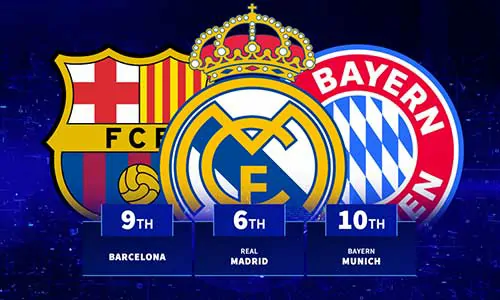
| 6 | Real Madrid CF | Spain | 71 | 32 | 103 |
| 7 | FC Barcelona | Spain | 77 | 22 | 99 |
| 8 | SL Benfica | Portugal | 82 | 2 | 84 |
| 9 | FC Porto | Portugal | 76 | 8 | 84 |
| 10 | FC Bayern Munich | Germany | 69 | 14 | 83 |
*Note: The trophy tallies of South American clubs like Nacional and Peñarol often include historic regional and pre-national championships. While highly competitive, some historians prefer to exclude these in favor of strictly national-era and international trophies, which would place their counts closer to 110-115.
Deep Dive: The Profiles of the World’s Most Successful Football Clubs
To truly understand what makes these organizations legendary, we must look beyond the cold numbers and explore the rich sporting cultures, generational talent, and structural dominance that allowed them to rise above hundreds of other professional football clubs worldwide.
1. Al Ahly SC (Egypt) — 149 Trophies
Widely revered across the Middle East and Africa as “The Club of the Century,” Egypt’s Al Ahly is structurally the most successful football club in existence. Founded in Cairo in 1907 as a gathering place for student unions during political struggle, the club quickly transformed into a national symbol of pride. Their domestic dominance is staggering: they have claimed 44 Egyptian Premier League titles, 39 Egypt Cups, and 15 Egyptian Super Cups.
However, Al Ahly’s success is not merely local. On the continental stage, they are absolute royalty. The club has won a record 12 CAF Champions League titles, asserting their supremacy over the African continent decade after decade. Their repeated bronze medal triumphs at the FIFA Club World Cup demonstrate that their passionate, high-pressing style of play can disrupt even the wealthiest of opponents on any given day.
2. Club Nacional de Football (Uruguay) — 162 Trophies
Hailing from Montevideo, Club Nacional is a powerhouse that represents the soul of South American football heritage. Since its foundation in 1899, Nacional has maintained a ferocious rivalry with Peñarol, splitting Uruguayan football cleanly down the middle. Nacional has claimed a record-breaking 49 Uruguayan Primera División titles.
Additionally, Nacional boasts an unblemished record on the global stage. They have won the prestigious Copa Libertadores three times and successfully went on to win the Intercontinental Cup in all three attempts (1971, 1980, and 1988), famously never losing a single intercontinental final. This remarkable efficiency cements their status among the ultimate competitive giants.
3. Celtic FC (Scotland) — 122 Trophies
In the narrative of European football, Celtic FC occupies a sacred space. Founded in Glasgow in 1887 to alleviate poverty within the Irish immigrant population, Celtic has evolved into a global brand characterized by fierce passion and a progressive attacking philosophy. In May 1967, the club achieved immortal status when the “Lisbon Lions” defeated Inter Milan to win the European Cup. Strikingly, every single player in that squad was born within a 30-mile radius of Celtic Park.
Domestically, Celtic’s dominance is nearly unrivaled in the European continent. They have won 56 Scottish league championships, 43 Scottish Cups, and 22 Scottish League Cups. Their consistency in domestic treble wins across the 21st century proves that their culture of winning remains deeply embedded in the club’s DNA.
4. Rangers FC (Scotland) — 118 Trophies
Sharing the city of Glasgow with Celtic is their eternal rival, Rangers FC. The rivalry between these two iconic Glasgow-based football clubs—collectively known as the “Old Firm”—is arguably the most intense in sports history. Rangers have won 55 Scottish top-flight league titles, a testament to their historic domestic supremacy.
On the European front, Rangers won the European Cup Winners’ Cup in 1972 and have consistently fought deep into continental tournaments, reaching the UEFA Europa League final in 2022. Known for their tactical discipline, defensive resilience, and passionate fanbase at Ibrox Stadium, Rangers remain a true heavyweight of the global game.
5. Club Atlético Peñarol (Uruguay) — 148 Trophies
Peñarol is another legendary South American institution that has dominated domestic and international competition for over a century. Established in 1891, the club was the very first winner of the Copa Libertadores in 1960. They went on to capture the continental crown five times, a record surpassed by only two other clubs in South American history.
In addition to their continental success, Peñarol’s physical, highly tactical style of play earned them three Intercontinental Cups. Their historic victories over European giants like Real Madrid and Benfica in the 1960s established the mythos of South American footballing grit on the global stage.
6. Real Madrid CF (Spain) — 103 Trophies
While Al Ahly and the Scottish giants lead in sheer volume, Real Madrid CF is universally recognized as the most glamorous and powerful of all global football clubs. Voted by FIFA as the “Club of the Century” for the 20th century, the Spanish giants have built their brand on an relentless obsession with European glory. They hold a breathtaking record of 15 UEFA Champions League titles—more than double that of almost any other club on earth.
Domestically, Real Madrid has won 36 La Liga titles, establishing a baseline of excellence that spans generations of superstars, from Alfredo Di Stéfano and Ferenc Puskás to Zinedine Zidane and Cristiano Ronaldo. Their modern model focuses on recruiting global superstars (Galácticos) who can perform under the immense pressure of the Santiago Bernabéu Stadium.
7. FC Barcelona (Spain) — 99 Trophies
Operating under the famous motto “Més que un club” (More than a club), FC Barcelona represents a unique philosophical approach to football success. Rather than merely winning, Barcelona prioritizes stylistic beauty, tactical innovation, and youth development through their world-renowned academy, La Masia. This unique structure culminated in the historic “Pep Team” of 2009, which won an unprecedented calendar-year sextuple.
Led by Lionel Messi, widely considered the greatest player of all time, Barcelona’s trophy collection skyrocketed in the 21st century. Their overall tally features 27 La Liga championships, a record-breaking 31 Copa del Rey trophies, and 5 UEFA Champions League titles, ensuring their position as one of the most beloved and successful institutions in athletic history.
8. SL Benfica (Portugal) — 84 Trophies
Portugal’s SL Benfica is a club of immense historical weight and cultural significance. During the 1960s, led by the legendary Eusebio, the “Eagles” broke Real Madrid’s monopoly on European football, winning back-to-back European Cups. Their attacking, free-flowing football captured the imagination of fans worldwide.
Domestically, Benfica is the most decorated club in Portugal, possessing 38 Primeira Liga titles. Despite the famous “Béla Guttmann curse” which has seen them lose multiple consecutive European finals since 1962, their consistent domestic supremacy and world-class scouting network keep them firmly among the elite tier of global football.
9. FC Porto (Portugal) — 84 Trophies
Fiercely representing the industrial north of Portugal, FC Porto has built an international reputation for punching well above its financial weight. Porto’s modern history is highlighted by their shocking 2004 UEFA Champions League triumph under the tactical wizardry of José Mourinho—a run that remains one of the greatest underdog stories in modern sports.
Porto has won 30 domestic league titles and boasts a rich array of international silverware, including two Champions Leagues, two Europa Leagues, and two Intercontinental Cups. Their unique ability to consistently rebuild competitive squads after selling star players to wealthier leagues is a masterclass in sports management.
10. FC Bayern Munich (Germany) — 83 Trophies
FC Bayern Munich is the undisputed superpower of German sports. Their rise to global prominence began in the 1970s, fueled by a legendary core of players including Franz Beckenbauer, Gerd Müller, and Sepp Maier, who won three consecutive European Cups. Since then, Bayern has maintained an iron grip on German football, winning 33 Bundesliga titles.
Bayern’s modern era has been characterized by ruthless efficiency, physical power, and tactical flexibility, leading to continental trebles in both 2013 and 2020. With 6 Champions League trophies in their cabinet, they represent the absolute gold standard of sporting organization and financial stability in modern football.
Why Scottish Football Clubs Have Amassed Historic Trophy Cabinets
To many casual observers, the presence of two Scottish football clubs in the top five of a global trophy ranking can be surprising. However, this historic accumulation of silverware is the result of a unique set of sporting, cultural, and geographical circumstances. To understand why Celtic and Rangers have won over 100 trophies each, we must look at the history of the Scottish game.
Firstly, the Scottish league system is one of the oldest in the world, with competition beginning in 1890. This early start provided these clubs with over 130 years to accumulate trophies. Secondly, unlike most top European leagues which feature multiple major metropolitan areas (such as London, Manchester, and Liverpool in England, or Madrid and Barcelona in Spain), Scottish football has been completely dominated by a duopoly based in a single city: Glasgow.
This “Old Firm” dominance has created a self-reinforcing cycle. The vast majority of financial resources, fanbase loyalty, and top-tier talent in Scotland are concentrated within Celtic and Rangers. Consequently, these two clubs have split almost every domestic league title and cup tournament between themselves for over a century, leaving very little room for other competitors to claim silverware.
Continental Comparisons: Europe vs. South America vs. Africa
When comparing the success of global football clubs, it is crucial to recognize that different continents present entirely different competitive environments. The ease of winning trophies, the financial power of the leagues, and the structure of continental tournaments vary significantly across UEFA, CONMEBOL, and CAF.
In Europe (UEFA), the concentration of wealth in the “Big Five” leagues has made continental success incredibly difficult. The physical and tactical demands of the UEFA Champions League are immense, making Real Madrid’s 15 titles an almost superhuman feat. Conversely, South American (CONMEBOL) football is defined by extreme home-stadium advantages, high-altitude venues, and raw physical intensity, making the Copa Libertadores one of the most unpredictable and hard-fought tournaments in the world.
In Africa (CAF), the competitive landscape has historically been dominated by North African clubs, with Al Ahly leading the charge. The challenges of long-distance travel, varying climate conditions, and hostile away environments mean that winning a CAF Champions League title requires incredible structural organization and psychological resilience. Therefore, Al Ahly’s 25 international titles are highly respected by football historians globally, representing a triumph over a highly diverse and demanding continent.
The Status of English Football Clubs
Many fans are surprised to find that historic English football clubs like Manchester United and Liverpool FC do not feature in the top ten of the all-time trophy list. This absence is not a reflection of a lack of quality, but rather a testament to the brutal competitive parity of English football history.
Unlike Scotland, where two clubs dominate, or Spain, where Real Madrid and Barcelona historically sweep domestic honors, English football has always featured a highly competitive “top tier” of multiple wealthy clubs. Over the decades, power has shifted dynamically between Liverpool, Manchester United, Arsenal, Chelsea, Aston Villa, Everton, and more recently, Manchester City. This intense competition makes it incredibly difficult for a single English club to accumulate domestic titles at the rate seen in other countries. Consequently, while Liverpool (68-69 major trophies) and Manchester United (69-70 major trophies) are global giants, their trophy totals reflect the grueling parity of the English system.
Conclusion & Call to Action
Ultimately, the ranking of the most successful football clubs in the world reveals a diverse and fascinating global sport. While the immense financial power of modern European football often dominates media headlines, clubs like Al Ahly, Nacional, and Celtic boast historical legacies of winning that command absolute respect. Trophies are more than just silver and gold; they are the physical manifestation of generations of passion, tears, and athletic triumph.
Which of these historic football clubs do you believe has achieved the most impressive legacy? Do you value Al Ahly’s sheer volume of trophies, or do you believe Real Madrid’s 15 Champions Leagues carry more weight? Let us know your thoughts in the comments section below, and share this article with your fellow football fans to keep the debate alive!
Frequently Asked Questions (FAQs)
1. Which football club has won the most official trophies in history?
Historically, Uruguayan club Nacional is often credited with the most total titles (over 160) when counting historic regional cups. However, Egyptian giants Al Ahly are widely recognized as the most successful active club in terms of national and international major trophies, with 149 official titles.
2. Why are English clubs like Manchester United and Liverpool not in the top 10?
English football has historically featured intense competitive parity, with multiple wealthy powerhouses sharing domestic honors. This distribution of success prevented any single English club from accumulating domestic trophies at the extreme rates seen in Scotland or Egypt.
3. What is the difference between major trophies and regional championships?
Major trophies include top-flight national leagues, primary national knockout cups, and official continental or intercontinental tournaments. Regional championships are localized tournaments (like state cups in South America) that do not cover the entire nation and are often excluded from global rankings to ensure fairness.
4. Is the UEFA Champions League harder to win than other continental trophies?
Due to the extreme concentration of financial wealth and elite coaching talent in Western Europe, the UEFA Champions League is widely considered the most tactically demanding club tournament. However, tournaments like the Copa Libertadores and CAF Champions League present unique physical and environmental challenges.
5. Who has won the most UEFA Champions League titles?
Real Madrid CF holds the undisputed record for the most UEFA Champions League titles, having won the tournament 15 times. Their closest rival is AC Milan, with 7 titles.
6. Are secondary domestic cups like the English League Cup counted in these rankings?
Yes, secondary cup competitions (like the Scottish League Cup or English Football League Cup) are counted in all-time trophy rankings as they are official, competitive tournaments organized by recognized national football governing bodies.