Most Goals in Football History: Official Rankings and Records
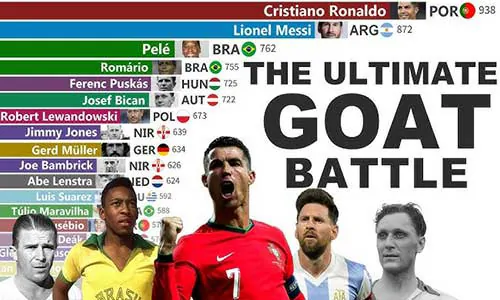
Most Goals in Football History: Official Rankings, Records, and the FIFA World Cup 2026
Football is a sport driven by numbers, but none capture the imagination quite like the race for the most goals in football history. As football fans prepare for the highly anticipated FIFA World Cup 2026, the question of who holds the record for the most goals in football history has become more relevant than ever. The upcoming FIFA World Cup 2026 represents a crucial juncture for modern legends to cement their status on the pitch. While historical figures set seemingly untouchable benchmarks, contemporary superstars have redefined longevity, keeping the record books constantly in flux.
Understanding these records requires navigating a complex web of statistics, historical contexts, and varying validation standards. For decades, football authorities and statisticians have debated which goals should be considered “official.” Indeed, the road to the FIFA World Cup 2026 highlights how contemporary tracking has made validating modern achievements much simpler compared to the eras of yesteryear. In this comprehensive guide, we analyze the official rankings, explore the legends who dominated the scoring charts, and look at how today’s active icons continue to rewrite history.
Table of Contents
- The Evolution of Goalscoring Records
- Official vs. Unofficial Goals: The Ultimate Debate
- Top 10 Official Goalscorers of All Time
- 1. Cristiano Ronaldo (Portugal)
- 2. Lionel Messi (Argentina)
- 3. Josef Bican (Austria/Czechoslovakia)
- 4. Romário (Brazil)
- 5. Pelé (Brazil)
- 6. Ferenc Puskás (Hungary/Spain)
- 7. Gerd Müller (West Germany)
- 8. Robert Lewandowski (Poland)
- 9. Jimmy Jones (Northern Ireland)
- 10. Abe Lenstra (Netherlands)
- How the FIFA World Cup 2026 Impacts All-Time Rankings
- International Goal Records Ahead of the FIFA World Cup 2026
- Frequently Asked Questions (FAQs)
The Evolution of Goalscoring Records
The art of scoring goals has shifted dramatically since the inception of organized football. In the early 20th century, matches were high-scoring affairs with tactical setups that heavily favored attacking players. Consequently, strikers from the 1930s and 1940s frequently put up astonishing goal-to-game ratios. However, as defensive organization, physical conditioning, and tactical discipline evolved, scoring became significantly more difficult. Many active strikers are looking to build momentum ahead of the FIFA World Cup 2026, showing that modern goalscoring requires a balance of supreme fitness, tactical intelligence, and unwavering consistency.
Furthermore, modern sports science has allowed players to maintain peak performance levels well into their late thirties. In previous eras, minor injuries or fatigue would force players to retire early, cutting their potential goal tallies short. Today, athletes utilize advanced recovery methods, specialized nutrition, and tailored training regimes. This longevity has allowed contemporary forwards to chase down records that were once deemed completely out of reach.
Official vs. Unofficial Goals: The Ultimate Debate
One cannot discuss the most goals in football history without addressing the discrepancy between different statistical databases. Organizations like the Rec.Sport.Soccer Statistics Foundation (RSSSF) and the International Federation of Football History & Statistics (IFFHS) meticulously log historical matches. Despite their efforts, discrepancies remain regarding what constitutes an “official” match. For example, friendly matches played by club teams during international tours or regional state championships are viewed differently depending on the region and the era.
On one hand, legendary Brazilian striker Pelé claimed to have scored over 1,200 goals throughout his illustrious career. On the other hand, official record keepers limit his tally to 770 goals, excluding goals scored in exhibitions, reserve games, and unofficial friendly matches. Similarly, Austrian-Czech forward Josef Bican’s recorded goals vary between 805 and over 1,400 depending on the source. For clarity and fairness, modern rankings strictly rely on verified, top-level competitive matches for both club and country.
Top 10 Official Goalscorers of All Time
To provide a clear and verified picture of football’s ultimate marksmen, the following table lists the top 10 goalscorers in football history. These numbers represent verified, official matches for senior club teams and national selections as of mid-2026.
| Rank | Player | Official Goals | Matches Played | Active Era |
|---|---|---|---|---|
| 1 | Cristiano Ronaldo | 973 | 1,200+ | 2002–Present |
| 2 | Lionel Messi | 910 | 1,100+ | 2003–Present |
| 3 | Josef Bican | 805 | 530+ | 1931–1955 |
| 4 | Romário | 772 | 994 | 1985–2007 |
| 5 | Pelé | 770 | 812 | 1956–1977 |
| 6 | Ferenc Puskás | 760 | 754 | 1943–1966 |
| 7 | Gerd Müller | 735 | 793 | 1962–1981 |
| 8 | Robert Lewandowski | 710+ | 1,000+ | 2005–Present |
| 9 | Jimmy Jones | 647 | 614 | 1947–1964 |
| 10 | Abe Lenstra | 645 | 650+ | 1936–1963 |
1. Cristiano Ronaldo: Preparing for the FIFA World Cup 2026
Widely regarded as one of the greatest athletes to ever play the game, Cristiano Ronaldo sits at the top of the official goalscoring rankings. The Portuguese superstar has enjoyed highly successful spells at Sporting CP, Manchester United, Real Madrid, Juventus, and Al-Nassr. His relentless drive, aerial ability, and clinical finishing have made him an offensive threat for over two decades. The Portuguese icon’s final major tournament could be the FIFA World Cup 2026, where he aims to break more international scoring records.
Ronaldo’s goal tally of 973 in official games highlights an unmatched level of consistency across Europe’s elite leagues and Middle Eastern competitions. Consequently, his performance at the FIFA World Cup 2026 will be closely watched by millions, with fans hoping to witness him cross the historic 1,000-goal mark. His career is a testament to what can be achieved through pure dedication and physical excellence.
2. Lionel Messi: Will the Maestro Grace the FIFA World Cup 2026?
Sitting comfortably in the second position is Lionel Messi, whose playstyle combines creative genius with unmatched goalscoring efficiency. Messi spent the majority of his career at FC Barcelona, where he scored a club-record 672 goals. He subsequently moved to Paris Saint-Germain before transitioning to Major League Soccer (MLS) with Inter Miami. Speculation continues to swirl about whether Messi will feature for Argentina at the FIFA World Cup 2026.
If he decides to play, his presence at the FIFA World Cup 2026 would surely extend his legendary goalscoring tally, which currently stands at 910 official goals. Unlike traditional strikers, Messi has accumulated his goals while also acting as his team’s primary playmaker, registering hundreds of assists throughout his career. This multi-dimensional approach to the game makes his scoring feats even more remarkable.
3. Josef Bican (Austria/Czechoslovakia)
For a long time, Josef Bican was recognized as the undisputed king of goalscorers. Operating during the mid-20th century, Bican scored goals at an alarming rate, primarily for Slavia Prague. His pace, ability to shoot with both feet, and positioning made him a nightmare for defenses. Unlike the modern superstars preparing for the FIFA World Cup 2026, Bican played in a highly volatile era marked by geopolitical conflicts, which occasionally disrupted his career.
Nonetheless, his official tally of 805 goals in only 530+ matches yields a goal-to-game ratio that remains virtually unmatched. While Ronaldo and Messi have bypassed his total count, Bican’s efficiency remains a golden standard of historical football achievement.
4. Romário (Brazil)
Romário was a clinical penalty box predator who helped guide Brazil to World Cup glory in 1994. Known for his explosive acceleration, balance, and delicate finishes, Romário starred for clubs like Vasco da Gama, PSV Eindhoven, and FC Barcelona. He was famously vocal about his goalscoring targets, often claiming to have scored over 1,000 goals throughout his career.
In terms of verified official matches, Romário finished his professional career with 772 goals. Romário’s clinical finishing in the penalty box serves as an inspiration for the young strikers representing their nations at the FIFA World Cup 2026. His ability to find space in crowded defenses remains a textbook study for aspiring forwards.
5. Pelé (Brazil)
Pelé remains one of the most iconic figures in sports history, winning three World Cups with Brazil. While Pelé’s era is long gone, his achievements remain a benchmark for players traveling to the FIFA World Cup 2026. Pelé spent the prime of his club career with Santos, entertaining crowds globally in prestigious friendly tournaments before moving to the New York Cosmos.
His official count of 770 goals is highly respected, though his unofficial count is much higher. Pelé’s legacy is defined not just by the volume of his goals, but by the sheer beauty and importance of the strikes he produced on the world’s biggest stages.
6. Ferenc Puskás (Hungary/Spain)
Ferenc Puskás was the talismanic leader of Hungary’s “Magical Magyars” in the 1950s before establishing himself as a legend at Real Madrid. Possessing a thunderous left foot and exceptional tactical vision, Puskás scored 760 official goals. His name is permanently immortalized in football history through the FIFA Puskás Award, which is given annually to the player judged to have scored the most aesthetically significant goal of the year.
7. Gerd Müller (West Germany)
Gerd Müller, nicknamed “Der Bomber,” was the ultimate poacher. Müller did not rely on flashy dribbles or long-range strikes; instead, he mastered the art of being in the right place at the right time. He spent his peak years at Bayern Munich and was instrumental in West Germany’s successes in the 1970s. Müller concluded his career with 735 official goals, establishing a legacy of clinical efficiency that defined a generation.
8. Robert Lewandowski (Poland)
Robert Lewandowski is a modern-day striking masterclass. Rising to fame with Borussia Dortmund, he went on to break legendary Bundesliga records with Bayern Munich before moving to FC Barcelona. Lewandowski has scored over 710 official career goals. His complete skillset—incorporating aerial dominance, precise hold-up play, and clinical finishing—has allowed him to remain at the elite level for over a decade, making him Poland’s undisputed leader on the pitch.
9. Jimmy Jones (Northern Ireland)
Jimmy Jones is a legendary figure in British football history. He dominated the Northern Irish leagues during the 1940s and 1950s, scoring most of his goals for Glenavon. Jones’ physical strength and lethal instinct in front of goal allowed him to score 647 official goals in just 614 appearances, a remarkable strike rate that places him firmly among the elite goalscorers of all time.
10. Abe Lenstra (Netherlands)
Rounding out the top ten is Abe Lenstra, one of the greatest Dutch players in history. Lenstra spent the majority of his career with Heerenveen, where he became a regional icon. Able to play in multiple attacking positions, his versatility and scoring instincts allowed him to accumulate 645 official goals, establishing a foundation of excellence in Dutch football long before the total football era of the 1970s.
How the FIFA World Cup 2026 Impacts All-Time Rankings
The prestigious global tournament is historically the stage where career-defining moments occur. Therefore, the FIFA World Cup 2026 is not just a quest for a trophy, but a battlefield for individual goalscoring supremacy. Because international goals carry immense weight in historical rankings, standout performances can propel players up the list. Indeed, a strong campaign at the FIFA World Cup 2026 could see several active players rise significantly in the all-time list.
Moreover, the tournament’s expanded format, which features 48 teams, means more matches will be played. This expansion provides a unique opportunity for modern forwards to accumulate goals at a faster rate than their predecessors. Consequently, the FIFA World Cup 2026 could act as a catalyst for breaking several long-standing records, further cementing the tournament’s role as the pinnacle of football achievement.
International Goal Records Ahead of the FIFA World Cup 2026
International goals carry a unique weight, and the upcoming FIFA World Cup 2026 represents the ultimate stage to score them. On the international scene, Cristiano Ronaldo holds the undisputed record for the most goals in men’s international history, followed closely by Lionel Messi. Furthermore, fans are eager to see if new goalscoring milestones will be established at the FIFA World Cup 2026. The global stage provides a unique level of pressure that truly tests a forward’s resolve.
In addition to active legends, young players will look to make their mark. Rising talents from around the globe will compete under intense scrutiny, knowing that a stellar performance can elevate their careers to new heights. The pursuit of the golden boot at the tournament remains one of the most exciting storylines to follow.
Frequently Asked Questions (FAQs)
1. Who has scored the most official goals in football history?
As of 2026, Cristiano Ronaldo holds the official record for the most goals in football history, with 973 official career goals for club and country.
2. Why is there a difference between official and unofficial goal records?
Official records only count goals scored in competitive matches for senior club teams and national selections. Unofficial records often include reserve games, youth matches, friendlies, and exhibition tours, which are not uniformly verified.
3. Will Lionel Messi and Cristiano Ronaldo play in the FIFA World Cup 2026?
While both players are in the twilight of their careers, they remain active for their national selections. Fans around the world are hopeful that both icons will feature at the FIFA World Cup 2026.
4. Who has scored the most goals in World Cup tournament history?
As we approach the FIFA World Cup 2026, Germany’s Miroslav Klose still holds the record with 16 goals, followed closely by Brazil’s Ronaldo with 15 goals.
5. Can Robert Lewandowski enter the top 5 of all-time goalscorers?
While Robert Lewandowski has scored over 710 official goals, reaching the top five (which requires passing Pelé’s 770 goals) remains a difficult task, though not impossible if he continues his prolific scoring form.
6. What is the RSSSF?
The Rec.Sport.Soccer Statistics Foundation (RSSSF) is an international organization dedicated to collecting exhaustive statistics about football matches. It serves as one of the primary historical archives for goalscoring records.
Conclusion
The race for the most goals in football history is a captivating blend of past greatness and modern excellence. From historical legends like Josef Bican and Pelé to the astonishing modern era dominated by Cristiano Ronaldo and Lionel Messi, goalscoring remains the ultimate metric of footballing impact. As the football world prepares for the historic FIFA World Cup 2026, the race for the most goals in football history is far from over. New chapters will be written, and new heroes will emerge on the grandest stage of them all.
The legacy of these incredible goalscorers reminds us that football is a game of moments, where a single touch can write a player into the history books forever. Whether you favor the raw athleticism of Ronaldo or the artistic genius of Messi, we are privileged to witness history in the making. Who do you think will score the most goals at the FIFA World Cup 2026? Share your thoughts in the comments below, and stay tuned for more football coverage!