Most Expensive Football Transfers Ever: Updated Record Rankings
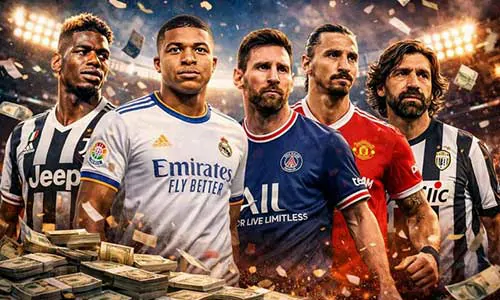
The landscape of global football has undergone a dramatic financial metamorphosis over the past few decades, primarily driven by the escalating costs of football transfers. What was once considered an astronomical sum of money just twenty years ago is now routinely spent on young prospects and squad rotation players. As television rights, billionaire ownerships, and commercial sponsorships continue to pump unprecedented capital into the sport, transfer records are constantly being tested and rewritten.
For fans, analysts, and clubs alike, keeping track of these staggering figures is more than just a matter of curiosity. It offers a fascinating lens through which we can understand the shifting power dynamics of the global game. In this comprehensive, updated guide, we analyze the absolute costliest deals in the history of the sport, detailing the financial structures, the sporting outcomes, and how these historic transactions have permanently altered the market landscape.
Table of Contents
- The Financial Evolution of Modern Football Transfers
- Summary of the Top 10 Most Expensive Deals
- Detailed Analysis of the Top 10 Football Transfers
- How These Football Transfers Redefined the Market
- The Role of FFP in Regulating Football Transfers
- Future Outlook: What Lies Ahead for Global Football Transfers?
- Conclusion & Key Takeaways
- Frequently Asked Questions (FAQ)
The Financial Evolution of Modern Football Transfers
To fully grasp the magnitude of modern-day spending, one must look at how the market reached this point. Historically, the world transfer record climbed at a steady, predictable pace. When Gianluigi Lentini moved from Torino to AC Milan in 1992 for roughly €15 million, it caused a massive stir. By the turn of the millennium, Real Madrid’s “Galácticos” era pushed boundaries, culminating in the €77.5 million signing of Zinedine Zidane in 2001.
However, the true inflection point arrived in the late 2000s and early 2010s. The arrival of massive state-backed wealth and ultra-wealthy private owners accelerated the valuation of elite talent. Furthermore, the English Premier League’s explosive broadcast revenue deals created a middle class of clubs that could easily outbid historic European giants for mid-tier talent, forcing the absolute elite to spend hundreds of millions to secure premium players. Today, the negotiation of football transfers involves highly complex contracts, including base fees, performance-related add-ons, loyalty bonuses, and massive agent commissions.
As documented in historical archives from Transfermarkt, the absolute volume of money exchanging hands during summer and winter windows has transformed the sport into a high-stakes corporate industry where a single miscalculation can destabilize a club’s finances for years.
Summary of the Top 10 Most Expensive Deals
The following table provides a clear, high-level overview of the ten most expensive football transfers recorded to date, reflecting their base valuations and documented structures.
| Rank | Player | From Club | To Club | Fee (Euros) | Year |
|---|---|---|---|---|---|
| 1 | Neymar | Barcelona | Paris Saint-Germain | €222 Million | 2017 |
| 2 | Kylian Mbappé | Monaco | Paris Saint-Germain | €180 Million | 2018 |
| 3 | João Félix | Benfica | Atlético Madrid | €126 Million | 2019 |
| 4 | Enzo Fernández | Benfica | Chelsea | €121 Million | 2023 |
| 5 | Philippe Coutinho | Liverpool | Barcelona | €120 Million (+ €40m add-ons) | 2018 |
| 6 | Antoine Griezmann | Atlético Madrid | Barcelona | €120 Million | 2019 |
| 7 | Jack Grealish | Aston Villa | Manchester City | €117.5 Million | 2021 |
| 8 | Declan Rice | West Ham United | Arsenal | €116.6 Million | 2023 |
| 9 | Moisés Caicedo | Brighton | Chelsea | €116 Million | 2023 |
| 10 | Romelu Lukaku | Inter Milan | Chelsea | €115 Million | 2021 |
Detailed Analysis of the Top 10 Football Transfers
While numbers on a spreadsheet tell part of the story, the context surrounding these historic football transfers reveals the true ambitions, desperation, and calculated risks of the world’s biggest sporting entities.
1. Neymar – Barcelona to Paris Saint-Germain (€222 Million)
In August 2017, the sporting world was rocked when Paris Saint-Germain triggered the staggering €222 million release clause in Neymar’s contract. The Brazilian superstar was in the prime of his career, fresh off forming the legendary “MSN” trio with Lionel Messi and Luis Suárez. PSG’s objective was clear: make an undeniable statement of intent to conquer the Champions League and elevate the club’s global brand. Consequently, this single transaction completely inflated market values overnight, creating a massive wave of hyper-inflation from which the transfer market has never fully recovered.
2. Kylian Mbappé – Monaco to Paris Saint-Germain (€180 Million)
Not satisfied with only signing Neymar, PSG immediately followed up in the same transfer window by securing the hottest teenage prospect in world football. To circumvent potential Financial Fair Play restrictions, Kylian Mbappé originally arrived from Monaco on a loan deal with an obligation to buy for €180 million in 2018. Mbappé proved to be an exceptional sporting investment, becoming the club’s all-time top goalscorer and delivering consistent domestic dominance, though the ultimate goal of a Champions League trophy remained elusive before his eventual departure to Real Madrid.
3. João Félix – Benfica to Atlético Madrid (€126 Million)
Following the departure of Antoine Griezmann, Atlético Madrid made a surprising and massive financial gamble by paying €126 million to Benfica for the highly-rated Portuguese teenager João Félix in 2019. Known for their rigid defensive solidity under Diego Simeone, Atlético struggled to seamlessly integrate Félix’s creative, free-roaming playing style. The signing serves as a cautionary tale of how tactical incompatibility can hinder even the most talented individuals, leading to subsequent loan spells at Chelsea and Barcelona, before a permanent move elsewhere.
4. Enzo Fernández – Benfica to Chelsea (€121 Million)
Following a standout campaign at the 2022 FIFA World Cup, where he helped Argentina lift the trophy, Enzo Fernández became the primary target for Chelsea’s aggressive new ownership group. Benfica held firm on their release clause, resulting in an intense January 2023 transfer saga. Chelsea eventually agreed to pay €121 million, setting a new record for the most expensive signing in Premier League history at the time. The deal highlighted a growing trend of clubs paying premium prices based on relatively short, high-profile bursts of elite performance.
5. Philippe Coutinho – Liverpool to Barcelona (€120m + €40m)
Having lost Neymar, Barcelona found themselves flush with cash but desperate to pacify an angry fan base. In January 2018, they signed Philippe Coutinho from Liverpool in a deal structured to reach up to €160 million with add-ons. Unfortunately, Coutinho was never played in his natural attacking midfield position, frequently deployed out wide or in a deeper central role. This mismatch contributed to a stark decline in form. The move is widely regarded by analysts at Goal.com as one of the most financially damaging deals in modern history, as it heavily contributed to the Catalan club’s subsequent financial crisis.
6. Antoine Griezmann – Atlético Madrid to Barcelona (€120 Million)
In another bid to bolster their post-Neymar attacking options, Barcelona triggered Antoine Griezmann’s €120 million release clause in the summer of 2019. While Griezmann was undeniably world-class, his preferred spaces on the pitch heavily overlapped with those occupied by Lionel Messi. Despite showing flashes of brilliance and maintaining a professional work ethic, Griezmann was never able to justify the massive price tag. He ultimately returned to Atlético Madrid on loan and then permanently for a fraction of the original fee.
7. Jack Grealish – Aston Villa to Manchester City (€117.5 Million)
In the summer of 2021, Manchester City triggered the £100 million (€117.5 million) release clause of Aston Villa captain Jack Grealish. This deal was highly analyzed, as Grealish had to adapt from being the undisputed focal point of Aston Villa’s attack to fitting into Pep Guardiola’s highly structured, possession-oriented system. Despite a slow adjustment period, Grealish’s tactical discipline and ball-retention capabilities proved essential during Manchester City’s historic treble-winning campaign in 2023, showcasing how elite coaching can validate massive expenditures.
8. Declan Rice – West Ham United to Arsenal (€116.6 Million)
Seeking to transition from title contenders to champions, Arsenal pulled off a club-record signing in the summer of 2023, acquiring West Ham captain Declan Rice for a guaranteed £100 million plus £5 million in add-ons. Unlike many other names on this list, Rice’s adaptation was virtually instantaneous. His physical presence, defensive intelligence, and leadership qualities transformed the Gunners’ midfield, illustrating that paying a high premium for Premier League-proven leadership can occasionally yield immediate, transformative sporting results.
9. Moisés Caicedo – Brighton to Chelsea (€116 Million)
The summer of 2023 witnessed one of the most chaotic transfer battles in recent memory when Chelsea and Liverpool went head-to-head for Brighton’s young Ecuadorian midfielder, Moisés Caicedo. After Liverpool had a £111 million bid accepted, Caicedo made it clear his preference was Chelsea. The Stamford Bridge club eventually sealed the deal for a fee rising to £115 million (€116 million). This signing further cemented Chelsea’s strategy of long-term investments in high-ceiling young talents, pairing Caicedo with Enzo Fernández in a incredibly expensive midfield engine room.
10. Romelu Lukaku – Inter Milan to Chelsea (€115 Million)
In the summer of 2021, Chelsea believed they had found the final piece of their tactical puzzle by bringing Romelu Lukaku back to Stamford Bridge for €115 million, following his Scudetto-winning season with Inter Milan. However, the move quickly fell apart. After an explosive mid-season television interview expressing unhappiness with Thomas Tuchel’s tactical system, Lukaku’s relationship with the club and fans deteriorated. Consequently, he spent subsequent seasons on loan back in Italy, marking this deal as one of the most frustrating return transfers in modern history.
How These Football Transfers Redefined the Market
The historical rankings of these massive football transfers reveal a broader narrative: the “middle tier” of the market has effectively disappeared. Historically, elite clubs could acquire world-class, proven international players for reasonable fees. Today, any player exhibiting a season of elite form is instantly slapped with an €80 million+ valuation.
This reality has drastically altered recruitment strategies. Clubs are now forced to choose between two distinct paths:
- The Pre-Emptive Strategy: Purchasing exceptionally young talents before they reach their peak, hoping their eventual development justifies a massive initial investment.
- The Proven Premium Strategy: Paying astronomical, heavily structured fees to a small group of direct rivals or selling clubs (such as Brighton, Benfica, or Dortmund) who specialize in maximizing player valuations.
Furthermore, these high-stakes transactions carry massive systemic risk. When a club commits a nine-figure sum to a single player, they are severely limited in their ability to address other squad deficiencies. This concentration of financial risk has resulted in several historic giants facing severe, long-term financial constraints.
The Role of FFP in Regulating Football Transfers
As transfer fees and player salaries began skyrocketing in the early 2010s, UEFA introduced Financial Fair Play (FFP) regulations, designed to prevent clubs from spending more than they earn. In theory, this was supposed to curb the runaway inflation of football transfers and ensure long-term systemic stability.
In practice, however, FFP has forced elite clubs to become incredibly creative with their accounting. A key mechanism used in modern recruitment is *amortization*. When a club signs a player for €100 million on a five-year contract, the cost is registered on the club’s annual balance sheets as €20 million per year. This accounting method explains why some clubs have handed out historically long contracts (some lasting up to eight years) to spread the transfer hit across a longer period. Despite these efforts, regulatory bodies continue to tighten rules, resulting in point deductions and strict spending limits across various leagues.
Future Outlook: What Lies Ahead for Global Football Transfers?
Predicting the trajectory of future football transfers requires analyzing several emerging economic factors. On one hand, the traditional European powerhouses are facing stricter domestic financial controls, which could theoretically cool down the market. On the other hand, the financial landscape has expanded globally.
The emergence of the Saudi Pro League as a massive financial force has introduced a new layer of competition, capable of offering unmatched transfer fees and wages to lure top talent away from Europe. Furthermore, multi-club ownership models are becoming increasingly common, allowing sister clubs to share resources, scout cooperatively, and potentially move players internally. This structure could bypass traditional transfer negotiations entirely. Consequently, while the rate of growth for the absolute highest transfer fees might slow down slightly, the average cost of competitive players is highly likely to remain incredibly high.
Conclusion & Key Takeaways
The evolution of modern football transfers has completely reshaped the beautiful game from a sporting discipline into an elite-level financial ecosystem. While record-breaking deals like Neymar’s move to PSG or Kylian Mbappé’s rise remain legendary spectacles, they serve as reminders of the immense pressure and volatility that accompany nine-figure valuations.
Ultimately, money can buy incredible individual talent, but it cannot guarantee tactical cohesion, team chemistry, or trophies. As clubs continue to navigate strict financial regulations and global competition, the art of the transfer window will remain just as compelling, unpredictable, and scrutinized as the action on the pitch itself.
Frequently Asked Questions (FAQ)
1. Who is the most expensive football player of all time?
Neymar remains the most expensive football player in history. His €222 million transfer from Barcelona to Paris Saint-Germain in August 2017 shattered all previous records and remains untouched as the highest transfer fee ever paid.
2. What is the most expensive transfer in Premier League history?
The record for the most expensive incoming Premier League transfer belongs to Enzo Fernández, who joined Chelsea from Benfica in January 2023 for a fee of €121 million (£106.8 million).
3. How do add-ons work in football transfers?
Add-ons are performance-related clauses built into a transfer agreement. They require the buying club to pay extra fees to the selling club if the player achieves specific milestones, such as winning a trophy, reaching a set number of appearances, or scoring a certain number of goals.
4. Why do clubs amortize transfer fees?
Clubs use amortization to spread the cost of a player’s transfer fee over the entire length of their contract. This helps clubs comply with Financial Fair Play rules, as the massive upfront cost is divided into smaller, manageable annual expenses on their official balance sheets.
5. Has any player been sold for over €100 million more than once?
Yes, Romelu Lukaku has been involved in multiple massive moves, including a €115 million transfer to Chelsea and an €80 million move to Inter Milan, making him one of the players with the highest accumulated transfer fees in football history.
6. What is a release clause?
A release clause is a pre-determined fee written into a player’s contract. If an interested club offers this exact amount, the selling club is contractually obligated to accept the bid and allow the player to enter direct contract negotiations with the buying club.