Gegenpressing Explained: The High-Pressure Football Strategy
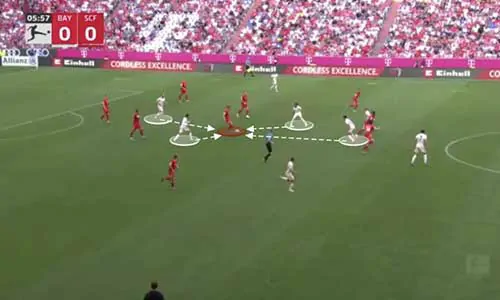
Gegenpressing Explained: How High-Pressure Tactics Will Shape the FIFA World Cup 2026
Modern football is a game of fine margins, high physical thresholds, and rapid transitions. As tacticians across the globe prepare their squads for the highly anticipated FIFA World Cup 2026, one specific tactical philosophy continues to dominate coaching boardrooms: Gegenpressing. Translated literally from German as “counter-pressing,” this system has revolutionized how teams defend and attack simultaneously. In this ultimate guide, we will break down the mechanics, history, and physical demands of Gegenpressing while exploring why it is set to be the defining tactical blueprint during the matches of the FIFA World Cup 2026.
Table of Contents
- What is Gegenpressing? The Core Philosophy
- The Tactical Evolution of Counter-Pressing Ahead of the FIFA World Cup 2026
- The Five-Second Rule and Pressing Triggers
- The Four Main Variations of Gegenpressing
- Physical Demands of Gegenpressing at the FIFA World Cup 2026
- The Vulnerabilities: How to Beat the High Press
- Tactical Comparison: Gegenpressing vs. Tiki-Taka vs. Low Block
- Frequently Asked Questions (FAQ)
- Conclusion and Key Takeaways
What is Gegenpressing? The Core Philosophy
At its heart, Gegenpressing is an active defensive strategy where a team, immediately upon losing possession, attempts to win the ball back rather than retreating into a traditional defensive shape. Traditional defensive tactics dictate that when you lose the ball, players run backward to organize their defensive lines. In contrast, Gegenpressing demands that players sprint forward to suffocate the opponent who has just won the ball.
The philosophical foundation of this strategy rests on a simple observation: an opposing team is at its most vulnerable the very moment they win the ball. Why? Because they are transitioning from a defensive, compact structure into an expansive, attacking shape. Their players are moving outward to create passing lanes. If you strike at this precise second of disorganization, you can easily reclaim the ball deep in their half, catch their defenders out of position, and create high-value goal-scoring opportunities.
This tactic bypasses the need to build an attack from the goalkeeper. Instead, the high-pressure system transforms defensive actions directly into immediate offensive output close to the opposition’s goal. As several elite national teams prepare for the expanded FIFA World Cup 2026 tournament, mastering these split-second transitions will be the primary difference between early exit and global glory.
The Tactical Evolution of Counter-Pressing Ahead of the FIFA World Cup 2026
While counter-pressing has roots in the Total Football played by Ajax and the Netherlands in the 1970s, it was refined in the modern era by German tacticians like Ralf Rangnick and Jürgen Klopp. Klopp famously declared that a well-executed counter-press is “better than any playmaker in the world” because it wins the ball back high up the pitch where the opponent’s defensive lines are completely open.
As we approach the historic FIFA World Cup 2026, which will feature 48 teams competing across North America, the implementation of this tactic is evolving. Coaching staff can no longer rely on simple, unorganized running. Modern scouting departments utilize highly advanced tracking data to map out exactly where and when to trigger a press. Consequently, we expect to see a highly calculated version of Gegenpressing at the FIFA World Cup 2026, where teams conserve energy during specific phases of the match and deploy explosive, coordinated pressure in highly targeted zones.
Additionally, the climatic conditions and travel demands across Canada, Mexico, and the United States will force managers to adapt their pressing systems. Playing a relentless high-press in summer heat requires a deep roster and incredibly intelligent squad rotation. Therefore, the successful teams at the FIFA World Cup 2026 will likely be those who can seamlessly switch between high counter-pressing and structured defensive blocks to preserve their physical stamina over a grueling tournament schedule.
The Five-Second Rule and Pressing Triggers
The tactical execution of Gegenpressing relies heavily on a concept known as the “Five-Second Rule.” When a team loses the ball in the attacking third, all nearby players have a strict five-second window to swarm the ball carrier and cut off passing lanes. If the ball is not recovered within this brief window, the pressing team will typically retreat into a compact mid-block to avoid getting exposed on the counter-attack.
To implement this successfully, players do not just run aimlessly. They look for specific “triggers” to initiate the press. Some of the most common tactical triggers include:
- The Backward Pass: When an opponent is forced to pass backward, it limits their forward options, signaling the team to push up and apply intense pressure.
- A Poor First Touch: If an opposing midfielder or defender miscontrols the ball, players immediately close in to exploit the mistake.
- Receiving with the Back to Goal: When an attacker receives the ball with their back to the play, their field of vision is restricted, making them an easy target for a double-team.
- The Pass to the Flank: Pressing near the touchline is highly effective because the boundary of the pitch acts as an extra defender, cutting the ball carrier’s exit options in half.
The Four Main Variations of Gegenpressing
Not all high-pressure systems are designed the same way. Coaches adjust their tactical approach based on their players’ profiles and the opponent’s weaknesses. Ahead of the highly anticipated matches of the FIFA World Cup 2026, we can categorize Gegenpressing into four distinct tactical variations:
1. Man-Oriented Gegenpressing
In this system, every player immediately matches up with the opponent nearest to them the moment possession is lost. The goal is to deny the ball carrier any short-passing options by tightly marking every potential receiver. While highly effective at disrupting the opponent’s rhythm, it can be physically exhausting and leaves the team vulnerable if a defender loses their individual 1v1 duel.
2. Space-Oriented Gegenpressing
Popularized heavily by Jürgen Klopp’s Borussia Dortmund and Liverpool teams, this variation focuses on swarming the immediate space around the ball. Instead of marking specific individuals, players construct a tight pressing cage around the ball carrier. This suffocates the player with the ball, forcing them into making hurried clearances or turning over possession directly.
3. Passing-Lane Oriented Gegenpressing
This is a highly intellectual approach where players focus primarily on cutting off the passing avenues rather than pressing the ball carrier directly. Players position themselves in the passing lanes leading to the opponent’s key playmakers. This forces the player in possession to make low-probability long balls or risk a pass that is easily intercepted by reading the play.
4. Ball-Oriented Gegenpressing
In this purest form of the tactic, everyone in the vicinity of the ball sprints directly toward it without worrying about marking assignments or passing lanes. The sheer density of defenders around the ball carrier creates overwhelming physical and psychological pressure, forcing a mistake. However, if the opponent manages to escape this zone with a quick switch of play, the pressing team is left heavily exposed on the opposite flank.
Physical Demands of Gegenpressing at the FIFA World Cup 2026
Executing a high-pressure system requires an extraordinary level of physical fitness, tactical discipline, and mental concentration. Because the FIFA World Cup 2026 will feature an expanded schedule with an extra knockout round, squad depth and sports science will play a massive role in a team’s tactical viability.
During a typical match, players in a high-pressing system must perform dozens of high-intensity sprints, quick changes of direction, and physical duels. Midfielders and full-backs are particularly taxed, often covering upwards of 12 kilometers per match. If a team’s physical conditioning drops by even 5%, the pressing lines will start to break, allowing elite opponents to pass through the lines with ease.
Therefore, sports science departments at the FIFA World Cup 2026 will be working around the clock to monitor player fatigue, muscle damage, and hydration levels. We are highly likely to see managers utilizing all five of their available substitutions in almost every match to maintain the relentless physical output required by a Gegenpressing system over a grueling tournament run.
The Vulnerabilities: How to Beat the High Press
While Gegenpressing is incredibly powerful, it is not a flawless strategy. Against highly organized, technically supreme opponents, a high-pressure system can be bypassed, leading to massive defensive vulnerabilities. Understanding these weaknesses is essential for analyzing how matches will unfold at the FIFA World Cup 2026.
The primary vulnerability of a high press is the massive space left behind the defensive line. Because the entire team pushes up high to compress the pitch, a simple, accurate long pass over the top can release a fast attacker into a 1v1 situation with the goalkeeper. Teams with press-resistant central midfielders—players who can comfortably turn under pressure and play precise long-range passes—pose the ultimate threat to a Gegenpressing side.
Furthermore, if the initial wave of pressure is broken, the pressing team is often left completely disorganized. Players are caught out of their natural positions, leaving huge gaps in the midfield and defense. If the opposition can execute quick, one-touch passing combinations to escape the initial trap, they can construct highly lethal counter-attacks against an exposed defensive unit.
Tactical Comparison: Gegenpressing vs. Tiki-Taka vs. Low Block
To help visualize how different footballing philosophies match up against each other, the table below compares Gegenpressing with two other dominant tactical styles that we will certainly observe at the FIFA World Cup 2026:
| Tactical Style | Primary Objective | Defensive Line Position | Key Player Attributes | Main Vulnerability |
|---|---|---|---|---|
| Gegenpressing | Immediate recovery of the ball in the opponent’s half through intense, coordinated pressure. | Extremely High | Stamina, acceleration, tactical awareness, team cohesion. | Long balls over the top, physical fatigue late in the game. |
| Tiki-Taka | Maintaining absolute possession through short, intricate passing to tire out the opponent. | Medium-High | Technical skill, vision, passing accuracy, press resistance. | Vulnerability to rapid, direct counter-attacks on turnovers. |
| Low Block | Denying space in the defensive third by keeping all players behind the ball. | Very Deep / Low | Physical strength, aerial ability, concentration, defensive positioning. | Relentless pressure on the edge of the penalty box, fatigue from defending. |
Frequently Asked Questions (FAQ)
1. Who invented the Gegenpressing style of football?
While early variations were used by Ernst Happel and Rinus Michels, the modern concept of Gegenpressing was heavily structured and popularized by German coach Ralf Rangnick, and later brought to global prominence by Jürgen Klopp during his highly successful tenures at Mainz, Borussia Dortmund, and Liverpool.
2. Why is Gegenpressing so important for the FIFA World Cup 2026?
The FIFA World Cup 2026 will feature 48 teams, meaning matches will be highly competitive and physically demanding. Gegenpressing allows teams to quickly disrupt opponents, dominate transitions, and secure goals without relying on complex, prolonged build-up play, making it a highly efficient tournament strategy.
3. What are the key physical requirements for a Gegenpressing team?
Players must possess elite aerobic fitness, explosive acceleration to close down space within seconds, and rapid cognitive processing to identify pressing triggers instantly. Stamina is particularly vital, as a single player failing to run can collapse the entire defensive system.
4. How do teams beat a highly organized Gegenpressing system?
Teams usually counter a high press by playing direct, accurate long balls over the defensive line to fast wingers, or by utilizing exceptionally press-resistant midfielders who can quickly bypass the initial wave of pressure with rapid, one-touch passing sequences.
5. Can smaller nations use Gegenpressing at the FIFA World Cup 2026?
Yes. In fact, Gegenpressing is often a highly effective equalizer for tactically disciplined, underdog nations at the FIFA World Cup 2026. It allows teams with less individual star power to disrupt highly technical opponents by utilizing collective work rate, physical stamina, and aggressive teamwork.
6. What is the “Five-Second Rule” in counter-pressing?
The Five-Second Rule dictates that when a team loses possession, nearby players have exactly five seconds to put maximum pressure on the opponent to win the ball back. If the ball is not won within this period, they must fall back into their standard defensive shape to avoid being caught out of position.
Conclusion and Key Takeaways
In conclusion, Gegenpressing is far more than just running hard after the ball; it is a highly sophisticated, mathematically calculated tactical system that has redefined the modern era of football. By turning defensive transitions into immediate offensive threats, high-pressure teams can completely dictate the tempo of a match and keep their opponents under constant psychological pressure.
As we head toward the highly anticipated kickoff of the FIFA World Cup 2026, tactical battles on the pitch will undoubtedly showcase how this system has evolved. Managers who can balance the extreme physical demands of a high-press with smart squad rotation and tactical flexibility are the ones most likely to guide their teams to ultimate victory in North America.
Are you excited to see how high-pressure tactics will unfold on the world’s biggest stage? Keep a close eye on the tactical setups of your favorite national teams as they prepare their squads for the historic FIFA World Cup 2026!