Football Position Numbers Explained: The Meaning of 1 to 11
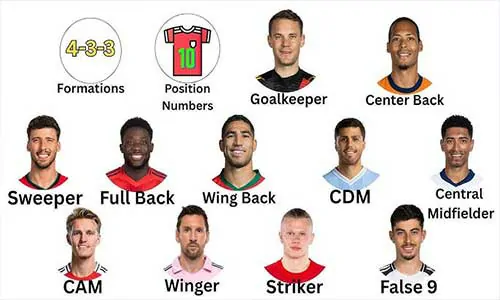
Football Position Numbers Explained: The 1 to 11 Guide Ahead of the FIFA World Cup 2026
As the global football community shifts its focus toward the upcoming FIFA World Cup 2026, understanding the core tactical foundations of the game is more important than ever. For decades, football has used a universal language of numbers to define roles on the pitch. When a manager talks about looking for a “classic number nine” or deploying a “creative number ten,” they are referencing a system that dates back nearly a century. This guide breaks down the traditional shirt numbers from 1 to 11, exploring their historical meanings, modern evolutions, and tactical significance.
Table of Contents
- The History of Football Shirt Numbers
- The Traditional 1 to 11 Numbers Explained
- Number 1: The Goalkeeper
- Number 2: The Right-Back
- Number 3: The Left-Back
- Number 4: The Center-Back / Defending Midfielder
- Number 5: The Center-Back
- Number 6: The Defending Midfielder
- Number 7: The Right Winger
- Number 8: The Box-to-Box Midfielder
- Number 9: The Striker / Center-Forward
- Number 10: The Attacking Midfielder / Playmaker
- Number 11: The Left Winger
- Why Shirt Numbers Still Dictate Tactics for the FIFA World Cup 2026
- Summary Comparison Table of Positions
- Conclusion and Key Takeaways
The History of Football Shirt Numbers
In the early days of association football, players did not wear numbers on their backs. The concept was first introduced in the late 1920s, most notably by English clubs Arsenal and Chelsea, to help officials and spectators identify players on the pitch. By the 1930s, the practice became mandatory in English leagues, and eventually, the system was adopted globally, starting with the 1954 World Cup.
Originally, numbering was strictly tied to the classic 2-3-5 formation, also known as the “Pyramid.” The goalkeeper wore number 1, the two full-backs wore 2 and 3, the half-backs wore 4, 5, and 6, and the five forwards wore 7 through 11. As formations evolved into the modern 4-4-2, 4-3-3, and 3-5-2 structures, these numbers shifted but largely retained their positional associations. This evolution has laid the groundwork for the modern tactical variations we will witness on display during the FIFA World Cup 2026.
The Traditional 1 to 11 Numbers Explained
While squad numbers have become highly personalized in modern club football, international tournaments still heavily respect the classic 1 to 11 numbering system for starting lineups. Let us examine each of these iconic positions in detail.
Number 1: The Goalkeeper
The Number 1 shirt is universally reserved for the primary goalkeeper. This player is the last line of defense and the only one allowed to use their hands inside the penalty box. Historically, the goalkeeper’s sole job was to stop shots. However, modern football has transformed this position entirely.
Today, a “sweeper-keeper” is expected to play with their feet, build attacks from the back, and rush out of the penalty area to clear long balls. This dual role of shot-stopping and playmaking will be highly visible when elite goalkeepers take the stage at the FIFA World Cup 2026.
Number 2: The Right-Back
Traditionally, the Number 2 was assigned to the right-back in a four-man defense. This player’s primary responsibility was to defend the right flank, mark the opposition’s left winger, and prevent crosses from entering the penalty area.
In contemporary tactics, the modern right-back is as much an attacking threat as a defender. They must possess incredible stamina to sprint up and down the sideline, delivering crosses into the box while maintaining the defensive discipline required to track back quickly.
Number 3: The Left-Back
Mirroring the right-back, the Number 3 is the traditional left-back. Like their counterpart on the right, the modern left-back is expected to provide width in attack, overlap with the wingers, and help stretch opposition defenses.
Historically, left-backs were strictly defensive stoppers. However, legends of the game redefined the role into a highly creative, offensive engine. Many modern coaches also use inverted left-backs who tuck into midfield to create numerical superiorities during build-up play.
Number 4: The Center-Back / Defending Midfielder
The interpretation of the Number 4 shirt varies significantly by region. In English and North American traditions, the Number 4 is typically worn by a commanding center-back who organizes the defensive line, wins aerial duels, and initiates physical tackles.
Conversely, in continental Europe and South America, the Number 4 is often assigned to a deep-lying defensive midfielder who acts as a shield in front of the backline. Both interpretations reflect the tactical setups expected from elite national teams competing in the FIFA World Cup 2026.
Number 5: The Center-Back
The Number 5 is almost universally recognized as the leader of the central defense. This player is responsible for commanding the backline, executing critical interceptions, and neutralizing the opponent’s main striker.
Modern ball-playing center-backs wearing the Number 5 are also highly skilled pass distributors. They must be comfortable under pressure, capable of playing precise long passes, and ready to start counter-attacks from deep inside their own half.
Number 6: The Defending Midfielder
The Number 6 role, often referred to as the “pivot” or “holding midfielder,” is the tactical anchor of any successful football team. Situated just ahead of the central defenders, this player’s main job is to break up opposition plays and recover possession.
Beyond defensive duties, the modern Number 6 serves as the primary distributor, connecting the defense to the attack. The tactical discipline of this deep-lying playmaker will be crucial for nations aiming for glory in the FIFA World Cup 2026.
Number 7: The Right Winger
The Number 7 shirt carries immense prestige and is traditionally worn by the right-sided winger or second striker. Players wearing this number are typically fast, highly skilled dribblers who specialize in beating defenders and delivering precise crosses.
Over the years, the role has shifted from a traditional touchline hugger to an “inside forward” who cuts inside onto their stronger foot to shoot. The Number 7 is often associated with flair, high-scoring capabilities, and match-winning moments.
Number 8: The Box-to-Box Midfielder
The Number 8 represents the engine room of the team. As a classic box-to-box midfielder, this player must possess elite-level physical conditioning, tactical awareness, and technical versatility.
A Number 8 is expected to defend aggressively near their own box, transition the ball through the midfield, and make late, dangerous runs into the opponent’s penalty area to score. These tireless midfield engines will dictate the tempo of matches during the hot summer of the FIFA World Cup 2026.
Number 9: The Striker / Center-Forward
The Number 9 shirt is reserved for the primary goalscorer—the target man or center-forward. Positioned closest to the opponent’s goal, their ultimate metric of success is the number of goals they score.
A traditional Number 9 excels at holding up the ball with their back to the goal, winning aerial battles, and finishing chances inside the penalty box. Tactically, they also lead the high press, putting pressure on opposing defenders to force mistakes. It will be fascinating to see how modern number nines will perform under pressure at the FIFA World Cup 2026.
Number 10: The Attacking Midfielder / Playmaker
Arguably the most iconic shirt in football history, the Number 10 is worn by the creative mastermind of the team. Operating in the space between the midfield and the attack, this player is responsible for orchestrating goal-scoring opportunities.
Excellent vision, precise passing, close control, and spatial awareness are the defining traits of a Number 10. They are tasked with unlocking stubborn defensive blocks, and we expect several modern number tens to define their legacies at the FIFA World Cup 2026.
Number 11: The Left Winger
The Number 11 shirt is traditionally assigned to the left-sided winger. Similar to the Number 7, these players rely on extreme pace, agility, and technical skill to stretch opposition defenses and create numerical advantages out wide.
An out-and-out Number 11 focuses on beating their fullback to cross from the left wing. In modern, asymmetrical tactical systems, they might also drift inside to act as a second striker, creating dynamic attacking angles that are difficult to defend.
Why Shirt Numbers Still Dictate Tactics for the FIFA World Cup 2026
From Classic Formations to the FIFA World Cup 2026 Style
While modern squads use highly fluid systems where players frequently swap zones, managers still use the 1 to 11 positional framework to map out their tactical blueprints. Understanding these numbers helps fans recognize the complex strategies that will be deployed by managers in the FIFA World Cup 2026.
For instance, a team playing a possession-oriented 4-3-3 relies heavily on the coordination between the Number 6 (holding midfielder) and the two interior midfielders (Numbers 8 and 10). On the other hand, counter-attacking setups often emphasize the direct wing play of Numbers 7 and 11 to exploit spaces left by overlapping fullbacks.
For deep tactical insights and technical analyses on how international teams organize these positions, you can explore the official FIFA Official Website and read comprehensive articles on The Coaches’ Voice.
As modern coaches prepare their rosters for the expanded FIFA World Cup 2026 format, we will likely see highly versatile players who can transition between multiple numbering systems during a single match. The flexibility of these roles makes the modern game incredibly fast-paced and unpredictable.
Key Players to Watch and Their Iconic Numbers at the FIFA World Cup 2026
The upcoming global tournament will feature the finest talent across all 11 positions. Every elite squad will boast key individuals wearing these classic numbers who are projected to star at the tournament. As teams finalize their squads for the FIFA World Cup 2026, the battle for these starting shirts represents a mix of tactical superiority and historical respect.
Whether it is a young talent inheriting the heavy burden of the Number 10 shirt, or a seasoned veteran anchoring the defense as a classic Number 5, these numbers are more than just digits on a jersey—they are symbols of tactical responsibility and national pride.
Summary Comparison Table of Positions
To help you quickly reference these classic football positions and their primary attributes, we have compiled a summary table below:
| Number | Traditional Position | Core Responsibility | Key Attribute |
|---|---|---|---|
| 1 | Goalkeeper | Shot-stopping & build-up | Reflexes & distribution |
| 2 | Right-Back | Defending right flank & crossing | Pace & stamina |
| 3 | Left-Back | Defending left flank & overlapping | Stamina & crossing |
| 4 | Center-Back / Midfield Shield | Central defending or anchoring | Tackling & positioning |
| 5 | Center-Back | Commanding central defense | Strength & aerial ability |
| 6 | Defensive Midfielder | Breaking up play & recycling ball | Tactical discipline & passing |
| 7 | Right Winger | Dribbling, crossing & scoring | Speed & skill |
| 8 | Box-to-Box Midfielder | Linking defense to attack | Work rate & versatility |
| 9 | Center-Forward | Scoring goals & holding up play | Finishing & strength |
| 10 | Attacking Midfielder | Playmaking & creating chances | Vision & creativity |
| 11 | Left Winger | Stretching the play & dribbling | Pace & crossing |
Conclusion and Key Takeaways
The traditional 1 to 11 positional numbers are far more than just arbitrary markings on a jersey. They represent a deep-rooted system of tactical organization that has guided coaches, players, and fans for generations. As we look forward to the spectacular matches of the FIFA World Cup 2026, understanding these classic roles will enrich your viewing experience and provide a deeper appreciation for the tactical battles on the field.
Whether you prefer the defensive resilience of a Number 5, the relentless stamina of a Number 8, or the creative genius of a Number 10, each player on the pitch must operate in harmony to achieve ultimate success. Every individual role, from the goalkeeper to the striker, will all play a vital role in determining who lifts the trophy at the FIFA World Cup 2026.
Which football position is your favorite, and which player do you think will dominate their role in the next global tournament? Let us know your thoughts in the comments below, and share this guide with your fellow football fans!
Frequently Asked Questions (FAQ)
1. Why do football players wear numbers 1 to 11?
Originally, football numbers 1 to 11 were assigned to designate a player’s starting position on the field based on the traditional 2-3-5 formation. Over time, these numbers became synonymous with specific tactical roles, helping officials, spectators, and coaches identify players’ duties easily. They remain highly relevant for analyzing team tactics ahead of major events like the FIFA World Cup 2026.
2. Can players wear any number they want at the FIFA World Cup 2026?
No, international tournaments governed by FIFA usually require squads to use continuous numbering, typically from 1 to 26 depending on the final squad size limits and registration rules for the FIFA World Cup 2026. The number 1 is strictly reserved for a goalkeeper, while the starting eleven usually wears a mix of traditional 1 to 11 numbers.
3. What is the difference between a Number 6 and a Number 8?
The main difference lies in their defensive and offensive focus. A Number 6 is a defensive or holding midfielder who stays deep, shields the backline, and breaks up plays. In contrast, a Number 8 is a box-to-box midfielder who moves dynamically between both penalty boxes, helping with both defense and launching attacking phases.
4. Why is the Number 10 shirt so famous in football?
The Number 10 shirt is legendary because it was traditionally worn by the team’s playmaker—the player with the highest skill, creativity, and vision. Icons like Pelé, Diego Maradona, and Lionel Messi wore the Number 10, cementing its reputation as the shirt of the team’s most influential attacking superstar.
5. What is a “False 9” in modern tactical systems?
A “False 9” is a tactical variation where a player assigned as the central forward (traditionally the Number 9) drops deep into midfield instead of staying high up the pitch. This movement pulls opposing center-backs out of position, creating large gaps for fast wingers (Numbers 7 and 11) to exploit and run into.
6. How do modern formations affect traditional shirt numbering?
Modern formations like 4-2-3-1 or three-at-the-back systems alter how traditional numbers line up on the pitch. For example, in a 3-5-2 system, the fullbacks (Numbers 2 and 3) might play as wing-backs, while a team might play with two deep-lying Number 6s instead of a traditional single defensive anchor.