FIFA World Cup Trophy History: Who Owns and Keeps the Original Cup?
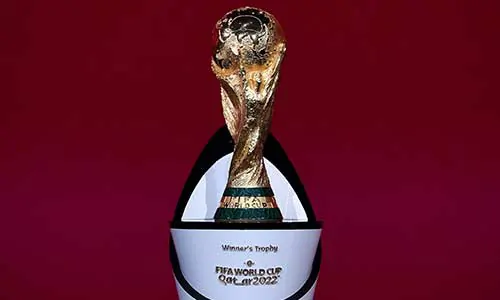
The FIFA World Cup trophy stands as the most prestigious and recognizable prize in the entire sporting world. As global excitement reaches unprecedented heights ahead of the historic FIFA World Cup 2026, millions of football fans are eager to learn more about this iconic masterpiece. Crafted from solid gold and symbolizing decades of athletic triumph, the trophy holds a storied past filled with drama, narrow escapes, and strict security measures. In this comprehensive guide, we explore the deep history of the trophy and explain who actually owns the original cup.
Throughout its existence, the tournament has featured two distinct trophy designs. Each represents a unique era of global football history. Understanding how these trophies were designed, stolen, protected, and awarded helps us appreciate the true weight of the prize that will be hoisted at the conclusion of the FIFA World Cup 2026.
Table of Contents
- 1. The Evolution of Football’s Ultimate Prize Before the FIFA World Cup 2026
- 2. The Jules Rimet Era (1930–1970)
- 3. The Dramatic Mystery of the Stolen Trophies
- 4. The Iconic Gazzaniga Design: What the Winners Will Raise at the FIFA World Cup 2026
- 5. Physical Specifications: Weight, Gold Content, and Design Details
- 6. Who Owns and Keeps the Original Trophy at the FIFA World Cup 2026?
- 7. Security and Transport of the Original Trophy for the FIFA World Cup 2026
- 8. Fascinating and Lesser-Known World Cup Trophy Facts
- 9. Frequently Asked Questions (FAQ)
1. The Evolution of Football’s Ultimate Prize Before the FIFA World Cup 2026
While fans count down the days to the opening kickoff of the FIFA World Cup 2026, it is essential to look back at how this global phenomenon began. The tournament started in 1930, and with it came the need for a physical prize that could match the grandeur of global athletic supremacy. Over the decades, the trophy has evolved not just in its physical shape, but also in the rules governing its permanent ownership.
Historically, the physical prize was more than just metal and stone; it was a symbol of national pride and geopolitical achievement. The struggle to claim it has occasionally mirrored the struggles of the modern world, including wars, economic transitions, and security challenges. Consequently, understanding this evolution provides invaluable context for the drama that will unfold on North American pitches during the FIFA World Cup 2026.
2. The Jules Rimet Era (1930–1970)
The original trophy was not the flowing, modern sculpture we recognize today. Instead, the first prize was named “Victory,” though it was later renamed the Jules Rimet Trophy in 1946 to honor the visionary FIFA president who helped establish the tournament. Designed by French sculptor Abel Lafleur, this legendary trophy was the predecessor to the one that will be hoisted in North America during the FIFA World Cup 2026.
Lafleur’s design depicted Nike, the ancient Greek goddess of victory, holding an octagonal cup above her head. The statuette was made of gold-plated sterling silver and sat on a base of lapis lazuli, a deep-blue semi-precious stone. The trophy stood approximately 35 centimeters (14 inches) tall and weighed 3.8 kilograms (8.4 pounds).
During World War II, the trophy was kept safe from occupying forces by Ottorino Barassi, the Vice-President of FIFA and President of the Italian Football Federation. Barassi secretly removed the trophy from a bank vault in Rome and hid it in a simple shoe box under his bed to ensure it did not fall into the wrong hands. His heroic actions preserved a vital piece of sporting heritage for future generations.
3. The Dramatic Mystery of the Stolen Trophies
The history of the Jules Rimet Trophy is shrouded in crime, mystery, and unresolved questions. To date, the prize has been stolen twice under completely different circumstances, giving it a near-mythic status in the sports world.
The 1966 London Exhibition Theft
In March 1966, just months before England was set to host the tournament, the Jules Rimet Trophy was stolen during a public exhibition at Westminster Central Hall in London. The theft sparked a massive police investigation and dominated international headlines. Fortunately, the story had a happy ending. A week after the heist, a mixed-breed dog named Pickles discovered the trophy wrapped in newspaper at the bottom of a garden hedge in South London. Pickles instantly became a national hero, and his owner received a handsome reward.
The 1983 Rio de Janeiro Theft
In 1970, Brazil won the tournament for the third time. Under the FIFA rules of that era, any nation that won the tournament three times was granted permanent possession of the original trophy. Therefore, the Jules Rimet Trophy was officially retired and handed over to the Brazilian Football Confederation (CBF) in Rio de Janeiro.
However, this arrangement did not last. In December 1983, thieves broke into the CBF headquarters, overpowered a night watchman, and stole the trophy from its display case, which was equipped with bulletproof glass but had a wooden frame that was easily pried open. Despite an exhaustive investigation, the original Jules Rimet Trophy was never recovered. The prevailing theory is that the thieves melted down the precious gold-plated silver, meaning this historic artifact is likely lost forever. Today, the CBF displays a high-quality replica created in Germany.
4. The Iconic Gazzaniga Design: What the Winners Will Raise at the FIFA World Cup 2026
Following Brazil’s permanent acquisition of the Jules Rimet Trophy in 1970, FIFA had to commission a new design for the 1974 tournament in West Germany. Artists from all over the world submitted a total of 53 designs to FIFA. Out of these competitive entries, the design by Italian sculptor Silvio Gazzaniga was chosen.
When the final whistle blows at the FIFA World Cup 2026, the victorious captain will lift Gazzaniga’s timeless creation. The design features two human figures rising in dynamic spirals from the base, stretching upward to support a depiction of the Earth. It perfectly captures the energy, struggle, and global unity inherent in competitive sport.
Compared to the previous statuette, this contemporary sculpture represents the universal appeal of football, an aspect that will be more evident than ever during the FIFA World Cup 2026 with its expanded 48-team format. Gazzaniga’s vision remains one of the most brilliant and universally appreciated designs in all of professional sports.
5. Physical Specifications: Weight, Gold Content, and Design Details
To appreciate the value of the prize that will be contested at the FIFA World Cup 2026, it is helpful to look at its physical specifications. Unlike its predecessor, the modern trophy is exceptionally heavy and contains highly valuable materials.
| Specification | Details |
|---|---|
| Height | 36.5 centimeters (14.4 inches) |
| Total Weight | 6.175 kilograms (13.6 pounds) |
| Material | 18-karat solid gold (75% pure gold) |
| Base Diameter | 13 centimeters (5.1 inches) |
| Base Material | Two concentric bands of green malachite (a semi-precious stone) |
One fascinating detail about the trophy’s construction is that it is hollow. If the trophy were made of solid gold all the way through, it would weigh upwards of 70 to 80 kilograms (over 150 pounds). Such a weight would make it virtually impossible for athletes to lift over their heads in celebration. Consequently, the hollow interior is a practical necessity that preserves the iconic post-match trophy hoist.
6. Who Owns and Keeps the Original Trophy at the FIFA World Cup 2026?
A common question among football enthusiasts as we approach the FIFA World Cup 2026 is: *Who keeps the original trophy?* The answer is simple yet highly regulated. FIFA retains permanent ownership of the original solid gold trophy.
Unlike the rules of the Jules Rimet era, no nation is ever allowed to keep the modern trophy permanently, regardless of how many times they win the tournament. This rule was established to ensure that the iconic Gazzaniga design remains the permanent and enduring symbol of the tournament indefinitely.
Therefore, the winners of the FIFA World Cup 2026 will briefly lift the authentic, solid gold trophy during the official post-match ceremony. However, shortly after the celebrations conclude, the original trophy is returned to FIFA’s possession. In its place, the winning nation is presented with a replica. This replica, known as the FIFA World Cup Winners’ Trophy, is made of bronze and plated with a thick layer of gold. While the original remains in Switzerland, the replica given to the FIFA World Cup 2026 champions will be theirs to display permanently in their national football association’s headquarters.
7. Security and Transport of the Original Trophy for the FIFA World Cup 2026
Due to its immense cultural and material value, transporting the original trophy for events like the FIFA World Cup 2026 requires unparalleled security protocols. When not on display, the authentic trophy is stored in a secure vault at the FIFA Museum in Zurich, Switzerland.
Strict Handling Protocols
Only a highly restricted group of people are legally permitted to touch the original trophy with their bare hands. This exclusive club is limited to:
- Former FIFA World Cup winners (players and coaches who have won the tournament)
- Heads of State and sovereign monarchs
- The President of FIFA
Anyone else who handles the trophy, including event staff and security personnel, must wear white, lint-free gloves to prevent oils from their skin from tarnishing the gold surface. Consequently, only a select few will touch the real trophy during the grand finale of the FIFA World Cup 2026.
Global Trophy Tours
The massive scale of the FIFA World Cup 2026, hosted across three nations—the USA, Canada, and Mexico—means that the global promotional tour will be more expansive than ever. During these promotional tours leading up to the FIFA World Cup 2026, the trophy is kept under continuous armed guard and transported in custom-designed, climate-controlled cases.
The tour acts as a primary catalyst for fan engagement, building incredible momentum before the FIFA World Cup 2026 officially kicks off. Fans worldwide get a rare opportunity to see the glimmering gold prize up close, even if they cannot attend the actual matches.
8. Fascinating and Lesser-Known World Cup Trophy Facts
- The Engraved Winners: The base of the trophy features a flat plate where the names of past winners and the years of their victories are engraved. The text is written in the national language of the victorious country (e.g., “1974 Deutschland” or “2010 España”). There is currently enough space on the base to accommodate the names of winners until the 2038 tournament.
- A Replica for Every Winner: Since 1974, every winning team has received a gold-plated replica to take home. These replicas are crafted by the original Italian manufacturer, GDE Bertoni, located in Milan.
- Value Beyond Gold: While the material value of the 18-karat gold is estimated to be worth hundreds of thousands of dollars, the cultural and historical value of the trophy makes it virtually priceless, with insurance valuations exceeding tens of millions of dollars.
9. Frequently Asked Questions (FAQ)
Q1: Who will keep the original trophy after the FIFA World Cup 2026 final?
Answer: No country keeps the original trophy. FIFA retains permanent ownership of the original solid gold trophy, which is kept at the FIFA Museum in Zurich. The winners of the FIFA World Cup 2026 will receive a gold-plated bronze replica.
Q2: Will the original trophy be on display during the FIFA World Cup 2026?
Answer: Yes, the original trophy will make official appearances during key matches, including the opening match and the grand final of the FIFA World Cup 2026. It will also be showcased during pre-tournament promotional tours.
Q3: How many teams will compete for the trophy in the FIFA World Cup 2026?
Answer: A record-breaking 48 teams will compete for the ultimate prize in the FIFA World Cup 2026, which is being hosted jointly by the United States, Canada, and Mexico.
Q4: Is the current trophy made of solid gold?
Answer: The trophy is made of 18-karat solid gold, but it is hollow on the inside. This design is necessary because a completely solid gold trophy would be far too heavy to lift comfortably.
Q5: What happened to the original Jules Rimet Trophy?
Answer: After being awarded permanently to Brazil in 1970, the Jules Rimet Trophy was stolen from the Brazilian Football Confederation headquarters in 1983 and is widely believed to have been melted down by the thieves.
Q6: Who designed the modern FIFA World Cup Trophy?
Answer: The modern trophy was designed by Italian sculptor Silvio Gazzaniga and was first awarded in 1974 to West Germany.
10. Conclusion and Call to Action
The journey of the FIFA World Cup trophy is a testament to the beautiful game’s enduring legacy. From the hidden shoebox of Ottorino Barassi to the global stage of the modern era, this prize continues to inspire millions. As we look forward to the spectacular matches of the FIFA World Cup 2026, the trophy remains the ultimate symbol of excellence, unity, and passion.
Which nation do you think will lift the replica of this legendary trophy in 2026? Join the conversation by sharing your predictions in the comments below, and don’t forget to check out the official FIFA Website and the FIFA Museum to explore more incredible football history.