FIFA World Cup Host Selection Process: Evolution Through the Years
FIFA World Cup Host Selection Process: Evolution Through the Years & The Road to FIFA World Cup 2026
The FIFA Men’s World Cup represents the absolute pinnacle of global sports, capturing the hearts of billions of football fans every four years. Yet, before a single ball is kicked on the pitch, a high-stakes competition of a different kind unfolds behind closed doors: the race to host the tournament. Over nearly a century, the bidding and host selection framework has shifted dramatically from informal agreements among a small group of delegates to a highly scrutinized, transparent process. Today, understanding this evolution provides invaluable context for the highly anticipated FIFA World Cup 2026, which marks a massive departure from historic hosting models.
Historically, host selection was plagued by geopolitical tensions, continental boycotts, and allegations of systemic backroom deals. However, as football expanded into a multibillion-dollar industry, the governing body, FIFA, was forced to reform its methodologies. The preparation for the FIFA World Cup 2026 represents the culmination of these reforms, introducing an era of expansive co-hosting, unprecedented economic scale, and rigid scoring metrics. This article explores the decades-long journey of how World Cup hosts are chosen, highlighting key milestones and examining the modern mechanisms that govern the sport’s greatest tournament.
Table of Contents
- 1. The Early Years (1930–1938): Direct Invites and Geopolitical Friction
- 2. The Post-War Era & Continental Alternation (1950–1998)
- 3. The 21st Century Shift: Co-Hosting and Broadening Horizons (2002–2022)
- 4. The 2015 Crisis & The Push for Selection Transparency
- 5. The Selection Process Behind the FIFA World Cup 2026
- 6. How the FIFA World Cup 2026 Redefined Bidding Guidelines
- 7. Future Bidding: What Lies Beyond FIFA World Cup 2026?
- 8. Comparison Table: Evolution of Bidding Procedures
- 9. Conclusion & Call to Action (CTA)
- 10. Frequently Asked Questions (FAQs)
1. The Early Years (1930–1938): Direct Invites and Geopolitical Friction
The inaugural FIFA World Cup in 1930 did not feature a complex bidding war. Instead, FIFA chose Uruguay as the host during a meeting of its congress in Barcelona. This decision was primarily a tribute to Uruguay’s centenary of independence and their back-to-back gold medals at the 1924 and 1928 Summer Olympics. Furthermore, Uruguay offered to cover all travel and accommodation expenses for the participating teams and construct a brand-new stadium, the Estadio Centenario.
However, this selection process immediately faced major challenges. In the 1930s, crossing the Atlantic required a grueling three-week sea voyage. Consequently, many European nations refused to make the journey, leaving only four European teams in the competition. This lack of participation illustrated that choosing a host without considering logistical constraints could severely affect the tournament’s quality.
To balance the scales, FIFA awarded the next two World Cups to European nations: Italy in 1934 and France in 1938. The decision to host the 1938 tournament in France sparked immense controversy. South American countries had been led to believe that the tournament would rotate back to their continent. Feeling betrayed, both Argentina and Uruguay boycotted the 1938 event. These early disputes demonstrated that without a structured, predictable system, the World Cup risked collapse due to continental favoritism and regional boycotts.
2. The Post-War Era & Continental Alternation (1950–1998)
Following a twelve-year hiatus due to World War II, FIFA recognized the need for a systematic rotation policy to secure global participation. When the tournament resumed in 1950, Brazil was chosen as the host, followed by Switzerland in 1954 and Sweden in 1958. During this period, FIFA established an unwritten “continental rotation” agreement, alternating hosting duties between Europe and the Americas to maintain political balance.
Under this arrangement, the tournament expanded significantly in television viewership and commercial interest. For instance, the 1970 World Cup in Mexico was the first to be broadcast in color, boosting the event’s profile. Throughout these decades, decisions were made years in advance by the FIFA Executive Committee (ExCo), a small group of high-ranking football administrators. While this committee kept the alternation cycle stable, it concentrated power in a few hands, opening the door for intensive lobbying and political negotiations behind closed doors.
On the other hand, the rigidity of this unwritten rotation rule occasionally forced FIFA to make exceptions. For example, Colombia was initially chosen to host the 1986 World Cup, but severe economic difficulties forced them to withdraw in 1982. FIFA quickly organized a replacement bidding process, ultimately awarding the tournament to Mexico, which became the first nation to host the event twice. This era highlighted that while continental rotation maintained political harmony, it lacked the technical and financial safeguards required to manage an increasingly complex global sporting event.
3. The 21st Century Shift: Co-Hosting and Broadening Horizons (2002–2022)
At the turn of the century, FIFA sought to break the traditional European-American monopoly to establish the World Cup as a truly global tournament. This vision was realized in 2002 when the tournament was hosted in Asia for the first time, co-hosted by Japan and South Korea. This co-hosting model presented massive logistical challenges, such as managing border crossings and coordinating two separate local organizing committees. Consequently, FIFA initially decided to discourage joint bids for future tournaments, preferring single-country bids.
In 2010, the tournament made another historic breakthrough when South Africa became the first African host country. This milestone was achieved through a formalized continental rotation policy, which mandated that only African nations could bid for the 2010 edition. This approach ensured geographic diversity and allowed developing nations to showcase their capabilities on the global stage.
However, the limits of this centralized decision-making system became apparent during the dual selection of the 2018 and 2022 hosts in December 2010. For the first time, FIFA’s Executive Committee voted on two tournaments simultaneously, awarding them to Russia and Qatar, respectively. This decision was met with widespread public criticism and intense scrutiny regarding the technical evaluations of the bids, human rights conditions, and potential conflicts of interest among voting members. This controversial dual award highlighted the urgent need to overhaul the selection process.
4. The 2015 Crisis & The Push for Selection Transparency
The turning point for FIFA’s bidding system occurred in 2015 when a major corruption scandal shook the international sporting community. Investigations by Swiss and American judicial authorities revealed systemic ethical issues within the organization. These revelations led to the departure of several high-ranking officials and forced FIFA to implement deep structural reforms to rebuild public trust.
To eliminate backroom deals, FIFA dismantled the 24-member Executive Committee and replaced it with the larger, more representative FIFA Council. More importantly, the power to make final host selections was stripped from this small executive group and handed to the entire FIFA Congress. Under this new democratic model, each of the 211 member associations receives one vote, and the entire voting register is published openly for the public to review.
Furthermore, FIFA introduced independent audit practices to evaluate technical bids thoroughly before they are put to a vote. These audits score bids on a strict scale based on existing infrastructure, financial guarantees, and risk factors. These changes ensured that future tournaments would be awarded through a transparent process, setting a new standard for international sports governance.
5. The Selection Process Behind the FIFA World Cup 2026
The bidding campaign for the FIFA World Cup 2026 served as the first major test of FIFA’s reformed selection framework. On June 13, 2018, at the 68th FIFA Congress in Moscow, member associations voted publicly to choose between two main contenders: Morocco’s bid and the joint “United Bid” submitted by Canada, Mexico, and the United States.
The democratic voting process resulted in a decisive victory for the United Bid, which received 134 votes compared to Morocco’s 65 votes. Under the new transparency rules, FIFA immediately published a detailed breakdown of how each national federation voted, proving that a transparent process was possible. This public disclosure helped rebuild confidence among fans, sponsors, and governments alike.
Crucially, the host selection for the FIFA World Cup 2026 was heavily influenced by the tournament’s expansion from 32 teams to 48 teams. This expansion meant that the host would need to accommodate 104 matches instead of the traditional 64. The immense logistical and infrastructural demands of this larger format favored the United Bid, which offered sixteen pre-existing, world-class stadiums and extensive transport networks across three North American nations. This decision marked a shift toward co-hosting as a practical necessity for managing large-scale sports events.
6. How the FIFA World Cup 2026 Redefined Bidding Guidelines
The bidding process leading to the FIFA World Cup 2026 introduced a highly detailed and objective evaluation system. Prior to this, technical reports were often overlooked by voters. However, under the updated guidelines, any bid that fails to meet the minimum threshold in key technical areas—such as stadium capacity, medical services, transport, and accommodation—can be disqualified before reaching the ballot.
Additionally, the evaluation process for the FIFA World Cup 2026 introduced mandatory human rights assessments. Bidding nations must now submit detailed strategies outlining how they will protect labor rights, ensure safety, and prevent discrimination during the construction and hosting phases. This requirement represents a major step forward, holding host nations accountable to international ethical standards.
Finally, environmental sustainability has become a key factor in bidding evaluations. To minimize the carbon footprint of these massive tournaments, FIFA now favors bids that utilize existing infrastructure over those requiring extensive new construction. By avoiding the creation of costly, underused stadiums, the model established for the FIFA World Cup 2026 provides a sustainable blueprint for future tournaments.
7. Future Bidding: What Lies Beyond FIFA World Cup 2026?
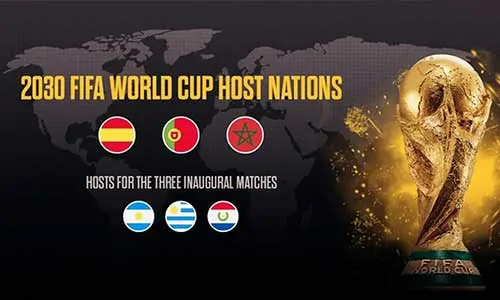
Following the successful selection of the FIFA World Cup 2026 hosts, the evolution of the selection process has continued to adapt to global demands. For the 2030 World Cup, FIFA approved an unprecedented cross-continental bid. To celebrate the tournament’s centenary, three matches will be played in Uruguay, Argentina, and Paraguay, while the main tournament will be hosted by Spain, Portugal, and Morocco. This unique arrangement demonstrates how flexible co-hosting models have become in the modern era.
On the other hand, the bidding process for the 2034 World Cup saw a return to a more streamlined approach. FIFA restricted the bidding to member associations from the Asian Football Confederation (AFC) and the Oceania Football Confederation (OFC), aligning with their rotation policy. Ultimately, Saudi Arabia emerged as the sole bidder, securing the hosting rights after other potential bidders withdrew. This outcome sparked fresh discussions among sports analysts regarding the balance between open competition and strategic planning.
As we look past the groundbreaking FIFA World Cup 2026, it is clear that the bidding process will continue to evolve. FIFA must balance democratic voting and strict technical requirements with the practical challenges of organizing a 48-team tournament. The lessons learned from the FIFA World Cup 2026 will likely shape how future hosts are selected for decades to come.
8. Comparison Table: Evolution of Bidding Procedures
To summarize how much the host selection process has changed, the table below compares the key characteristics of bidding across four distinct eras of FIFA history, culminating in the modern standards established for the FIFA World Cup 2026.
| Era / Phase | Voting Body | Primary Criteria | Transparency Level | Key Milestones |
|---|---|---|---|---|
| Early Era (1930–1938) | FIFA Congress Meetings | Political consensus & financial offers | Very Low (Informal agreements) | Uruguay 1930; subsequent South American boycotts |
| Alternation Era (1950–1998) | FIFA Executive Committee (ExCo) | Europe-Americas alternation policy | Low (Private lobby & negotiations) | Mexico hosting twice (1970, 1986); growth of TV rights |
| Expansion Era (2002–2022) | FIFA Executive Committee (ExCo) | Global reach & new football markets | Moderate (Technical reports introduced but ignored) | First co-hosted cup (2002); highly controversial 2018/2022 dual vote |
| Modern Reform Era (2026–Present) | Full FIFA Congress (211 nations) | Infrastructure, Human Rights, & Sustainability | Very High (Public votes & audited scoring) | Selection of the FIFA World Cup 2026; multi-continental 2030 model |
9. Conclusion
The history of the FIFA World Cup host selection process reflects the broader evolution of football from a regional pastime into a massive global industry. Over the years, the system has transitioned from a small group of delegates making informal decisions into a structured, democratic process. While challenges remain, the introduction of public voting, independent technical audits, and mandatory social responsibility criteria has significantly improved the transparency of host selection.
The selection of the FIFA World Cup 2026 stands as a landmark in this ongoing journey. By successfully managing the demands of a 48-team tournament through a transparent, joint-bidding process, the 2026 edition has set a new benchmark for future events. As the tournament continues to expand and adapt, these modern standards will help ensure that the World Cup remains a celebrated global event for generations of football fans to come.
Join the Football Conversation!
What are your thoughts on the modern co-hosting model and the transition to a 48-team format? Do you prefer multi-country bids or single-country hosts?
Leave a comment below to share your perspective, and don’t forget to share this article with fellow football fans as we count down to the historic FIFA World Cup 2026!
10. Frequently Asked Questions (FAQs)
Q1: How are the host countries chosen for the FIFA World Cup 2026?
A1: The hosting rights for the FIFA World Cup 2026 were decided through a democratic vote at the 68th FIFA Congress in 2018. All 211 member associations had a public, transparent vote, choosing the joint United Bid (Canada, Mexico, and the United States) over Morocco’s bid.
Q2: What is the continental rotation policy in World Cup host selection?
A2: The continental rotation policy is a guideline used by FIFA to ensure that hosting duties rotate among the different football confederations (such as UEFA, CONMEBOL, CAF, AFC, and CONCACAF). Under current regulations, a continent cannot bid to host the tournament if it has hosted either of the previous two editions.
Q3: What makes the bidding guidelines different for the FIFA World Cup 2026?
A3: The bidding process for the FIFA World Cup 2026 introduced mandatory technical evaluations, independent audits, public vote disclosures, and strict human rights assessments. This ensured that candidate nations were evaluated objectively on their infrastructure, sustainability plans, and labor standards before the vote.
Q4: Why did FIFA move away from using a small committee to select hosts?
A4: Following the 2015 corruption investigations, FIFA dismantled the 24-member Executive Committee to prevent private lobbying and conflict of interest. Power was transferred to the entire FIFA Congress to ensure a more democratic, transparent, and accountable decision-making process.
Q5: Can multiple countries host a World Cup under the modern system?
A5: Yes. Co-hosting has become highly favored due to the expansion of the tournament format to 48 teams. Joint bids allow host nations to share logistical responsibilities and utilize existing infrastructure, reducing the financial burden of building new stadiums.
Q6: Where can I find a complete historical overview of previous World Cup hosts?
A6: You can explore the complete list of previous hosts and their selection details on the official Wikipedia List of FIFA World Cup hosts, which tracks every tournament’s location since 1930.
Q7: How has the host footprint grown geographically over time?
A7: The tournament has evolved from a single-nation event centered in Europe and South America to a highly connected global event. To see this expansion in detail, check out Statista’s FIFA World Cup Hosts Timeline, which charts the geographic expansion of the tournament through 2034.