FIFA World Cup 2026 Venues: Iconic Stadiums Hosting the Tournament
The eyes of the entire planet are locked onto North America as the legendary FIFA World Cup 2026 officially gets underway. Representing a historic shift in the tournament’s framework, this massive event is co-hosted by three powerhouse nations: the United States, Mexico, and Canada. For the first time in history, 48 teams will compete on soccer’s grandest stage, expanding from the previous 32-team format. Consequently, 16 state-of-the-art stadiums have been selected across the continent to handle the massive influx of international fans, elite athletes, and media personnel.
This extraordinary iteration of the FIFA World Cup 2026 stands as a landmark tournament. Every single host venue brings its own unique flavor, technological marvels, and historic legacy. From the soaring altitudes of Mexico City to the high-tech, billion-dollar structures of the United States and the energetic coastal atmospheres of Canada, these arenas are prepared to showcase the beautiful game like never before. Here is an in-depth, comprehensive look at the 16 iconic stadiums that will define the tournament.
Table of Contents
- The Historical Significance of the FIFA World Cup 2026 Venues
- United States Stadiums: Architectural Marvels of the FIFA World Cup 2026
- Historic and Passionate Stadiums in Mexico
- Canada’s Host Stadiums: Shaping the Soccer Legacy
- A Complete Comparison of All 16 Stadiums
- Essential Fan Travel and Logistics Guide
- Conclusion: The Lasting Impact of the Tournament
- Frequently Asked Questions
The Historical Significance of the FIFA World Cup 2026 Venues
Organizing a cross-continental soccer tournament across three massive nations presents a logistical and structural feat never before attempted in sports history. Crucially, the selection of the FIFA World Cup 2026 host cities was a monumental process, taking years of bidding, assessments, and structural renovations. Unlike prior tournaments that relied heavily on building brand-new stadiums from scratch, the vast majority of the venues chosen for this event are pre-existing, world-class facilities that host NFL, MLS, and Liga MX matches.
Historically speaking, hosting the tournament offers an unparalleled opportunity to cement local sports heritage. For instance, Mexico is making history by co-hosting the event for a record third time, having previously hosted iconic iterations in 1970 and 1986. In contrast, the United States hosted a highly successful tournament in 1994, which catalyzed the birth of Major League Soccer (MLS). Meanwhile, Canada is hosting matches of the men’s tournament for the absolute first time, signaling a major milestone for soccer’s rapid growth in the nation.
Furthermore, these 16 venues must cater to diverse weather conditions, altitudes, and time zones. To illustrate, teams playing in Mexico City will face altitudes of over 2,240 meters above sea level, while those in Vancouver will experience mild, coastal maritime weather. Managing player recovery and travel logistics between these varying environments has driven teams to utilize cutting-edge sports science and tailored preparation strategies.
United States Stadiums: Architectural Marvels of the FIFA World Cup 2026
The United States plays host to the largest share of matches during the tournament. The 11 selected American stadiums are renowned worldwide for their massive capacities, high-end VIP suites, and striking futuristic designs. Let’s examine these marvels in detail.
1. MetLife Stadium (New York/New Jersey) – The Venue for the Grand Final
Located in East Rutherford, New Jersey, MetLife Stadium holds a pivotal role in this tournament. It has been chosen to host the prestigious final match of the FIFA World Cup 2026 on July 19. Boasting a massive capacity of over 82,500 seats, this open-air venue is the home of the NFL’s New York Giants and New York Jets.
To prepare for soccer’s ultimate match, the stadium underwent extensive playing surface modifications to transition from turf to a high-performance natural grass pitch. Because of its proximity to New York City, fans will enjoy a bustling, cosmopolitan atmosphere, complemented by top-tier transit links connecting Manhattan to the stadium gates.
2. AT&T Stadium (Dallas/Arlington) – The Giant Soccer Dome
Affectionately known as “Jerry World,” AT&T Stadium in Arlington, Texas, is one of the most structurally impressive indoor arenas on Earth. Featuring a retractable roof and a colossal, center-hung high-definition video board, the stadium can comfortably expand its capacity to over 93,000 spectators for major sporting events.
Dallas will serve as a core hub for the tournament, hosting multiple high-stakes knockout stage matches, including a semi-final. The venue’s fully climate-controlled environment guarantees comfortable playing conditions, shielding both players and fans from the intense Texas summer heat.
3. SoFi Stadium (Los Angeles/Inglewood) – Ultra-Modern Masterpiece
Costing over $5 billion to construct, SoFi Stadium in Inglewood, California, is a state-of-the-art marvel of modern engineering. It features an open-sided, translucent canopy roof and the breathtaking “Infinity Screen” by Samsung—a dual-sided, 360-degree video board suspended above the field.
For the FIFA World Cup 2026, SoFi Stadium will host the highly anticipated opening match for the United States Men’s National Team (USMNT) on June 12. To meet FIFA’s strict pitch dimension requirements, parts of the stadium’s concrete bowl were carefully modified to accommodate a natural grass field.
4. Mercedes-Benz Stadium (Atlanta) – High-Tech Fan Experience
Atlanta’s premier stadium is celebrated for its unique, pinwheel-like retractable roof design and its massive 360-degree halo video board. Housing both NFL and MLS franchises, the stadium possesses an incredibly passionate local soccer fan base.
With a tournament capacity of approximately 71,000, Mercedes-Benz Stadium is set to host a semi-final match. Its highly efficient, fan-centric design focuses on rapid concessions, cheap food options, and sustainable operations, making it a favorite for traveling supporters.
5. Hard Rock Stadium (Miami) – Tropical Football Hub
Situated in Miami Gardens, Florida, Hard Rock Stadium is a dynamic, multi-purpose venue designed to provide excellent sightlines. The stadium is no stranger to global sporting spectacles, having hosted multiple Super Bowls, major tennis championships, and international friendly matches.
During the tournament, Miami will host several group matches and the Bronze Final (third-place playoff) on July 18. The stadium’s canopy roof covers 90% of the seating bowl, protecting fans from both rain and sun while keeping the grass pitch exposed to natural sunlight.
6. Lumen Field (Seattle) – The Loudest Atmosphere
Located in the heart of Seattle, Washington, Lumen Field is famous for its uniquely vertical seating layout and its partial roof canopy. These architectural features were specifically engineered to trap acoustic energy, making it one of the loudest outdoor venues in the world.
Given Seattle’s rich soccer history and the passionate culture surrounding the Seattle Sounders MLS team, matches played here are expected to feature electric environments. The stadium offers breathtaking views of the Seattle skyline and the nearby Puget Sound.
7. NRG Stadium (Houston) – The Versatile Texas Arena
Houston’s NRG Stadium was the first NFL facility built with a retractable roof, allowing for flexible climate control. It boasts a capacity of over 72,000 and is highly regarded for its expansive floor layout and top-tier hospitality amenities.
As a diverse, international city, Houston is fully prepared to welcome soccer fans from around the world. The stadium’s experience hosting major international events, including the Copa América, makes it a reliable venue for high-intensity group and knockout fixtures.
8. Levi’s Stadium (San Francisco/Santa Clara) – Green and Sustainable
Nestled in Silicon Valley, Levi’s Stadium in Santa Clara is one of the most environmentally friendly major sports venues in the world. It features a green roof planted with native species and relies heavily on recycled water and solar energy arrays.
The stadium is designed to provide excellent tech connectivity, allowing fans to enjoy fast-loading mobile ticketing and high-speed Wi-Fi throughout the venue. It is poised to host highly competitive matches in front of roughly 68,500 fans.
9. Arrowhead Stadium (Kansas City) – The Heart of the Midwest
Arrowhead Stadium holds the official Guinness World Record for the loudest stadium crowd noise ever recorded. Known for its open-air layout, incredible bowl sightlines, and world-renowned tailgating culture, it is a legendary American sports venue.
For the tournament, Kansas City will provide a warm, welcoming midwestern atmosphere. Fans visiting Arrowhead will experience a true, historic sports cathedral that has been carefully modernized to host global soccer matches.
10. Gillette Stadium (Boston/Foxborough) – New England’s Sports Hub
Gillette Stadium, located in Foxborough, Massachusetts, features an iconic lighthouse and bridge structure at its north end. To prepare for the tournament, the venue received major upgrades, including a newly built, larger lighthouse and an expanded high-definition video board.
Gillette Stadium’s open-air setting and proximity to the city of Boston make it an excellent location for historical matches. It successfully hosted games during the 1994 World Cup and continues to be a vital anchor for New England sports.
11. Lincoln Financial Field (Philadelphia) – The Historic East Coast Arena
Lincoln Financial Field, located in Philadelphia, Pennsylvania, is highly respected for its clean, eco-friendly energy programs. The stadium incorporates hundreds of solar panels and wind turbines, matching its passionate, high-energy fan base with sustainable operations.
As Philadelphia celebrates the nation’s rich historical background, “The Linc” will offer international travelers a direct gateway to the historic birthplace of American independence, wrapped in a fantastic, loud sporting atmosphere.
Historic and Passionate Stadiums in Mexico
No country matches the pure romanticism and historical weight that Mexico brings to the soccer world. The three selected stadiums are a mix of legendary cathedrals and gorgeous, ultra-modern sporting arenas.
12. Estadio Azteca (Mexico City) – The Legendary Colossus
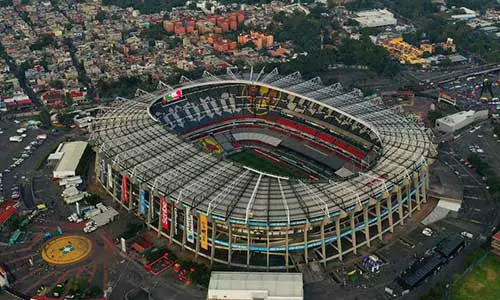
There is perhaps no venue in world soccer more revered than the Estadio Azteca in Mexico City. Standing as the beating heart of football heritage for the FIFA World Cup 2026, it is the first stadium to host matches in three separate World Cups (1970, 1986, and 2026). It was here that Pelé lifted the trophy in 1970 and Diego Maradona scored his famous “Hand of God” and “Goal of the Century” goals in 1986.
Estadio Azteca is scheduled to host the official opening match of the tournament on June 11, 2026. Facing a high elevation of 2,240 meters, visiting teams will have to adapt quickly to the thin air, while the loud, passionate cheers of over 72,000 fans create a highly intimidating atmosphere for opponents.
13. Estadio BBVA (Monterrey) – The Steel Giant
Located in Guadalupe, Monterrey, Estadio BBVA is widely considered one of the most visually stunning stadiums in the world. Known as “El Gigante de Acero” (The Steel Giant), the venue features a beautiful, flowing metallic design that perfectly frames the breathtaking Cerro de la Silla mountain peak directly behind it.
Completed in 2015, this modern arena offers fans spectacular views, close proximity to the pitch, and world-class culinary options. It is a brilliant example of how modern infrastructure can harmoniously blend with beautiful natural landscapes.
14. Estadio Akron (Guadalajara) – The Volcanic Arena
Estadio Akron, located in Zapopan, Guadalajara, features a highly unique architectural design that mimics a grass-covered volcano. The stadium’s roof resembles a white cloud floating gracefully above the crater, blending seamlessly into the surrounding green landscape.
With a tournament capacity of over 44,000, Estadio Akron is the proud home of Chivas, one of Mexico’s most popular soccer clubs. It boasts excellent eco-friendly credentials, using rainwater harvesting and efficient waste-reduction programs.
Canada’s Host Stadiums: Shaping the Soccer Legacy
Canada is poised to co-host its first-ever men’s World Cup matches, utilizing two spectacular coastal and metropolitan hubs. Both venues have undergone significant updates to meet the high demands of the tournament.
15. BC Place (Vancouver) – Scenic West Coast Jewel
BC Place in Vancouver, British Columbia, is a stunning stadium located right on the False Creek waterfront. It is famous for its state-of-the-art cable-supported retractable roof and its massive, centrally suspended video board.
For the tournament, BC Place will host key group and knockout matches, seating roughly 48,000 fans. The local fans in Vancouver are known for their highly welcoming, diverse, and vibrant nature, making this scenic West Coast destination a favorite for international visitors.
16. BMO Field (Toronto Stadium) – The Energetic Soccer Cathedral
Located at Exhibition Place in Toronto, BMO Field is the smallest of the selected host venues, offering an intimate and highly energetic atmosphere. Originally designed specifically for soccer, the venue has been expanded to support a tournament capacity of over 44,000.
Toronto’s deeply multicultural population ensures that every visiting national team will enjoy local community support. Its central location close to Lake Ontario and the downtown core makes it incredibly accessible for fans using public transit.
A Complete Comparison of All 16 Stadiums
To help you visualize the scale of the tournament, here is an essential quick-reference guide to all 16 stadiums of the FIFA World Cup 2026:
| Stadium Name | Host City & Country | Capacity (Approx.) | Key Tournament Role |
|---|---|---|---|
| MetLife Stadium | New York/New Jersey, USA | 82,500+ | Grand Final Host (July 19) |
| AT&T Stadium | Dallas (Arlington), USA | 93,000+ | Semi-Final Host |
| Mercedes-Benz Stadium | Atlanta, USA | 71,000+ | Semi-Final Host |
| SoFi Stadium | Los Angeles, USA | 70,000+ | USMNT Opening Match |
| Estadio Azteca | Mexico City, Mexico | 72,000+ | Official Opening Match |
| Hard Rock Stadium | Miami, USA | 64,000+ | Bronze Final (3rd Place) |
| BC Place | Vancouver, Canada | 48,000+ | Key Group/Knockout Stage |
| BMO Field | Toronto, Canada | 44,000+ | Canada Opening Match |
| Estadio BBVA | Monterrey, Mexico | 50,000+ | Key Group Stage Matches |
| Estadio Akron | Guadalajara, Mexico | 44,000+ | Key Group Stage Matches |
| Lumen Field | Seattle, USA | 68,000+ | Key Group Stage Matches |
| Levi’s Stadium | San Francisco, USA | 68,000+ | Key Group Stage Matches |
| Arrowhead Stadium | Kansas City, USA | 76,000+ | Key Group/Knockout Stage |
| NRG Stadium | Houston, USA | 72,000+ | Key Group/Knockout Stage |
| Gillette Stadium | Boston, USA | 63,000+ | Key Group Stage Matches |
| Lincoln Financial Field | Philadelphia, USA | 67,000+ | Key Group Stage Matches |
Essential Fan Travel and Logistics Guide
Planning to navigate travel across three vast countries during the tournament requires careful planning. Because distances between host cities are vast—for instance, flying from Vancouver to Mexico City takes roughly five to six hours—relying on local flight connections and train systems is essential.
In addition to this, international travelers must pay close attention to visa requirements. Crossing borders between Canada, the United States, and Mexico involves passing through three distinct immigration authorities. Consequently, fans are strongly advised to check visa requirements well in advance to avoid travel disruptions.
To help you prepare, keep these essential travel tips in mind:
- Book Transport Early: Flight prices and accommodation rates in host cities will peak during the matches. Securing lodging months in advance is highly recommended.
- Acclimatize to Altitude: If you are attending matches in high-altitude cities like Mexico City, spend a couple of days resting and staying hydrated to adjust to the elevation.
- Leverage Public Transit: Most of the host cities are offering specialized public transit routes directly to the stadium complexes to reduce traffic congestion.
- Utilize Official Platforms: For official updates, match schedules, and stadium rules, consult the Official FIFA Website and local tourist guides.
Conclusion: The Lasting Impact of the Tournament
The tournament represents a landmark chapter in modern sports history, uniting three distinct nations under a single sporting passion. By utilizing world-class, pre-existing facilities, the organizers have prioritized sustainability and long-term infrastructure health while delivering a grand fan experience.
As the tournament progresses, these 16 iconic stadiums will host historical moments that soccer fans will remember for generations to come. Ultimately, the legacy of this event will reside in the cultural exchanges, the celebration of the sport’s global expansion, and the memories forged within these magnificent arenas.
Are you planning to attend any of the matches in person? Which of these 16 stadiums are you most excited to see? Let us know in the comments below, and don’t forget to share this guide with your fellow soccer fans!
Frequently Asked Questions
Q1: Which cities are hosting matches in the tournament?
Matches are hosted in 16 cities across three countries. The USA hosts in Atlanta, Boston, Dallas, Houston, Kansas City, Los Angeles, Miami, New York/New Jersey, Philadelphia, San Francisco, and Seattle. Mexico hosts in Guadalajara, Mexico City, and Monterrey. Canada hosts in Toronto and Vancouver.
Q2: What is the largest stadium in terms of capacity?
AT&T Stadium in Dallas, Texas, holds the highest potential capacity, expanding to accommodate over 93,000 spectators for premier sporting events. MetLife Stadium (New York/New Jersey) closely follows with a capacity of over 82,500.
Q3: Which stadium will host the opening match?
The historic opening match will be hosted at the legendary Estadio Azteca in Mexico City on June 11, 2026, marking its record third time hosting a World Cup opening fixture.
Q4: Which venue will host the final match?
The final match of the tournament will take place on July 19, 2026, at MetLife Stadium in East Rutherford, New Jersey (New York/New Jersey metropolitan area).
Q5: How many teams are participating in the tournament?
A record 48 national teams are participating in the tournament. This represents a significant expansion from the traditional 32-team format used in previous tournaments.
Q6: Are there travel visas required for moving between the host countries?
Yes. Because the United States, Canada, and Mexico maintain independent border and customs regulations, travelers must check and satisfy visa requirements for each country they plan to cross.