FIFA World Cup 2026 Stadium Guide: Locations, Capacities and Key Facts
The FIFA World Cup 2026 is set to be the grandest and most expansive football tournament in history. As the first edition to feature an expanded roster of 48 national teams, it presents an unprecedented scale for sports entertainment. Spanning three sovereign nations—Canada, Mexico, and the United States—this monumental tournament will feature 104 matches played across 16 world-class venues. For fans, traveling supporters, and sports journalists alike, understanding the geographical distribution, transport links, and distinct characteristics of these arenas is essential.
This comprehensive stadium guide breaks down the official host cities, exact seating capacities, architectural marvels, and historic significance of each arena. Whether you are planning a travel itinerary, purchasing tickets, or simply following the action from home, this article offers a highly detailed overview of every stadium hosting the FIFA World Cup 2026.
Table of Contents
The Historical Scale of the FIFA World Cup 2026
The magnitude of the FIFA World Cup 2026 extends far beyond the sheer number of participating nations. By bringing together three massive nations under a unified bid, football’s governing body has established a monumental tournament framework for the FIFA World Cup 2026. On one hand, this tri-country layout showcases the cultural diversity and shared love for sports across North America. On the other hand, it introduces significant logistical challenges, requiring teams and fans to navigate multiple time zones, climates, and border crossings.
Furthermore, Mexico will secure its status as a footballing legend by becoming the first country to host or co-host the tournament three times, following its historic editions in 1970 and 1986. Similarly, the United States will leverage its massive sporting infrastructure, building on the legacy of the 1994 World Cup. In contrast, this represents Canada’s maiden voyage as a host of the men’s tournament, marking an exciting chapter for the beautiful game in the north. Consequently, each host city has spent years preparing its facilities to meet the strict global standards required for the FIFA World Cup 2026.
Canadian Host Cities and Stadiums
Canada will host matches in two of its most vibrant metropolitan areas: Vancouver and Toronto. Both stadiums bring a distinct localized atmosphere and are undergoing major preparations to welcome the world.
1. Vancouver Stadium (BC Place)
- Host City: Vancouver, British Columbia, Canada
- Tournament Capacity: 54,500
- Key Fact: Known for its retractable roof and spectacular mountain views.
Located on the scenic edge of False Creek in downtown Vancouver, BC Place—operating as Vancouver Stadium for the tournament—is an architectural landmark. Known for its state-of-the-art retractable roof and massive cable-supported structure, this venue offers spectators a comfortable viewing environment regardless of coastal weather conditions. The stadium has a rich history of hosting major sporting events, including the 2015 FIFA Women’s World Cup Final.
To comply with strict tournament regulations, the venue is replacing its traditional artificial turf with a temporary, high-performance natural grass pitch. This process requires advanced agricultural engineering to ensure the pitch remains in pristine condition throughout the tournament. Fans attending games here will enjoy a highly walkable urban setting, with excellent transit access and stunning views of the surrounding mountains.
2. Toronto Stadium (BMO Field)
- Host City: Toronto, Ontario, Canada
- Tournament Capacity: 45,000
- Key Fact: The most intimate venue of the tournament, located near downtown Toronto.
Toronto Stadium, commonly known as BMO Field, serves as Canada’s primary soccer-specific stadium. Situated at Exhibition Place, just minutes from the bustling downtown core of Toronto, this outdoor arena provides some of the best sightlines in North American soccer. Because the standard capacity of the venue is roughly 30,000, local organizers have undertaken temporary seating expansions to reach the 45,000 capacity required for the FIFA World Cup 2026.
The open-air design creates an intense, loud atmosphere when the stands are full. As a result of its smaller size compared to the American megastadiums, fans in Toronto will experience a cozy, community-driven football environment. The venue will host Canada’s highly anticipated opening group stage match, cementing Toronto’s place in global football history.
Mexican Host Cities and Stadiums
Mexico’s football heritage is deeply woven into the fabric of the global game. For the FIFA World Cup 2026, Mexico will feature three iconic venues that represent both the rich history and modern progression of Latin American football.
3. Mexico City Stadium (Estadio Azteca)
- Host City: Mexico City, Mexico
- Tournament Capacity: 83,000
- Key Fact: The historic colosseum will make history by hosting the opening match on June 11, 2026.
No stadium in world football commands the same level of reverence as the Estadio Azteca. Operating under the tournament moniker of Mexico City Stadium, this legendary venue will make history by hosting the highly anticipated opening match of the FIFA World Cup 2026. Having previously staged the iconic World Cup finals of 1970 and 1986, its legacy is unmatched.
The stadium is located at a high altitude of over 2,200 meters above sea level, presenting a unique physical challenge for visiting players. Extensive renovations have focused on upgrading hospitality suites, press facilities, and lighting systems. Consequently, while retaining its historic soul, the arena is ready to deliver a modern, safe experience for fans who want to witness the opening chapter of this massive tournament.
4. Guadalajara Stadium (Estadio Akron)
- Host City: Zapopan, Jalisco (Guadalajara), Mexico
- Tournament Capacity: 48,000
- Key Fact: Designed to look like a rising volcano capped by a hovering cloud.
Guadalajara Stadium, known locally as Estadio Akron, is one of the most visually stunning arenas in North America. The exterior of the stadium is covered in lush green grass, allowing it to blend seamlessly into the surrounding landscape. It serves as the home of CD Guadalajara, one of Mexico’s most popular and historic football clubs.
The interior features comfortable seating with outstanding sightlines from every angle, thanks to its lack of running tracks or obstructions. Furthermore, the stadium is fully equipped with advanced digital infrastructure and eco-friendly rainwater harvesting systems. It will host several highly anticipated group stage matches during the FIFA World Cup 2026, promising a carnival-like atmosphere for visiting international fans.
5. Monterrey Stadium (Estadio BBVA)
- Host City: Guadalupe, Nuevo León (Monterrey), Mexico
- Tournament Capacity: 53,500
- Key Fact: Known as “El Gigante de Acero” (The Steel Giant) with spectacular mountain backdrops.
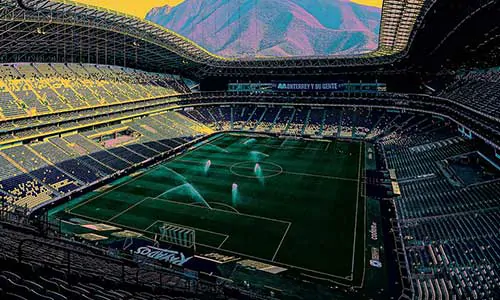
Monterrey Stadium is a modern architectural masterpiece. Its asymmetric metallic structure mimics the shape of the famous Cerro de la Silla mountain, which serves as a breathtaking backdrop visible through the open-ended design of the stadium. Opened in 2015, it is highly praised for its fan comfort, steep stands, and advanced construction.
The stadium features state-of-the-art grass-cooling systems to cope with the intense summer heat of northern Mexico. Consequently, the pitch remains in prime condition even when temperatures soar outside. For fans traveling to Monterrey, the combination of world-class stadium amenities and stunning natural scenery offers one of the most memorable tour experiences of the tournament.
United States Host Cities and Stadiums
The United States boasts the largest share of host cities, with 11 of the 16 venues located within its borders. Originally built for the National Football League (NFL), these stadiums represent some of the most technologically advanced and expensive sports facilities ever built. For the FIFA World Cup 2026, these venues are undergoing extensive modifications to ensure optimal field-of-play dimensions.
6. New York New Jersey Stadium (MetLife Stadium)
- Host City: East Rutherford, New Jersey, USA
- Tournament Capacity: 82,500
- Key Fact: Officially selected to host the grand Final of the FIFA World Cup 2026.
Located just across the Hudson River from Manhattan, New York New Jersey Stadium is a premier open-air venue. It has been selected to host the crown jewel of the tournament: the Final of the FIFA World Cup 2026 on July 19, 2026. This open-air venue is one of the busiest and highest-grossing stadiums in the world, regularly hosting major NFL contests and massive concerts.
To prepare for the final and seven other matches, groundskeepers are working tirelessly to lay and maintain a premium natural grass turf. The stadium’s location provides unparalleled transport connectivity, with direct rail links and proximity to major international airports. Fans from across the globe will gather here, creating a melting pot of cultures in the shadow of the New York City skyline.
7. Dallas Stadium (AT&T Stadium)
- Host City: Arlington, Texas, USA
- Tournament Capacity: 94,000
- Key Fact: The largest venue of the tournament, featuring a massive central hanging videoboard.
Dallas Stadium is the largest venue in the tournament by capacity, capable of expanding to hold even larger crowds. This massive indoor colosseum features a retractable roof and a legendary center-hung high-definition videoboard that stretches over 170 feet. Because of its massive capacity and luxurious amenities, it has been selected to host nine matches, including a highly anticipated semi-final.
Converting this indoor venue to host matches is a massive undertaking. Due to the lack of natural sunlight inside the dome, specialized LED grow lights and advanced ventilation systems are utilized to sustain the newly laid grass pitch. Dallas Stadium’s sheer scale ensures that every match played here will feel like an absolute spectacle.
8. Atlanta Stadium (Mercedes-Benz Stadium)
- Host City: Atlanta, Georgia, USA
- Tournament Capacity: 71,000
- Key Fact: Features an iconic pinwheel retractable roof and a massive 360-degree halo board.
Atlanta Stadium is celebrated for its revolutionary design, highlighted by an octagonal retractable roof that opens like a camera aperture. The interior is dominated by a 360-degree “halo” videoboard, the largest of its kind in the world, ensuring fans never miss a second of the action. It serves as a major hub for soccer in the United States, being the home of MLS club Atlanta United.
For the tournament, the stadium is undergoing a major transformation. Organizers are installing a sophisticated natural grass pitch over the existing artificial turf, using custom grow systems to keep the grass healthy under the closed roof when necessary. With its downtown location and excellent public transit, Atlanta is poised to be an incredibly convenient host city.
9. Los Angeles Stadium (SoFi Stadium)
- Host City: Inglewood, California, USA
- Tournament Capacity: 70,000
- Key Fact: The most expensive sports venue ever built, featuring a double-sided Infinity Screen.
As a monument to modern engineering, Los Angeles Stadium is a crowd favorite. It features a translucent canopy roof and a double-sided, oval-shaped “Infinity Screen” suspended above the field. The venue is located in Inglewood, just a short drive from LAX airport, making it highly accessible for international travelers.
To accommodate soccer matches of this scale, the stadium underwent minor structural adjustments to widen the playing field area, allowing for a standard FIFA-sized pitch. The excitement surrounding the stadium will reach its peak when it hosts the United States men’s national team’s opening match, promising a star-studded, electric atmosphere in the entertainment capital of the world.
10. Boston Stadium (Gillette Stadium)
- Host City: Foxborough, Massachusetts, USA
- Tournament Capacity: 65,000
- Key Fact: Replaced the old Foxboro Stadium which hosted matches in the 1994 World Cup.
Boston Stadium carries a strong soccer pedigree. It sits adjacent to the site of the old Foxboro Stadium, which hosted matches during the 1994 World Cup and the 1999 Women’s World Cup. The modern venue features a newly renovated north end zone, complete with a massive outdoor lighthouse landmark and a giant high-definition scoreboard.
The outdoor stadium will feature a natural grass pitch installed specifically for the tournament. Located roughly 30 miles southwest of downtown Boston, the venue is accessible via special event trains. It is set to host multiple group stage and knockout round matches, offering fans a classic New England summer sporting experience.
11. Seattle Stadium (Lumen Field)
- Host City: Seattle, Washington, USA
- Tournament Capacity: 69,000
- Key Fact: Designed to trap and amplify sound, making it one of the loudest sports venues.
Seattle is widely considered the heartbeat of soccer culture in the Pacific Northwest. Seattle Stadium, known locally as Lumen Field, is famous for its unique horseshoe-shaped design and vertical seating decks. The stadium’s structure is specifically designed to trap and amplify sound, making it one of the loudest sports venues in the world.
For the tournament, the stadium will transition from its standard synthetic turf to a state-of-the-art natural grass field. Given the region’s incredible passion for the game, matches in Seattle are expected to feature some of the most enthusiastic and vocal crowds of the entire tournament, with several fixtures scheduled for the U.S. National Team.
12. San Francisco Bay Area Stadium (Levi’s Stadium)
- Host City: Santa Clara, California, USA
- Tournament Capacity: 68,500
- Key Fact: An eco-friendly venue featuring a unique “green roof” and solar panels.
Located in Santa Clara, the heart of Silicon Valley, the San Francisco Bay Area Stadium is an eco-friendly marvel. It was the first professional sports stadium in the United States to open with a LEED Gold certification. The venue features a unique “green roof” covered in native Californian plants, along with solar panels that generate renewable energy.
The open-air design is perfectly suited for Northern California’s mild summer climate. With wide concourses and extensive digital connectivity, the stadium ensures a seamless user experience. It will host several group-stage matches, bringing the global game to one of the world’s premier technological hubs.
13. Houston Stadium (NRG Stadium)
- Host City: Houston, Texas, USA
- Tournament Capacity: 72,220
- Key Fact: A climate-controlled indoor venue with a retractable fabric roof.
Houston Stadium is a highly versatile venue with a long history of hosting major sporting events, including multiple Super Bowls and international soccer matches. It features a retractable fabric roof and a massive indoor space designed to protect fans from the intense Texas summer heat and humidity.
Like other indoor NFL venues, the stadium is replacing its artificial turf with natural grass for the tournament, utilizing advanced turf-management technology. The stadium’s location in the diverse metropolis of Houston guarantees a highly multicultural fan turnout, with local community events planning to celebrate the diverse heritages of the participating teams.
14. Kansas City Stadium (Arrowhead Stadium)
- Host City: Kansas City, Missouri, USA
- Tournament Capacity: 73,000
- Key Fact: Holds the Guinness World Record for the loudest outdoor sports crowd.
Kansas City Stadium, or Arrowhead Stadium, is a historic venue renowned for its unmatched acoustic atmosphere. According to the Guinness World Records, this open-air stadium holds the record for the loudest outdoor sporting crowd ever recorded, reaching a deafening 142.2 decibels. This intense environment will translate perfectly to the drama of the World Cup.
Located about 8.5 miles from downtown Kansas City, the venue is a classic American sports bowl with outstanding sightlines. To make matchdays smooth, the local host committee is deploying dedicated shuttle bus networks to transport fans. The venue will host several high-profile matches, including a quarterfinal on July 11.
15. Miami Stadium (Hard Rock Stadium)
- Host City: Miami, Florida, USA
- Tournament Capacity: 65,000
- Key Fact: Featuring an iconic shade canopy and scheduled to host the Bronze Final.
Miami Stadium is a premier multi-purpose venue that underwent a comprehensive $350 million renovation. This upgrade added an iconic roof canopy that shades 90% of the spectator seats while leaving the playing field open to natural sunlight. The stadium is highly experienced in hosting international soccer, regularly staging international club friendlies and Copa América matches.
Because the stadium already features a natural Bermuda grass field, groundskeepers will not need to perform a turf swap, allowing them to focus entirely on pitch grooming and cosmetic adjustments. Miami’s cultural ties to Latin America and Europe make it one of the most exciting host cities, set to host the Bronze Final (Third Place Match) on July 18, 2026.
16. Philadelphia Stadium (Lincoln Financial Field)
- Host City: Philadelphia, Pennsylvania, USA
- Tournament Capacity: 69,000
- Key Fact: Powered in part by wind turbines and over 11,000 solar panels.
Philadelphia Stadium, located within the South Philadelphia Sports Complex, is a modern open-air stadium known for its aggressive, energetic atmosphere. The venue features extensive eco-friendly systems, including wind turbines and over 11,000 solar panels that generate clean electricity to power the facilities on matchdays.
The stadium’s pitch is native grass, making the transition to World Cup play straightforward. It is exceptionally well-connected to public transit, with subway lines running directly from the historic center of Philadelphia. The host city will celebrate the United States’ Semiquincentennial (250th anniversary) in 2026, making it an incredibly historic backdrop for the international matches.
Comprehensive Stadium Comparison Table
To help you compare the venues at a glance, the following table provides a breakdown of all 16 stadiums, including their locations, tournament capacities, and unique characteristics:
| FIFA Stadium Name | Host City & Country | Capacity | Key Characteristic / Fact |
|---|---|---|---|
| Vancouver Stadium | Vancouver, Canada | 54,500 | Retractable roof, mountain views |
| Toronto Stadium | Toronto, Canada | 45,000 | Most intimate venue, urban location |
| Mexico City Stadium | Mexico City, Mexico | 83,000 | Opening match venue, iconic history |
| Guadalajara Stadium | Guadalajara, Mexico | 48,000 | Volcano-inspired architectural design |
| Monterrey Stadium | Monterrey, Mexico | 53,500 | Stunning views of Cerro de la Silla |
| New York New Jersey Stadium | New York/New Jersey, USA | 82,500 | Host of the World Cup Final |
| Dallas Stadium | Dallas, USA | 94,000 | Largest capacity, giant hanging videoboard |
| Atlanta Stadium | Atlanta, USA | 71,000 | 360-degree halo videoboard |
| Los Angeles Stadium | Los Angeles, USA | 70,000 | Most expensive sports venue ever built |
| Boston Stadium | Boston, USA | 65,000 | Classic New England venue, outdoor lighthouse |
| Seattle Stadium | Seattle, USA | 69,000 | Vertical seating, world-famous acoustics |
| San Francisco Bay Area Stadium | San Francisco, USA | 68,500 | LEED Gold certified, green roof |
| Houston Stadium | Houston, USA | 72,220 | Retractable fabric roof, climate-controlled |
| Kansas City Stadium | Kansas City, USA | 73,000 | Guinness World Record for loudest outdoor crowd |
| Miami Stadium | Miami, USA | 65,000 | Bronze final host, massive shade canopy |
| Philadelphia Stadium | Philadelphia, USA | 69,000 | Eco-friendly venue, excellent public transit |
Key Regulations for Fans Attending the FIFA World Cup 2026
Attending a match during the FIFA World Cup 2026 is a dream come true for many fans, but thorough preparation is essential. Because the stadiums are spread across vast distances and different countries, local regulations may vary. However, FIFA has established several uniform guidelines to ensure maximum safety and a smooth spectator experience.
First and foremost, the tournament uses 100% digital, mobile-only tickets. Paper tickets will not be issued, so fans must have a fully charged smartphone with the official ticketing application installed. Additionally, NFL-style security measures are standard across all US venues. Consequently, clear bags are highly recommended, and oversized bags are strictly prohibited, with no storage lockers provided on-site. Supporters are encouraged to check individual host city travel guides before heading to the matches.
For more detailed updates, fans should regularly consult the official FIFA portal and review the historical context on the Wikipedia tournament overview.
Frequently Asked Questions (FAQ)
Here are answers to some of the most common questions regarding the venues and logistics of the FIFA World Cup 2026:
Q1: What is the official start date and end date of the FIFA World Cup 2026?
The FIFA World Cup 2026 will officially kick off with the opening match on June 11, 2026, at the historic Estadio Azteca in Mexico City, Mexico. The tournament will reach its grand conclusion with the final match on July 19, 2026, at the New York New Jersey Stadium in East Rutherford, New Jersey, USA.
Q2: Why are some stadiums renamed for the FIFA World Cup 2026?
FIFA enforces a strict “clean stadium” commercial policy. Consequently, any stadium that has corporate naming rights (such as MetLife Stadium, AT&T Stadium, or SoFi Stadium) must temporarily drop its sponsor’s name and adopt a neutral, city-based tournament name for the duration of the World Cup.
Q3: Which stadium will host the FIFA World Cup 2026 Final?
The final of the FIFA World Cup 2026 will be played at the New York New Jersey Stadium (MetLife Stadium) in East Rutherford, New Jersey. The venue is located just outside of New York City and can comfortably accommodate over 82,000 fans.
Q4: What is the largest stadium by capacity in the tournament?
Dallas Stadium (AT&T Stadium) in Arlington, Texas, is the largest venue of the tournament, boasting a tournament capacity of approximately 94,000. It will host nine matches throughout the tournament, including a semi-final.
Q5: How does the 48-team expansion affect stadium scheduling?
The expansion from 32 to 48 teams increases the total number of matches from 64 to 104. To accommodate this expansion, the 16 host stadiums will host more games than in past tournaments. The schedule is carefully structured into regional clusters (West, Central, and East) to minimize travel fatigue for both the squads and traveling supporters.
Q6: Will all stadiums use natural grass for the FIFA World Cup 2026?
Yes. FIFA regulations strictly mandate that all matches must be played on high-quality natural grass. Venues that normally feature artificial turf (such as Vancouver, Toronto, Atlanta, Dallas, Los Angeles, Boston, Seattle, and Houston) are undergoing sophisticated temporary grass installations, employing advanced grow lights and pitch-management technology to maintain optimal field conditions for the FIFA World Cup 2026.
Conclusion
The FIFA World Cup 2026 is poised to set new benchmarks for sports entertainment, and the 16 host stadiums are the perfect stages for this historic spectacle. From the legendary altitude of Mexico City’s Estadio Azteca to the cutting-edge luxury of Los Angeles’ SoFi Stadium and the expanded intimacy of Toronto Stadium, each venue offers a unique chapter in what will be an unforgettable global celebration of football.
If you are planning to attend, make sure to stay updated on travel guidelines, ticket confirmations, and venue-specific bag policies. Explore the official ticketing platforms and plan your transport routes early to enjoy a smooth, historic, and breathtaking experience of the beautiful game!