FIFA World Cup 2026 Schedule: Match Dates, Groups and Kick-Off Times
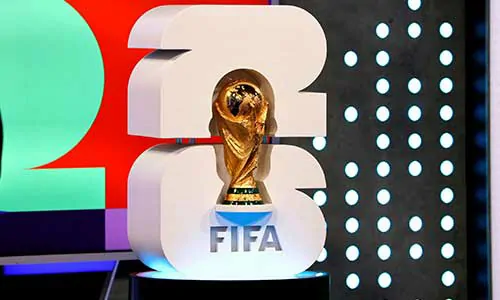
The global football landscape is preparing for a sporting event of unprecedented scale as North America gears up to host the FIFA World Cup 2026. For the first time in the history of the sport, three nations—the United States, Canada, and Mexico—will join forces as co-hosts to stage the planet’s most celebrated tournament. In addition to this unique tri-national format, the competition is undergoing a massive expansion, growing from the traditional 32-team setup to a historic 48-team roster. Consequently, fans will be treated to a staggering 104 matches played over 39 action-packed days, making the FIFA World Cup 2026 the largest and most diverse tournament ever organized.
For football enthusiasts, staying on top of the sprawling schedule is essential. Whether you are planning to attend games in person across one of the 16 state-of-the-art host cities, or organizing watch parties from the comfort of your living room, having an accurate guide is crucial. This comprehensive resource provides everything you need to know about the FIFA World Cup 2026, including official match dates, group alignments, stadium locations, and kick-off times. Ultimately, this tournament promises to deliver historic moments and rewrite the record books of global football.
Table of Contents
- The Expanded Format of the FIFA World Cup 2026
- Official Stadiums and Host Cities of the FIFA World Cup 2026
- FIFA World Cup 2026 Groups: The Full Breakdown
- FIFA World Cup 2026 Complete Match Dates & Key Milestones
- Highlight Opening Matches and the Grand Finale
- Kick-Off Times & Global Broadcasting: Where to Watch
- Frequently Asked Questions (FAQ)
- Conclusion & Final Thoughts
The Expanded Format of the FIFA World Cup 2026
The FIFA World Cup 2026 represents a monumental shift in the architecture of international football. Historically, the tournament has evolved from a modest 13-team event in 1930 to the 32-team spectacle that defined the game since 1998. However, FIFA’s decision to expand the bracket to 48 nations marks the most substantial modernization in generations, aimed at democratizing access to the world stage.
Under this groundbreaking system, the 48 qualified countries are divided into 12 distinct groups of four teams. This format ensures that every team plays a minimum of three group-stage matches, maintaining the competitive integrity of the early phase. To accommodate the expanded field, the knockout phase will now begin with a brand-new Round of 32. Consequently, the top two teams from each of the 12 groups will automatically qualify for the knockouts, accompanied by the eight best third-placed finishers across all groups.
This expansion has several profound implications for global football:
- Enhanced Representation: Historically underrepresented regions—particularly Africa, Asia, and North America—have received more direct qualification spots, enriching the tournament’s global diversity.
- More Matches, More Drama: The overall number of matches rises from 64 to 104, creating a massive feast of football for viewers worldwide.
- A Tougher Path to Glory: Ultimately, the team that raises the iconic trophy on July 19, 2026, will have to navigate eight matches instead of the traditional seven, testing the absolute limits of squad depth, tactical adaptability, and endurance.
For more detailed insights into the qualifying pathways and official tournament regulations, you can check the official FIFA website.
Official Stadiums and Host Cities of the FIFA World Cup 2026
Staging a tournament of this magnitude requires world-class infrastructure. Fortunately, the joint bid of the United States, Canada, and Mexico leverages some of the most advanced sports arenas on Earth. A total of 16 host cities have been chosen to stage the 104 games, each offering a unique cultural backdrop and elite facilities.
The matches are geographically distributed across three main regions: Western, Central, and Eastern. This division was strategically designed by organizers to minimize travel times and facilitate smoother logistical transitions for teams and fans alike. Below is the official list of stadiums and cities hosting the FIFA World Cup 2026:
| City | Stadium Name (FIFA Branded Name) | Capacity (Approx.) | Country |
|---|---|---|---|
| New York/New Jersey | New York New Jersey Stadium (MetLife Stadium) | 82,500 | United States |
| Dallas | Dallas Stadium (AT&T Stadium) | 94,000 | United States |
| Kansas City | Kansas City Stadium (Arrowhead Stadium) | 76,000 | United States |
| Houston | Houston Stadium (NRG Stadium) | 72,000 | United States |
| Atlanta | Atlanta Stadium (Mercedes-Benz Stadium) | 71,000 | United States |
| Los Angeles | Los Angeles Stadium (SoFi Stadium) | 70,000 | United States |
| Philadelphia | Philadelphia Stadium (Lincoln Financial Field) | 69,000 | United States |
| Seattle | Seattle Stadium (Lumen Field) | 69,000 | United States |
| San Francisco Bay Area | San Francisco Bay Area Stadium (Levi’s Stadium) | 68,500 | United States |
| Boston | Boston Stadium (Gillette Stadium) | 65,000 | United States |
| Miami | Miami Stadium (Hard Rock Stadium) | 64,700 | United States |
| Vancouver | Vancouver Stadium (BC Place) | 54,000 | Canada |
| Toronto | Toronto Stadium (BMO Field) | 45,000 | Canada |
| Mexico City | Mexico City Stadium (Estadio Azteca) | 83,000 | Mexico |
| Monterrey | Monterrey Stadium (Estadio BBVA) | 53,500 | Mexico |
| Guadalajara | Guadalajara Stadium (Estadio Akron) | 48,000 | Mexico |
Each of these venues is undergoing customized renovations, including installing high-grade natural grass pitches to comply with FIFA’s strict playing surface regulations. For instance, Dallas Stadium features a retractable roof and cutting-edge video board, making it a spectacular venue for high-stakes matches, including one of the semi-finals. Meanwhile, the historic Mexico City Stadium (Estadio Azteca) will go down in the record books as the first stadium to host matches in three separate World Cups, having previously witnessed the legendary triumphs of Pelé in 1970 and Diego Maradona in 1986.
FIFA World Cup 2026 Groups: The Full Breakdown
The official draw for the FIFA World Cup 2026 has established a series of highly competitive groups, setting the stage for mouth-watering continental clashes. By expanding to 12 groups, the tournament introduces intriguing new dynamics, with traditional powerhouses colliding with surging underdogs. Here is the official breakdown of the 12 groups:
- Group A: Mexico, South Africa, South Korea, Czechia
- Group B: Canada, Bosnia and Herzegovina, Qatar, Switzerland
- Group C: Brazil, Morocco, Haiti, Scotland
- Group D: United States, Paraguay, Australia, Turkiye
- Group E: Germany, Curacao, Cote d’Ivoire, Ecuador
- Group F: Netherlands, Japan, Sweden, Tunisia
- Group G: Belgium, Egypt, Iran, New Zealand
- Group H: Spain, Cabo Verde, Saudi Arabia, Uruguay
- Group I: France, Senegal, Iraq, Norway
- Group J: Argentina, Algeria, Austria, Jordan
- Group K: Portugal, Congo DR, Uzbekistan, Colombia
- Group L: England, Croatia, Ghana, Panama
In Group C, Brazil faces a stern test against Morocco, who shocked the world by reaching the semi-finals of the 2022 tournament. Additionally, Scotland and Haiti add great competitive depth, ensuring that every point in this group will be fiercely contested. On the other hand, Group D features the co-hosts, the United States, alongside a young and highly talented Turkiye squad, a resilient Australia, and a tough Paraguay team, making it one of the most balanced groups in the opening phase.
Furthermore, Group L promises intense drama as England renewing their rivalry with Croatia, alongside the physical presence of Ghana and the tactical organization of Panama. This expanded variety of matchups highlights the global nature of the tournament, offering fans unique tactical battles that have rarely been seen on the international stage.
FIFA World Cup 2026 Complete Match Dates & Key Milestones
The scheduling of a 104-match tournament requires meticulous planning. FIFA has structured the calendar to minimize travel stress while ensuring an optimal rest cycle for athletes. The tournament will officially commence on Thursday, June 11, 2026, and culminate with the grand final on Sunday, July 19, 2026.
Below is the structured breakdown of the tournament’s phases and corresponding dates:
| Tournament Phase | Start Date | End Date | Number of Matches |
|---|---|---|---|
| Group Stage | June 11, 2026 | June 27, 2026 | 72 matches |
| Round of 32 | June 28, 2026 | July 3, 2026 | 16 matches |
| Round of 16 | July 4, 2026 | July 7, 2026 | 8 matches |
| Quarter-finals | July 9, 2026 | July 11, 2026 | 4 matches |
| Semi-finals | July 14, 2026 | July 15, 2026 | 2 matches |
| Third-Place Playoff | July 18, 2026 | July 18, 2026 | 1 match |
| Final | July 19, 2026 | July 19, 2026 | 1 match |
During the group stage, matches will be played daily, with up to four fixtures scheduled per day to keep the momentum high. Consequently, fans will experience an uninterrupted celebration of football. After the group stage concludes on June 27, the drama intensifies with the single-elimination Round of 32 starting on June 28, leaving no room for error as teams vie for a spot in the later rounds.
Highlight Opening Matches and the Grand Finale
Because there are three co-hosting nations, the tournament will feature historic opening matches in each host country. The grand journey begins on Thursday, June 11, 2026, at the legendary Estadio Azteca in Mexico City. The opening match will feature co-hosts Mexico squaring off against South Africa in Group A. This fixture is expected to set an energetic tone for the rest of the tournament.
Subsequently, on Friday, June 12, 2026, Canada and the United States will kick off their home campaigns. Canada will make its debut at Toronto Stadium (BMO Field) against Bosnia and Herzegovina in a highly anticipated Group B encounter. Later that evening, the United States Men’s National Team (USMNT) will take the pitch at the state-of-the-art Los Angeles Stadium (SoFi Stadium) in Inglewood, California, going head-to-head with Paraguay in a crucial Group D opener.
The journey ends on Sunday, July 19, 2026, at MetLife Stadium in East Rutherford, New Jersey (branded as New York New Jersey Stadium for the event). This 82,500-capacity arena will host the grand final, where the two surviving nations will compete for the ultimate prize in global sports, bringing a spectacular close to 39 days of elite competition.
For more details on the historical significance of these venues and their past matches, you can explore the Wikipedia guide to the 2026 tournament.
Kick-Off Times & Global Broadcasting: Where to Watch
Because the tournament spans multiple time zones across North America—including Pacific, Mountain, Central, and Eastern Time—broadcast schedules have been meticulously designed to maximize viewership in Europe, South America, Asia, Africa, and the host nations. Organizers have prioritized convenient time slots to ensure fans around the world can tune in without disruption.
Generally, group-stage matches are scheduled to kick off at several staggered times:
- Morning / Midday slots: 3:00 PM EST (8:00 PM BST / 12:00 AM next day in Gulf regions)
- Afternoon slots: 4:00 PM EST and 7:00 PM EST
- Evening slots: 10:00 PM EST (3:00 AM next day BST)
For fans looking to watch the matches live:
- In the United States: Fox Sports will handle English-language broadcasting, while Telemundo and Universo will offer comprehensive Spanish-language coverage, with streaming available on Peacock.
- In Canada: CTV, TSN, and RDS will provide multi-platform coverage of all 104 matches.
- In the United Kingdom: The BBC and ITV will share broadcasting rights, offering extensive free-to-air coverage.
- In Australia: SBS and SBS On Demand will provide extensive coverage, tailored to Australian Eastern Standard Time (AEST).
In addition, major international broadcasters in South America, Africa, and Asia will offer local-language coverage. Consequently, regardless of your location, you will have easy access to follow every pass, tackle, and spectacular goal of the tournament.
Frequently Asked Questions (FAQ)
When does the FIFA World Cup 2026 start and end?
The tournament officially begins with the opening match on Thursday, June 11, 2026, and concludes with the grand final on Sunday, July 19, 2026.
How many teams are participating in the FIFA World Cup 2026?
A record-breaking 48 national teams are participating, representing an expansion from the previous 32-team format used in Qatar 2022.
Where will the FIFA World Cup 2026 final be played?
The final match is scheduled to be played on July 19, 2026, at MetLife Stadium in East Rutherford, New Jersey (officially branded as New York New Jersey Stadium).
How does the new group stage format work?
The 48 teams are divided into 12 groups of four. The top two teams from each group, along with the eight best third-placed teams across all groups, advance to the Round of 32.
Which countries are hosting the FIFA World Cup 2026?
The tournament is co-hosted by three North American countries: the United States, Canada, and Mexico.
Where can fans stream the FIFA World Cup 2026 matches online?
In the United States, matches can be streamed on Peacock (Spanish) and the Fox Sports App (English). In Canada, TSN and CTV will offer streaming, while SBS On Demand will broadcast matches in Australia, and BBC iPlayer/ITVX will serve the United Kingdom.
Conclusion & Final Thoughts
The FIFA World Cup 2026 is set to be a landmark event in sporting history, showcasing the beautiful game on an unprecedented scale. With 48 teams, 16 state-of-the-art host cities, and a newly structured 104-match format, this tournament promises to captivate billions of fans worldwide. From the electric opening matches in Mexico City, Toronto, and Los Angeles to the highly anticipated final in New York/New Jersey, the tournament will provide a historic platform for the world’s greatest talents to shine.
As the countdown continues, excitement is building across the globe. Teams are finalizing their strategies, and fans are making their travel arrangements to be part of this footballing feast. Which national team do you believe has the depth and quality to go all the way and lift the trophy? Let us know your predictions in the comments below, and don’t forget to bookmark this guide to keep the complete match schedule, groups, and kick-off times at your fingertips!