FIFA World Cup 2026 Location and Viewing Guide
The global football community is preparing for a historic milestone as the FIFA World Cup 2026 approaches. For the first time in the tournament’s history, three nations—the United States, Canada, and Mexico—will co-host the event. In addition, the tournament is expanding from 32 to 48 teams, meaning fans will experience more matches, more goals, and more competitive action than ever before. Navigating this vast tournament can be challenging with games spread across an entire continent. Therefore, having a comprehensive guide to stadium locations, broadcast channels, and key dates is essential for any football enthusiast.
Whether you are planning to travel across North America to witness the tournament live or preparing your living room for weeks of elite football coverage, keeping track of key details is crucial. This complete FIFA World Cup 2026 location and viewing guide provides all the necessary information. From stadium details to streaming networks, we have compiled a detailed roadmap to help you navigate and enjoy every single moment of the action.
Table of Contents
- What Makes the FIFA World Cup 2026 Historic?
- Host Countries and Cities for the FIFA World Cup 2026
- Overview of Selected Stadiums and Capacities
- FIFA World Cup 2026 Match Schedule and Key Dates
- How to Watch: The FIFA World Cup 2026 Viewing Guide
- Essential Tips for Attending the FIFA World Cup 2026
- Final Thoughts on the FIFA World Cup 2026
- Frequently Asked Questions about the FIFA World Cup 2026
What Makes the FIFA World Cup 2026 Historic?
The upcoming tournament represents a monumental shift in the structure of international football. Historically, the tournament has accommodated 32 teams since the 1998 edition in France. However, the FIFA World Cup 2026 will welcome 48 nations, reflecting FIFA’s goal of broader global representation. Consequently, the total number of matches will jump from 64 to 104, offering fans an unprecedented festival of football over a 39-day period.
Furthermore, hosting the tournament across three vast nations presents unique logistical challenges and triumphs. While Mexico has hosted the tournament twice before (in 1970 and 1986) and the United States hosted in 1994, this will be Canada’s first time hosting men’s World Cup matches. In addition, the geographical spread spans four different time zones, meaning kickoff times and travel routes will require careful coordination for teams and spectators alike.
As a result of these changes, the competitive format has also evolved. The teams will be divided into 12 groups of four. The top two teams from each group, along with the eight best third-place finishers, will advance to a new Round of 32 knockout stage. This adjustment adds an extra layer of drama, making every group-stage match highly competitive as teams vie for a spot in the extended single-elimination bracket.
Host Countries and Cities for the FIFA World Cup 2026
To minimize travel and facilitate smoother operations, FIFA has organized the 16 host cities into three geographic regions: East, Central, and West. This division helps teams and fans limit long-distance transit during the initial group stages. Let us explore the host cities and venues across the United States, Mexico, and Canada that will bring the FIFA World Cup 2026 to life.
The United States: The Core Venues
The United States boasts 11 of the 16 host cities, featuring some of the most technologically advanced sporting venues in the world. On one hand, historic arenas like the Rose Bowl are replaced by modern architectural marvels like SoFi Stadium in Los Angeles and AT&T Stadium in Dallas. On the other hand, classic East Coast venues like MetLife Stadium in New Jersey will host some of the most critical stages of the tournament, including the final match.
The selected U.S. cities and their respective venues include:
- Atlanta: Mercedes-Benz Stadium (Retractable roof, major hub in the East region)
- Boston: Gillette Stadium (Located in Foxborough, a historic sporting venue)
- Dallas: AT&T Stadium (An iconic indoor arena in Arlington, Texas, set to host a semifinal match)
- Houston: NRG Stadium (Equipped with a retractable roof, ideal for summer conditions)
- Kansas City: GEHA Field at Arrowhead Stadium (Famous for its passionate sports atmosphere)
- Los Angeles: SoFi Stadium (A state-of-the-art stadium in Inglewood, California)
- Miami: Hard Rock Stadium (An open-air stadium hosting the third-place play-off)
- New York/New Jersey: MetLife Stadium (Located in East Rutherford, designated venue for the tournament finale)
- Philadelphia: Lincoln Financial Field (Conveniently located on the East Coast with massive capacity)
- San Francisco Bay Area: Levi’s Stadium (Situated in Santa Clara, California, representing Silicon Valley)
- Seattle: Lumen Field (Renowned for its incredible acoustics and passionate fan base)
Mexico: Rich Football Heritage
Mexico brings an unparalleled footballing heritage to the FIFA World Cup 2026. Having previously witnessed legends like Pelé and Diego Maradona lift the trophy on its soil, the country is set to create history once more. Three cities will host matches, each representing a distinct region of the country’s footballing culture.
- Mexico City: Estadio Azteca (The historic venue will host the tournament’s opening match, making it the first stadium to host matches in three separate World Cups)
- Guadalajara: Estadio Akron (A modern, aesthetically pleasing stadium located in Zapopan)
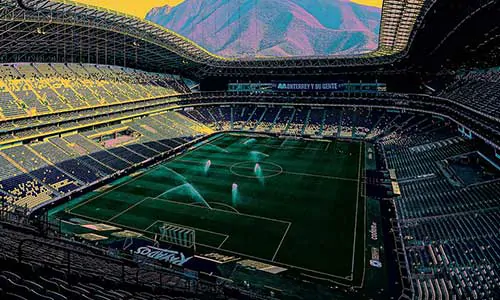
- Monterrey: Estadio BBVA (Known for its scenic backdrop of the Cerro de la Silla mountain)
Canada: Historic Debuts
Canada is preparing to make its mark as a co-host of the prestigious tournament. By hosting games in two of its major cosmopolitan centers, the nation aims to showcase its diversity and growing passion for football. Both host cities are equipped with highly capable stadiums that have hosted major domestic and international sporting events.
- Vancouver: BC Place (A beautifully renovated stadium featuring a retractable roof and situated on the Pacific coast)
- Toronto: BMO Field (A vibrant soccer-specific stadium located at Exhibition Place, expanding its capacity for the tournament)
Overview of Selected Stadiums and Capacities
To help you visualize the scale of the venues hosting the FIFA World Cup 2026, here is a detailed breakdown of the stadiums, their locations, and their estimated tournament capacities. These venues are preparing to welcome millions of spectators from around the globe.
| Host City | Stadium Name | Country | Estimated Capacity |
|---|---|---|---|
| Mexico City | Estadio Azteca | Mexico | 87,523 |
| New York/New Jersey | MetLife Stadium | United States | 82,500 |
| Dallas | AT&T Stadium | United States | 80,000 |
| Los Angeles | SoFi Stadium | United States | 70,240 |
| Atlanta | Mercedes-Benz Stadium | United States | 71,000 |
| Vancouver | BC Place | Canada | 54,500 |
| Toronto | BMO Field | Canada | 45,736 |
FIFA World Cup 2026 Match Schedule and Key Dates
Planning your viewing calendar requires knowing when the most critical games are scheduled. The action kicks off on June 11, 2026, and concludes with the crowning of the world champion on July 19, 2026. Therefore, understanding the tournament’s timeline is crucial for organizing watch parties or travel schedules.
The group stage matches will begin immediately after the opening ceremony on June 11, running until June 27, 2026. This period will be characterized by a high volume of matches daily, as 48 teams battle in their respective groups. Following the group stage, the newly introduced Round of 32 knockout matches will take place from June 28 to July 3, 2026. This stage represents a high-stakes, single-elimination phase where half of the qualified teams will be sent home.
Subsequently, the remaining teams will progress through the traditional knockout phases. The Round of 16 matches are scheduled between July 4 and July 7, followed by the intense Quarterfinal matchups from July 9 to July 11, 2026. After that, the world will watch the Semifinal matches on July 14 and July 15, hosted in Atlanta and Dallas, respectively. Finally, after the third-place play-off on July 18 in Miami, the grand finale of the FIFA World Cup 2026 will take place on Sunday, July 19, at MetLife Stadium in New Jersey.
How to Watch: The FIFA World Cup 2026 Viewing Guide
With 104 matches on the schedule, securing reliable access to live broadcasts is paramount for fans. Because the tournament spans multiple countries, broadcasting rights have been distributed to various major networks across different regions. This section provides a detailed breakdown of where and how to watch the matches live, whether you prefer traditional television or online streaming services.
Watching in the United States
For viewers residing in the United States, English-language broadcast rights are held exclusively by FOX Sports. Consequently, the network will divide the 104 matches of the FIFA World Cup 2026 between its main broadcast station, FOX, and its cable sports channel, FS1. Specifically, FOX is scheduled to air 70 matches, focusing on high-profile group stages and major knockout rounds, while FS1 will broadcast the remaining 34 matches.
On the other hand, Spanish-language coverage in the United States is managed by NBCUniversal. Fans can watch Spanish broadcasts on television through Telemundo, which will carry 92 matches, and Universo, which will broadcast 12 matches. Additionally, streaming enthusiasts can access every single match in Spanish live via Peacock, NBC’s dedicated streaming platform. This ensures comprehensive coverage for diverse audiences across the country.
Watching in Canada
In Canada, Bell Media holds the official broadcasting rights for the tournament. Consequently, fans can catch the live action on TSN (The Sports Network) and CTV. TSN is scheduled to provide live coverage for all 104 matches of the tournament, while CTV will broadcast select high-profile games during prime-time hours. For French-speaking fans in Canada, RDS will offer full live coverage of the tournament with expert commentary.
International Broadcasters
If you are located outside North America, international broadcasting rights are distributed through regional networks partnering with FIFA. For instance, viewers in the United Kingdom can watch the matches live on the BBC and ITV, which traditionally share broadcasting responsibilities for major international tournaments. In other regions, localized sports networks will provide live coverage to ensure global access.
Furthermore, digital platforms have taken on a more significant role. FIFA has established partnerships with digital video platforms to provide short-form content, match highlights, and select live-streaming options in specific regions. For up-to-date and region-specific listings, you can consult the official media guide on the FIFA Official Website or check with local sports providers as the tournament draws closer.
Streaming and Cord-Cutting Options
For fans who have moved away from traditional cable television, several live TV streaming services offer access to FOX, FS1, Telemundo, and Universo. Popular services include Fubo TV, YouTube TV, Hulu + Live TV, and DirecTV Stream. Many of these platforms offer free trials, which can be strategically utilized during the peak weeks of the tournament. However, ensuring a stable, high-speed internet connection is highly recommended to enjoy high-definition streams without interruption.
Essential Tips for Attending the FIFA World Cup 2026
Attending the tournament in person requires meticulous planning, especially given the vast distances between host cities. Travelling from Vancouver to Mexico City, for example, involves crossing international borders and adjusting to different climates. Therefore, early preparation is the key to ensuring a smooth and enjoyable tournament experience.
First and foremost, secure your travel documents well in advance. Because the FIFA World Cup 2026 takes place across three nations, you may need specific visas or entry permits depending on your nationality. Furthermore, booking flights and accommodation early is highly recommended, as prices are expected to rise significantly as the opening match approaches. Consider staying in designated hub cities and using public transit or official shuttle services to reach the stadiums, as parking at venues will be limited and expensive.
In addition, stay informed about official Fan Zones and ticketing updates. FIFA operates official Fan Festivals in each host city, providing live match screenings, local food, and entertainment for fans who do not have stadium tickets. For reliable ticketing information and authorized resellers, always refer to trustworthy portals like FOX Sports Coverage or the official FIFA ticketing app to avoid scams and counterfeit tickets.
Final Thoughts on the FIFA World Cup 2026
The FIFA World Cup 2026 is set to be an extraordinary celebration of football, uniting millions of fans across the globe. With an expanded field of 48 teams, historic venues, and unprecedented coverage, this tournament promises unforgettable drama both on and off the pitch. Whether you are traveling to support your country in person or planning to watch from the comfort of your home, early preparation will help ensure you get the absolute most out of this historic sporting event.
Do not wait until the opening whistle to prepare your setup. Share this guide with your fellow football fans, plan your viewing schedules, and get ready for a month of world-class action. What matches are you most excited to watch? Leave a comment below and join the global conversation as we count down to kick-off!
Frequently Asked Questions about the FIFA World Cup 2026
Q1: Where will the FIFA World Cup 2026 be held?
A1: The tournament will be co-hosted by three countries: the United States, Canada, and Mexico. Matches will be played across 16 designated host cities, with 11 venues in the US, 3 in Mexico, and 2 in Canada.
Q2: How can I watch the FIFA World Cup 2026 live?
A2: In the United States, you can watch English broadcasts on FOX and FS1, or Spanish coverage on Telemundo, Universo, and streaming on Peacock. In Canada, coverage is available on TSN, CTV, and RDS. International viewers can check local listings or partner broadcasters like BBC and ITV in the UK.
Q3: When does the FIFA World Cup 2026 start and end?
A3: The tournament starts on June 11, 2026, with the opening ceremony and match at Estadio Azteca in Mexico City. The final match will be held on July 19, 2026, at MetLife Stadium in East Rutherford, New Jersey.
Q4: How many teams are playing in the FIFA World Cup 2026?
A4: For the first time, the tournament will feature 48 teams, expanding from the traditional 32-team format. This expansion brings the total number of matches to 104 across the tournament.
Q5: Where will the FIFA World Cup 2026 final match take place?
A5: The final match will take place on July 19, 2026, at MetLife Stadium in East Rutherford, New Jersey (representing the New York/New Jersey area).
Q6: How do I buy tickets for the matches?
A6: Official tickets must be purchased through FIFA’s official ticketing portal. Fans are encouraged to register for ticket updates on the official website to receive notifications about sales phases and random selection draws.