Comparing FIFA World Cup 2026 Stadiums: Facilities, Capacity and Fan Experience
The grandest stage in international sports is set for a historic transformation with the arrival of the FIFA World Cup 2026. For the first time in tournament history, three nations—the United States, Mexico, and Canada—will unite to host the matches. As the first tournament to feature an expanded roster of 48 teams playing 104 matches, the FIFA World Cup 2026 represents a monumental shift in how global sports entertainment is structured. The success of this sprawling event depends heavily on the capabilities of its 16 host stadiums, which range from historic football sanctuaries to modern technological marvels.
To help you navigate this massive tournament, this article compares the facilities, seating capacities, and overall fan experience across the selected venues. Whether you are planning a trip to see your national team or simply following the games from afar, understanding the unique features of these stadiums will enrich your tournament experience.
Table of Contents
- The Historic Scale of the FIFA World Cup 2026 Host Venues
- Top FIFA World Cup 2026 Stadiums by Seating Capacity
- Head-to-Head Comparison: MetLife vs. Estadio Azteca vs. SoFi Stadium
- Evaluating Fan Experience across different FIFA World Cup 2026 Host Cities
- Highlighting Unique Facilities of Selected FIFA World Cup 2026 Stadiums
- Frequently Asked Questions (FAQ) about the FIFA World Cup 2026 Stadiums
- Conclusion and Final Thoughts
The Historic Scale of the FIFA World Cup 2026 Host Venues
When analyzing the layout of the FIFA World Cup 2026, one cannot ignore the vast geographical footprint of the host countries. Spanning four distinct time zones and three sovereign states, this tournament demands unprecedented travel logistics from teams and fans alike. The host venues are divided into three distinct regional zones—East, Central, and West—to help minimize travel fatigue, though the scale remains staggering.
The selected stadiums reflect a rich diversity in architecture, design intent, and sporting heritage. On one hand, you have legendary structures that have witnessed iconic moments in football history. On the other hand, you have state-of-the-art multi-purpose arenas designed primarily for American football but adapted specifically for international soccer. Consequently, the FIFA World Cup 2026 will test the logistical networks of all three host nations, creating a unique environment for live spectators.
Furthermore, because many of these stadiums usually feature artificial playing surfaces, extensive preparations are underway to install advanced natural grass systems. FIFA has strict requirements regarding turf quality, which means arenas like Atlanta’s Mercedes-Benz Stadium and Seattle’s Lumen Field must temporarily transition their playing surfaces. This commitment to pitch quality highlights the high standards set for the competition.
Top FIFA World Cup 2026 Stadiums by Seating Capacity
Seating capacity is a crucial metric for evaluating the scale of each host venue. It determines not only how many fans can experience the action live but also the overall intensity of the stadium’s atmosphere. Knowing these differences is crucial for fans planning their journeys across the FIFA World Cup 2026.
The table below provides a comprehensive comparison of all 16 host stadiums, showcasing their official tournament names, local names, host cities, and estimated seating capacities configured for the games:
| Official FIFA Name | Local Stadium Name | Host City & Country | Estimated Seating Capacity |
|---|---|---|---|
| Dallas Stadium | AT&T Stadium | Arlington, USA | 94,000 |
| New York New Jersey Stadium | MetLife Stadium | East Rutherford, USA | 82,500 |
| Kansas City Stadium | Arrowhead Stadium | Kansas City, USA | 73,000 |
| Mexico City Stadium | Estadio Azteca | Mexico City, Mexico | 72,766 |
| Houston Stadium | NRG Stadium | Houston, USA | 72,220 |
| Los Angeles Stadium | SoFi Stadium | Inglewood, USA | 70,240 |
| Philadelphia Stadium | Lincoln Financial Field | Philadelphia, USA | 69,000 |
| Seattle Stadium | Lumen Field | Seattle, USA | 69,000 |
| San Francisco Bay Area Stadium | Levi’s Stadium | Santa Clara, USA | 68,500 |
| Atlanta Stadium | Mercedes-Benz Stadium | Atlanta, USA | 67,382 |
| Miami Stadium | Hard Rock Stadium | Miami Gardens, USA | 64,767 |
| Boston Stadium | Gillette Stadium | Foxborough, USA | 63,815 |
| Monterrey Stadium | Estadio BBVA | Guadalupe, Mexico | 50,113 |
| BC Place Vancouver | BC Place | Vancouver, Canada | 48,821 |
| Guadalajara Stadium | Estadio Akron | Zapopan, Mexico | 44,330 |
| Toronto Stadium | BMO Field | Toronto, Canada | 44,315 |
This physical landscape highlights how seating capacities for the FIFA World Cup 2026 will shape match atmospheres. Dallas Stadium leads the pack, boasting the potential to host massive crowds of over 90,000 spectators. Meanwhile, Toronto Stadium stands as the most intimate venue, ensuring that fans are exceptionally close to the action on the pitch.
On the other hand, the smaller arenas during the FIFA World Cup 2026 will bring an entirely different dynamic. For instance, venues with capacities in the 40,000 to 50,000 range, such as Estadio BBVA and BC Place, are highly praised for their excellent sightlines and compact, energetic fan interactions.
Head-to-Head Comparison: MetLife vs. Estadio Azteca vs. SoFi Stadium
Three venues stand out as the crown jewels of the tournament, representing different eras of sporting culture and architecture. Let us compare New York New Jersey Stadium (MetLife), Mexico City Stadium (Estadio Azteca), and Los Angeles Stadium (SoFi) to see how they stack up in terms of legacy, design, and user experience.
New York New Jersey Stadium (MetLife) – The Final Venue of the FIFA World Cup 2026
Located in East Rutherford, New Jersey, MetLife Stadium is a colossal open-air arena that normally serves as the home to both the New York Giants and New York Jets. Designed with a massive open-air bowl configuration, it will host the ultimate clash of the FIFA World Cup 2026: the final match scheduled for July 19, 2026.
Its exterior is lined with customizable aluminum louvers, allowing the stadium to project neutral colors depending on the event. Inside, the design prioritizes raw seating capacity and multi-level corporate hospitality. However, because it relies on public transportation lines from Manhattan that require transfers, traveling to this stadium requires careful route planning during high-traffic matchdays.
Mexico City Stadium (Estadio Azteca) – The Sacred Ground of the FIFA World Cup 2026
Estadio Azteca is a monument of footballing history. It is the first stadium to host matches in three separate World Cup editions, having previously hosted legendary finals in 1970 and 1986. With deep-rooted history, this venue adds unparalleled prestige to the FIFA World Cup 2026 and has been selected to host the opening match of the tournament.
Sitting more than 2,200 meters above sea level, the stadium presents a physical challenge to visiting players while offering an incredibly loud, enclosed atmosphere for spectators. Extensive renovations are being finalized to modernize the hospitality areas and press box facilities, ensuring this historic venue meets modern FIFA criteria without losing its historic soul.
Los Angeles Stadium (SoFi Stadium) – Cutting-Edge Innovation for the FIFA World Cup 2026
Located in Inglewood, California, SoFi Stadium represents the pinnacle of modern architectural luxury. This indoor-outdoor wonder features a transparent, canopy-style roof and a dual-sided, 120-yard oval video board called “The Infinity Screen.” As a result, this venue is set to provide an ultra-modern aesthetic to the FIFA World Cup 2026.
Because American football fields are narrower than soccer pitches, some modifications to the seating corners near the touchlines are required. Despite this adjustment, the sheer scale of the stadium’s premium suites, surrounding tech-infused parklands, and excellent public plaza space makes it a highly anticipated destination for international fans.
Evaluating Fan Experience across different FIFA World Cup 2026 Host Cities
The overall fan experience extends far beyond the duration of the 90-minute match. It encompasses how easily a fan can travel to the venue, the local weather during the summer months, and the quality of amenities inside the concourses.
Transportation options vary significantly across the FIFA World Cup 2026 cities. Urban layouts like Toronto’s Exhibition Place and Vancouver’s BC Place offer direct public transit and walkable access to nearby downtown districts. In contrast, massive suburban complexes like Boston Stadium in Foxborough and Kansas City Stadium rely heavily on centralized parking zones, dedicated shuttle networks, and rideshare hubs, which can lead to traffic congestion during peak hours.
In-Stadium Technology and Premium Hospitality in the FIFA World Cup 2026
In addition, connectivity remains a top priority for the FIFA World Cup 2026. Most stadiums built or renovated in the last decade feature high-density Wi-Fi 6 or 5G systems, ensuring that fans can upload photos, check live match stats, and access digital ticketing without frustrating delays. This digital integration is a major upgrade compared to previous tournaments.
Premium hospitality is another area where these host venues excel. From field-level club lounges that let spectators stand feet away from the players to climate-controlled luxury suites, the premium seating options are highly sophisticated. These high-end amenities are particularly prominent in newer arenas like Mercedes-Benz Stadium in Atlanta and AT&T Stadium in Dallas.
Highlighting Unique Facilities of Selected FIFA World Cup 2026 Stadiums
Several other host stadiums stand out for their legendary features in the FIFA World Cup 2026. Here is a look at what makes some of these selected stadiums particularly unique:
- Dallas Stadium (AT&T Stadium): Famous for its retractable roof and one of the largest high-definition video screens in the world hanging directly above the pitch, this venue will host nine matches, including a high-profile semi-final.
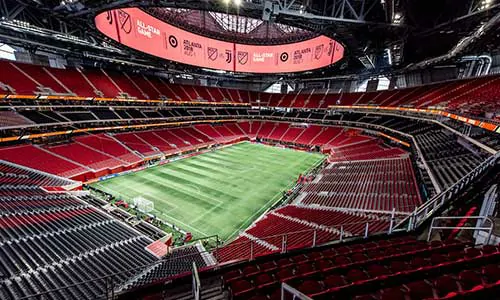
- Atlanta Stadium (Mercedes-Benz Stadium): Features a striking, pinwheel-style retractable roof and a 360-degree halo board that wraps around the entire upper rim of the dome, providing a highly immersive visual environment.
- Seattle Stadium (Lumen Field): Designed with two large overhanging metal canopies that reflect crowd noise back onto the field. This design creates an incredibly loud atmosphere, making it a very loud and energetic venue.
- Monterrey Stadium (Estadio BBVA): Known as “The Steel Giant,” this stadium offers a visually stunning backdrop, with direct views of the majestic Cerro de la Silla mountain rising just outside the open structure.
To keep up with official ticket sales, schedule changes, and local city guides, always refer to the Official FIFA World Cup Platform. For a broader historical look at how these stadiums were chosen, you can also explore the Detailed Tournament Overview on Wikipedia.
Frequently Asked Questions (FAQ) about the FIFA World Cup 2026 Stadiums
Which stadium has the largest capacity for the FIFA World Cup 2026?
Dallas Stadium (AT&T Stadium) in Arlington, Texas, has the largest configured tournament capacity, capable of accommodating up to 94,000 spectators under its retractable dome roof.
Which stadium will host the FIFA World Cup 2026 final match?
The final match will be held at New York New Jersey Stadium (MetLife Stadium) in East Rutherford, New Jersey, on Sunday, July 19, 2026.
How are NFL stadiums being modified for soccer games?
Because NFL fields are narrower than FIFA-compliant international soccer pitches, several stadiums are temporarily removing corner seats and adjusting touchline areas to fit the wider playing surface.
Are all the stadiums using natural grass for the tournament?
Yes, FIFA requires natural grass for all tournament matches. Venues that normally use artificial turf are installing advanced, temporary natural grass systems designed to withstand elite tournament play.
What is the most historic stadium in the 2026 lineup?
Mexico City’s Estadio Azteca is the most historic venue, having hosted matches in two previous World Cups (1970 and 1986), including historic performances by football legends Pelé and Diego Maradona.
Which cities in Canada are hosting World Cup matches?
The Canadian host cities are Vancouver, hosting matches at BC Place, and Toronto, hosting matches at Toronto Stadium (BMO Field).
Conclusion and Final Thoughts
To conclude, the FIFA World Cup 2026 is not just a sporting tournament; it is a celebration of architectural diversity, engineering marvels, and cultural heritage. From the towering heights and historical legacy of Estadio Azteca to the premium, tech-driven design of SoFi Stadium, each venue brings its own unique character to the global stage.
As the host nations prepare their transit systems, hospitality sectors, and pitches, fans can look forward to a diverse range of live sporting environments. Whether you prefer the intense, compact energy of Canada’s intimate venues or the massive scale of the American domes, this tournament promises unforgettable moments.
Which stadium are you most excited to visit? Let us know in the comments below, and start planning your World Cup journey today!