Box-to-Box Midfielder Explained: Duties, Skills and Tactical Importance
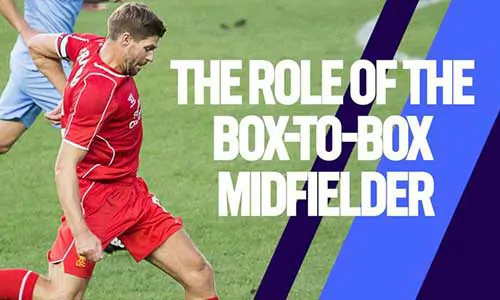
Box-to-Box Midfielder Explained: Duties, Skills, and Tactical Importance for the FIFA World Cup 2026
As football fans and tactical analysts gear up for the highly anticipated FIFA World Cup 2026, the evolution of key playing positions remains a major talking point. Modern football demands unprecedented levels of versatility, physical endurance, and intellectual adaptability. No position on the pitch embodies these traits more than the box-to-box midfielder. Often referred to as the traditional “number eight,” this player is the engine room of the squad, directly influencing outcomes in both defensive and attacking phases.
In the modern era, no role is more demanding or structurally crucial to a team’s success in elite tournaments like the FIFA World Cup 2026 than the box-to-box midfielder. This comprehensive guide breaks down the core duties, essential skill sets, and tactical importance of this pivotal role, while exploring how it will shape the strategies of national teams competing on the global stage.
Table of Contents
- 1. Defining the Box-to-Box Midfielder
- 2. Core Duties of the Modern Number Eight
- 3. Essential Skills and Physical Attributes
- 4. Tactical Importance and Formations in the FIFA World Cup 2026
- 5. Key Box-to-Box Midfielders to Watch in the FIFA World Cup 2026
- 6. Midfield Resilience and Depth Needed for the FIFA World Cup 2026
- 7. Modern Training Methods for Midfielders Ahead of the FIFA World Cup 2026
- 8. Conclusion
- 9. Frequently Asked Questions (FAQ)
Defining the Box-to-Box Midfielder
A box-to-box midfielder is a central midfield player who possesses the tactical intelligence, stamina, and technical skill to contribute effectively at both ends of the pitch. The name itself defines the primary objective: moving continuously from their own defensive penalty area (“box”) to the opponent’s attacking penalty area (“box”). This dual responsibility requires a balance that few players can master over a full ninety-minute match.
Historically, this role was popularized by legendary players who could tackle hard, distribute the ball cleanly, and score crucial goals. National teams preparing for the FIFA World Cup 2026 are intensely focusing on identifying players who can seamlessly transition between these phases. This is because modern tactical setups no longer allow for passengers in central midfield.
Unlike specialized defensive screeners or pure attacking playmakers, the box-to-box midfielder acts as the connector. Furthermore, they balance the side’s defensive shape while offering an unpredictable attacking threat from deep. Therefore, finding an elite player of this profile is often the difference between a functional team and a championship-winning one.
Core Duties of the Modern Number Eight
The responsibilities of a box-to-box midfielder are multifaceted and change rapidly depending on the state of the match. To understand their tactical value, it is helpful to divide their responsibilities into three primary phases: defensive, transitional, and offensive.
Defensive Responsibilities
- Squeezing Central Spaces: Working alongside defensive midfielders to compress the space between the midfield and defensive lines.
- Pressing and Intercepting: Engaging in high-intensity press triggers, forcing turnovers, and disrupting opponent build-up play.
- Tracking Runners: Following deep-running midfielders from the opposition to prevent overloads in the penalty area.
This high-intensity defensive coverage is precisely why elite teams at the FIFA World Cup 2026 will rely heavily on robust central units. Without disciplined defensive contributions from the central block, backlines are easily exposed to fast, direct counter-attacks.
Transitional Phase Duties
- Ball Progression: Carrying the ball forward out of pressure using physical strength and dribbling skills.
- Vertical Passing: Delivering precise, forward-thinking passes to breaking wingers or central strikers.
- Securing Second Balls: Winning aerial duels and loose balls in the middle third to maintain possession.
Excellent transition play is critical during the fast-paced transitions of the FIFA World Cup 2026. Because modern international matches are decided by fine margins, turning defensive recovery into offensive opportunity in a matter of seconds is a priceless trait.
Offensive Responsibilities
- Late Runs into the Box: Arriving late into the opposition penalty area to meet crosses or loose balls, making them difficult for defenders to mark.
- Sustaining Possession: Circulating the ball patiently around the edge of the final third to find gaps in deep defensive blocks.
- Shooting from Distance: Offering a threat from outside the penalty box, forcing opposing defenses to step out and open up space behind them.
Essential Skills and Physical Attributes
Playing this role at the highest level requires an extraordinary blend of physical endurance and technical precision. It is widely considered one of the most physically taxing positions in modern sports.
Stamina and Aerobic Capacity
First and foremost, a box-to-box midfielder must have elite stamina. These players regularly cover between 11 to 13 kilometers per match. The physical demands of the travel-heavy and demanding schedules of the FIFA World Cup 2026 mean that stamina and recovery rates are more critical than ever. Matches will be played across different time zones, altitudes, and climates, making high aerobic capacity a fundamental requirement.
Spatial Awareness and Tactical Intelligence
Stamina is useless without the intelligence to direct it. A top-tier number eight must constantly read the game, anticipating where the ball will land next. On one hand, they must know when to sit deep to preserve defensive structure; on the other hand, they must recognize when to make a high-risk run forward to create a goal-scoring opportunity.
Technical Versatility
Because they operate in congested central areas, these players must have a flawless first touch and the ability to shield the ball under pressure. Their passing range must be diverse, encompassing short, quick combinations and long, diagonal switches. Additionally, they must be competent tacklers who understand how to delay opposition attacks without committing unnecessary fouls.
Tactical Importance and Formations in the FIFA World Cup 2026
Modern managers rely on box-to-box midfielders to solve complex tactical puzzles. In tournaments where opponents analyze every detail, having a player who can alter their positioning on the fly gives a head coach massive flexibility.
Whether deployed in a 4-3-3 or a 3-5-2, having an elite box-to-box presence gives national teams a substantial tactical advantage in the high-stakes matches of the FIFA World Cup 2026. For example, in a standard 4-3-3, the box-to-box midfielder acts as the bridge between the defensive anchor (the number six) and the forward line. Consequently, this dynamic ensures that the team does not become disjointed when transitioning from back to front.
In a 3-5-2 or 5-3-2 system, these midfielders are tasked with covering wider areas to support the wing-backs. This tactical flexibility is required at the FIFA World Cup 2026, where national teams must adapt to varying styles of play, from low-block counter-attacking setups to aggressive high-pressing teams.
| Position Profile | Primary Focus | Key Statistical Metric | Tactical Alignment |
|---|---|---|---|
| Defensive Midfielder (No. 6) | Screening backline, breaking up attacks, defensive coverage | Interceptions & Tackles won | Stays deep, protects central zones |
| Box-to-Box Midfielder (No. 8) | Ball progression, late runs, two-way contribution | Progressive carries & Distance covered | Moves fluidly between both boxes |
| Attacking Midfielder (No. 10) | Creating chances, final third assists, shot creation | Key passes & Expected Assists (xA) | Operates in pocket spaces behind striker |
Key Box-to-Box Midfielders to Watch in the FIFA World Cup 2026
Several world-class players have redefined the boundaries of what a modern central midfielder can achieve. Their performances will likely dictate how deep their respective nations go in the tournament.
Jude Bellingham (England)
Jude Bellingham represents the gold standard of what managers will expect to witness during the FIFA World Cup 2026. Combining physical power, refined technical skill, and an instinct for scoring vital goals, Bellingham operates with a maturity that belies his age. He can break up an opponent’s attack in his own box and, seconds later, be found finishing a cross at the other end of the field.
Federico Valverde (Uruguay)
Federico Valverde’s lung-bursting runs and defensive tenacity make him a vital component for Uruguay as they prepare for the FIFA World Cup 2026. Known for his tactical versatility, Valverde can play in a narrow midfield diamond or drift wide to support the attack, offering his team a rare mix of defensive security and explosive ball progression.
Nicolò Barella (Italy)
Nicolò Barella’s low center of gravity, rapid acceleration, and precise passing range make him a crucial player for Italy in the FIFA World Cup 2026. Barella’s tireless work rate allows Italy to maintain intense high-pressing systems, quickly winning back possession in the middle third and launching clinical counter-attacks.
Midfield Resilience and Depth Needed for the FIFA World Cup 2026
With 48 teams competing across North America, the physical demands of the FIFA World Cup 2026 will test squad depth to its absolute limits. Given the intense physical output required of the box-to-box midfielder, national team head coaches cannot rely on a single starting lineup. Tactical rotation will be necessary to keep players fresh for the knockout rounds.
Consequently, the presence of multi-functional bench options who can step into the box-to-box role without dropping the team’s tactical intensity is critical. Squads that possess a deep pool of versatile central midfielders are far more likely to withstand the physiological strain of a prolonged tournament run.
Modern Training Methods for Midfielders Ahead of the FIFA World Cup 2026
To prepare for these challenges, international coaching staffs are implementing advanced training methodologies. These modern approaches combine athletic conditioning with cognitive training to elevate players’ performance.
Sports scientists utilize GPS tracking devices to carefully monitor workload metrics, ensuring that players build the necessary aerobic foundations without risking soft-tissue injuries. Furthermore, tactical simulations are specifically customized for the environmental challenges of the FIFA World Cup 2026, such as playing in high-temperature or high-altitude venues.
Cognitive training, including virtual reality setups, is also used to improve spatial awareness. By practicing scanning techniques in virtual environments, midfielders can make faster decisions under pressure, finding open passing lanes even when surrounded by aggressive defensive setups.
Conclusion
The box-to-box midfielder remains one of the most compelling and tactically significant roles in modern football. By combining defensive resilience, elite physical conditioning, and attacking flair, these players act as the heartbeat of their teams, quietly shaping the outcome of the FIFA World Cup 2026.
As the countdown to kickoff continues, watching how managers deploy and rotate their dynamic midfielders will offer fascinating insights into the evolving landscape of football tactics. To learn more about tournament preparations and official schedules, visit the official FIFA Website or keep track of international player statistics on the Premier League Portal.
Which box-to-box midfielder do you think will stand out the most in the upcoming global tournament? Share your thoughts and tactical predictions in the comments section below, and subscribe to our newsletter for more deep-dive football analyses!
Frequently Asked Questions (FAQ)
How will the intense climate variations of the FIFA World Cup 2026 affect box-to-box midfielders?
The vast geographic spread across Canada, Mexico, and the USA means that players will face diverse altitudes and temperatures. Because box-to-box midfielders cover the most distance on the pitch, managing recovery, hydration, and squad rotation will be crucial physical preparation for the FIFA World Cup 2026 to prevent fatigue-related injuries.
Which national teams are best equipped with box-to-box midfielders for the FIFA World Cup 2026?
Nations like England (with Jude Bellingham and Declan Rice), Uruguay (with Federico Valverde), and France (with Eduardo Camavinga and Aurélien Tchouaméni) possess some of the most versatile and physically robust box-to-box talents, giving them a significant structural advantage.
What is the difference between a box-to-box midfielder and a deep-lying playmaker?
A deep-lying playmaker (often a number six) operates primarily in front of their own defense, focusing on distributing long-range passes and controlling the tempo. In contrast, a box-to-box midfielder actively runs with the ball, makes runs into the opponent’s box, and defends aggressively across all thirds of the pitch.
Can a box-to-box midfielder win the Golden Ball at the FIFA World Cup 2026?
Yes. If a box-to-box midfielder consistently scores decisive goals, provides key assists, and anchors their team’s defensive transitions, they will be strong contenders for individual awards, especially if they lead their team to glory at the FIFA World Cup 2026.
How does modern technology assist box-to-box midfielders in their training?
Coaches use advanced GPS tracking, heat maps, and bio-wearables to monitor heart-rate recovery, lactic acid thresholds, and sprinting frequencies. This data allows sports scientists to customize training loads to match the high-intensity demands of international tournaments.
Why is the number eight shirt often associated with this role?
Traditionally, shirt numbers 1 to 11 corresponded to specific starting positions. The number six was assigned to the defensive midfielder, the number ten to the attacking playmaker, and the number eight to the central player who connected both ends of the pitch, cementing its association with the box-to-box role.