BMO Field World Cup 2026 Upgrades: How Toronto Is Preparing for FIFA
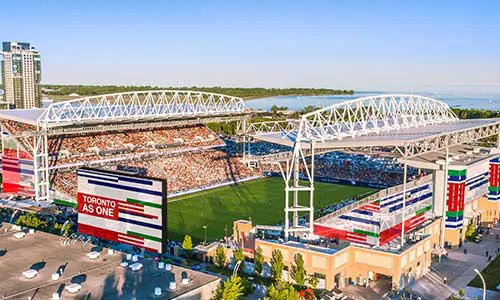
BMO Field FIFA World Cup 2026 Upgrades: How Toronto Is Preparing for Kickoff
The global stage is officially set, and the soccer world is turning its collective gaze toward North America. For the first time in history, Canada is co-hosting the biggest sporting event on the planet. As Canada prepares to host matches for the historic FIFA World Cup 2026, all eyes are on Toronto and its premier soccer venue, BMO Field FIFA. Temporarily rebranded as Toronto Stadium to comply with strict FIFA guidelines on commercial naming rights, the venue is undergoing a massive transformation to welcome the world’s best players and hundreds of thousands of passionate fans City of Toronto .
The upcoming FIFA World Cup 2026 represents a monumental milestone for Southern Ontario, promising significant economic growth, infrastructural legacy, and unforgettable moments on the pitch . However, transforming a stadium primarily designed for Major League Soccer (MLS) and Canadian Football League (CFL) matches into a world-class, FIFA-compliant arena has been no small feat . From temporary grandstands to cutting-edge pitch technology, Toronto is executing a meticulous preparation plan .
Table of Contents
- 1. The Metamorphosis of BMO Field into Toronto Stadium
- 2. Key Stadium Upgrades for the FIFA World Cup 2026
- 3. Economic and Legacy Impacts of the FIFA World Cup 2026 on Toronto
- 4. Transit, Logistics, and Fan Mobility during the Tournament
- 5. Post-Tournament Legacy: What Happens to the Upgrades?
- 6. Frequently Asked Questions (FAQ)
- 7. Conclusion: A Historic Chapter for Canadian Sport
The Metamorphosis of BMO Field into Toronto Stadium
First opened in 2007 at Exhibition Place with a relatively modest initial construction cost of $62.9 million, BMO Field has long served as the cherished home of Toronto FC (MLS) and the Toronto Argonauts (CFL) . Over the past nearly two decades, the venue has witnessed iconic sporting achievements, including MLS Cup finals and international rugby matches. However, to host matches of the FIFA World Cup 2026, BMO Field had to undergo a comprehensive $146 million facelift to elevate its facilities to meet elite international football standards .
Delivered through an active partnership between the City of Toronto and Maple Leaf Sports & Entertainment (MLSE), the extensive upgrade project was carried out in two distinct construction phases . This strategic decision was made to ensure that local sports teams could continue playing their home matches with minimal disruptions . The timeline of these crucial renovations was carefully structured:
- Phase 1 (Completed September 2025): Focused on establishing the digital and technological backbone of the stadium. Upgrades during this phase included advanced broadcast systems, enhanced stadium acoustics, improved Wi-Fi capabilities, and the expansion of key food preparation areas .
- Phase 2 (Completed March 2026): Centered primarily on the tournament-specific requirements requested by FIFA officials. This phase delivered the massive seating extensions, player facilities, and pitch adjustments .
By phasing the development over eighteen months, the city avoided major scheduling conflicts while steadily preparing the lakeside venue to become a critical venue for the FIFA World Cup 2026, ensuring the broadcast and hospitality infrastructure was thoroughly tested long before the opening whistle .
Key Stadium Upgrades for the FIFA World Cup 2026
While BMO Field is highly regarded for its intimate viewing experience, its standard capacity and legacy infrastructure fell short of the strict requirements set by world soccer’s governing body . The $146-million investment addressed these requirements through several key architectural and technological enhancements .
Expanding the Seating Capacity for the FIFA World Cup 2026
The most visible and debated aspect of Toronto’s venue preparation is the massive temporary seating expansion. FIFA requires tournament host stadiums to have a minimum capacity of 45,000 spectator seats . Because BMO Field’s permanent seating capacity sits at approximately 28,000 to 30,000, engineers had to design an ambitious modular addition .
This expansion was successfully realized through the addition of 17,756 temporary seats, bringing the total World Cup capacity to 45,736 . The geographic breakdown of these temporary grandstands is structured as follows:
- The North Grandstand: Accommodates approximately 10,000 additional temporary seats, creating a towering tier of fans behind the goal line .
- The South Grandstand: Features roughly 7,000 additional temporary seats, with some fieldside seating positioned mere feet from the pitch to maximize the match-day atmosphere .
While early constructions raised some questions online regarding the steepness and sheer height of the temporary stands, municipal and safety officials have reassured fans that these modular structures are built to the highest safety and wind-resistance engineering standards, similar to those used at major Olympic events and international golf championships .
The State-of-the-Art Hybrid Turf System
For top-tier soccer players, nothing is more critical than the surface beneath their feet. While the stadium has historically utilized various grass surfaces, the demands of hosting six matches in a compressed timeframe meant the pitch had to be exceptionally durable . To ensure that the playing surface for the FIFA World Cup 2026 meets the highest standards, the grounds team replaced the traditional grass with a cutting-edge hybrid stitched system .
This hybrid surface blends natural Kentucky bluegrass with roughly millions of synthetic fibers stitched deep into the root zone. The synthetic fibers reinforce the natural turf, reducing the risk of Divots, improving drainage, and ensuring the ball rolls consistently regardless of Southern Ontario’s early summer weather conditions. Furthermore, the playing field itself has been widened slightly to meet FIFA’s strict international match dimensions .
Immersive Corner LED Videoboards
In addition to physical expansions, the spectator experience has been modernized through the installation of four giant LED videoboards situated in each corner of the stadium . Replacing the older, single-screen setup, these displays are supported by a newly built, state-of-the-art video production control room .
These upgraded visual elements ensure that fans seated in any section of the venue—including those at the very top of the newly built temporary grandstands—will have clear, high-definition lines of sight to real-time replays, statistics, and tournament media broadcasts .
Premium Hospitality & Team Facilities
Beyond the public eye, significant renovations have taken place deep inside the stadium’s concrete structure. These upgrades focused heavily on providing world-class facilities designed for the FIFA World Cup 2026 players and VIP delegates:
- Locker Rooms & Dugouts: Upgraded and expanded to handle large squad sizes, incorporating modern recovery spaces, customized tactical boards, and superior medical examination areas .
- VIP Lounges & Suites: The addition of 32 brand-new, high-end suites and 4,000 premium hospitality seats, alongside a spacious 1,000-fan rooftop patio designed for high-profile hospitality .
- Upgraded Concessions: Expanded kitchens and self-serve ordering technologies have been integrated throughout the public concourses to decrease queue wait times and maximize the fan experience .
| Stadium Feature | Pre-Renovation Status | World Cup 2026 Standard |
|---|---|---|
| Seating Capacity | ~28,000 – 30,000 | 45,736 (with temporary stands) |
| Playing Surface | Standard Natural Grass / Hybrid | FIFA-Stitched Hybrid Turf System |
| Videoboards | Single main scoreboard | Four Corner LED screens |
| VIP Suites | Standard club-level boxes | 32 new premium suites & rooftop patio |
Economic and Legacy Impacts of the FIFA World Cup 2026 on Toronto
While the capital cost of preparing Toronto Stadium has faced scrutiny from local taxpayers, economists point out that hosting the FIFA World Cup 2026 is projected to generate nearly unprecedented long-term economic returns for the region . According to a comprehensive economic impact study conducted by Deloitte Canada, the tournament is expected to generate a $940 million surge for the Greater Toronto Area (GTA) . This includes:
- GDP Growth: Over $520 million in direct and indirect contributions to the local Gross Domestic Product .
- Labor Income: Approximately $340 million flowing into the pockets of local workers and contractors .
- Job Creation: More than 6,600 temporary and long-term jobs across hospitality, security, logistics, and tourism sectors .
The jobs created for the FIFA World Cup 2026 will leave a lasting footprint on the local workforce. Furthermore, the municipal tax revenue is projected to see a bump, which helps offset the initial capital funding provided by the provincial and federal governments, who have contributed roughly $100 million each to support the city’s bid .
Transit, Logistics, and Fan Mobility during the Tournament
Welcoming over one million international soccer fans over the course of the tournament presents massive logistical challenges. Exhibition Place, while historically well-equipped to handle high-attendance events like the Canadian National Exhibition (CNE), requires highly synchronized transport planning . Navigating logistics during the FIFA World Cup 2026 will present unique opportunities for municipal transit services, with several strategies in place:
- GO Transit (Exhibition GO Station): Located directly adjacent to the stadium, train frequencies are being increased to shuttle thousands of fans directly to and from Union Station in downtown Toronto .
- TTC Streetcars: The 511 Bathurst and 509 Harbourfront streetcar lines will operate on express schedules, connecting fans directly to the subway network.
- Dedicated Shuttle Buses: Connecting key tourist hubs, official Fan Fest zones, and airport terminals to the stadium precinct.
Additionally, the outer perimeter of Toronto Stadium will feature Olympic-style secure fencing . Fans are urged to plan their commutes well in advance, arrive early to clear security screenings, and take advantage of the digital ticketing and transit integration provided through the city’s official transport app.
Post-Tournament Legacy: What Happens to the Upgrades?
A primary concern for many host cities is the phenomenon of “white elephant” stadiums—massive, expensive venues built for a single event that fall into disuse afterward. Fortunately, Toronto has planned for sustainability. Long after the FIFA World Cup 2026 concludes, the permanent upgrades integrated into BMO Field will serve local communities and domestic sports .
Following the completion of the final matches, the 17,756 temporary seats will be systematically dismantled . The stadium will then revert to its familiar 30,000 capacity, maintaining the intimate neighborhood atmosphere that local Toronto FC and Argonauts fans cherish . However, the venue will retain all permanent infrastructure improvements, including:
- The high-performance hybrid stitched turf pitch, allowing local teams to play on a world-class surface.
- The upgraded corner LED videoboards and high-fidelity sound systems.
- The permanent broadcast connections, making BMO Field a prime destination for future international concerts and matches.
- The expanded commercial kitchens and premium VIP lounges, enhancing the fan experience for decades to come.
This approach highlights a highly balanced strategy, combining temporary capacity expansions to meet immediate demands with permanent, high-value infrastructure upgrades designed for long-term community use.
Frequently Asked Questions (FAQ)
Q1: How many matches of the FIFA World Cup 2026 will be played in Toronto?
Toronto is scheduled to host a total of six tournament fixtures, including the highly anticipated opening match on Canadian soil, where Canada will face Bosnia-Herzegovina on June 12, 2026.
Q2: Why is BMO Field being called Toronto Stadium during the FIFA World Cup 2026?
FIFA rules mandate that tournament host stadiums cannot use commercial naming rights unless the sponsor is an official FIFA partner. Because Bank of Montreal (BMO) is not a global FIFA sponsor, the venue will operate under the neutral moniker “Toronto Stadium” for the duration of the event.
Q3: What is the final seating capacity of the stadium for the tournament?
By adding temporary seating structures in the north and south grandstands, the stadium’s total capacity has been expanded from roughly 28,000 to approximately 45,736 seats, fully satisfying FIFA’s seating requirements.
Q4: What will happen to the temporary seats after the FIFA World Cup 2026?
Once the tournament concludes, the temporary grandstands will be carefully dismantled and repurposed for other entertainment venues. BMO Field will return to its standard, intimate configuration for Toronto FC and Argonauts matches.
Q5: What is a hybrid grass pitch, and why was it installed?
A hybrid pitch combines natural grass with millions of stitched synthetic fibers. It was installed to provide maximum turf durability, superior drainage, and consistent ball behavior, preventing the field from deteriorating under heavy tournament play.
Q6: How did the city fund the upgrades for the FIFA World Cup 2026?
The $146 million renovation was funded through a collaborative framework. The City of Toronto contributed $123 million, MLSE contributed $23 million, and additional operational shortfalls are being supported by provincial and federal grant programs.
Conclusion: A Historic Chapter for Canadian Sport
The transformation of BMO Field is a testament to Toronto’s ambition and dedication to hosting the world. By taking a balanced approach to the upgrades—utilizing temporary seating to meet capacity requirements while investing in permanent premium infrastructure—the city is poised to deliver an unparalleled experience for fans and players alike. As the opening whistle of the FIFA World Cup 2026 approaches, Toronto is ready to welcome the world to Toronto Stadium.
For more insights into the FIFA World Cup 2026 and how it will transform local tourism and community sports programs, consider visiting official community soccer portals or checking back regularly for updated match-day guides and transit recommendations.