Ballon d’Or Winners Ranked: Players with the Most Awards
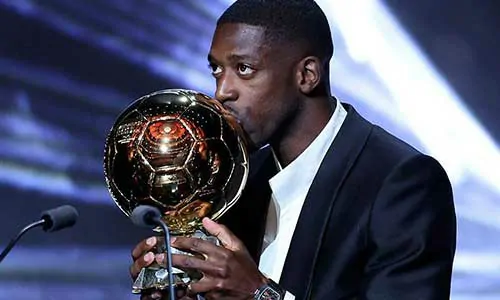
In the magnificent world of professional football, countless team trophies are contested annually, but a single individual accolade stands above all others in terms of prestige, glamour, and historical significance: the Ballon d’Or. Established by the French news magazine France Football in 1956, this iconic award has served as the ultimate benchmark for individual greatness in the beautiful game. Every year, journalists, national team coaches, and captains from across the globe cast their votes to crown the best player on the planet. Over the decades, the trophy has been lifted by generational talents who redefined how football is played, building legacies that transcend eras.
But when we look back at the history of the sport, which legendary players have dominated this prestigious ceremony? In this comprehensive guide, we present the definitive rankings, exploring the iconic athletes who have claimed the most awards. From the relentless dominance of Lionel Messi and Cristiano Ronaldo in the modern era to the foundational brilliance of Johan Cruyff and Michel Platini in the 20th century, we analyze the careers and historic seasons of football’s ultimate elite.
Table of Contents
- A Brief History of the Ballon d’Or
- The Ultimate Ballon d’Or Leaderboard
- Lionel Messi: The Eight-Time Record Holder
- Cristiano Ronaldo: The Five-Time Champion
- The Three-Time Kings: Cruyff, Platini, and Van Basten
- The Elite Two-Time Winners Club
- The Modern Era of the Ballon d’Or (2018–2025)
- Conclusion and the Future of the Trophy
- Frequently Asked Questions (FAQs)
A Brief History of the Ballon d’Or
The origin of the Ballon d’Or traces back to 1956, conceived by the visionary sports writer Gabriel Hanot and his colleagues at France Football. Originally, the award was exclusively reserved for European players active in European leagues, which is why historical giants like Pelé and Diego Maradona never won the official trophy during their active playing careers. This policy changed in 1995 when the eligibility criteria expanded to include any player, regardless of nationality, playing for a European club. The impact was immediate, with AC Milan’s Liberian striker George Weah winning the trophy that very year, becoming the first non-European recipient.
In 2007, the award became truly global, allowing players from any league in the world to be nominated. Between 2010 and 2015, the honor temporarily merged with the FIFA World Player of the Year to become the FIFA Ballon d’Or, before returning to its independent status under France Football. For the most up-to-date news and full historical archives of the gala, you can visit the official France Football portal or explore European football statistics on the official UEFA website.
More recently, the voting criteria underwent a major modernization shift, transitioning from evaluating players based on their achievements in a calendar year to assessing their performance over a standard European football season (August to July). This change has made the criteria fairer, reflecting the natural cycle of competitive football. Additionally, UEFA officially co-organized the award ceremony alongside Groupe Amaury starting in 2024, elevating the global profile of the gala even further.
The Ultimate Ballon d’Or Leaderboard
To understand who truly rules footballing history, we must look at the numbers. Only a select group of exceptional players have won this individual trophy more than once. The following table highlights the players who have won the most awards since the trophy’s inception in 1956, up to the latest 2025 ceremony.
| Rank | Player | Country | Awards Won | Winning Years |
|---|---|---|---|---|
| 1 | Lionel Messi | Argentina | 8 | 2009, 2010, 2011, 2012, 2015, 2019, 2021, 2023 |
| 2 | Cristiano Ronaldo | Portugal | 5 | 2008, 2013, 2014, 2016, 2017 |
| 3 | Michel Platini | France | 3 | 1983, 1984, 1985 |
| 4 | Johan Cruyff | Netherlands | 3 | 1971, 1973, 1974 |
| 5 | Marco van Basten | Netherlands | 3 | 1988, 1989, 1992 |
| 6 | Franz Beckenbauer | Germany | 2 | 1972, 1976 |
| 7 | Ronaldo Nazário | Brazil | 2 | 1997, 2002 |
| 8 | Alfredo Di Stéfano | Spain / Argentina | 2 | 1957, 1959 |
| 9 | Kevin Keegan | England | 2 | 1978, 1979 |
| 10 | Karl-Heinz Rummenigge | Germany | 2 | 1980, 1981 |
Lionel Messi: The Eight-Time Record Holder
When discussing the master of the Ballon d’Or, one name stands unmatched at the absolute summit of footballing history: Lionel Messi. The Argentinian playmaker has claimed the trophy an incredible eight times, cementing his place as one of the greatest to ever play the sport. His relationship with the award began in 2009 when he led Pep Guardiola’s legendary Barcelona side to a historic sextuple, showing a level of individual brilliance that the world had rarely seen.
Messi’s dominance was so absolute that he won four consecutive awards between 2009 and 2012. The 2012 trophy came after an astonishing year in which he scored 91 goals in a single calendar year for club and country, shattering Gerd Müller’s decades-old record. He reclaimed the award in 2015 following another treble with Barcelona’s devastating attacking frontline of Messi, Luis Suárez, and Neymar.
In the latter stage of his career, Messi continued to rewrite history. He secured his sixth award in 2019, followed by a seventh in 2021 after leading Argentina to Copa América glory—his first major international trophy. Finally, in 2023, Messi secured an eighth Ballon d’Or after captaining Argentina to a legendary victory at the 2022 FIFA World Cup in Qatar. This final achievement separated him even further from his closest competitors, establishing an individual milestone that may never be surpassed.
Cristiano Ronaldo: The Five-Time Champion
If Lionel Messi is the artist, Cristiano Ronaldo is the ultimate competitor whose relentless pursuit of perfection drove him to five Ballon d’Or victories. The Portuguese icon won his first award in 2008 with Manchester United, after a spectacular season where he captured his first UEFA Champions League title and scored 42 goals across all competitions.
Following his world-record transfer to Real Madrid, Ronaldo was often the runner-up to Messi. However, his unmatched work ethic and goal-scoring prowess saw him fight back to claim consecutive awards in 2013 and 2014. He then won back-to-back awards again in 2016 and 2017, a golden period where he led Real Madrid to three consecutive Champions League titles under Zinedine Zidane and guided Portugal to an emotional UEFA Euro 2016 triumph.
Ronaldo’s five awards highlight a career defined by longevity, physical excellence, and big-game performance. He holds the record for the most nominations in the history of the Ballon d’Or, demonstrating an unparalleled ability to stay at the pinnacle of world football for nearly two decades. His rivalry with Messi defined a generation and pushed both players to heights never previously imagined in the history of the sport.
The Three-Time Kings: Cruyff, Platini, and Van Basten
Before the Messi-Ronaldo era completely rewrote the record books, winning three Ballon d’Or trophies was considered the absolute pinnacle of individual achievement. Only three iconic players reached this extraordinary milestone in the 20th century, each leaving a massive tactical imprint on how football is played today.
Johan Cruyff (Netherlands)
Johan Cruyff, the father of “Total Football,” changed how the sport is conceptualized and played. The Dutch visionary won his awards in 1971, 1973, and 1974. His first trophy came with Ajax, where he orchestrated three consecutive European Cups. He then won the subsequent two with Barcelona, famously leading the Catalan club to a historic La Liga title. Cruyff’s legacy goes far beyond his three trophies, as his philosophical influence still shapes modern tactical frameworks across Europe.
Michel Platini (France)
Michel Platini achieved something even more unique: he was the first player to win the Ballon d’Or in three consecutive years (1983, 1984, and 1985). Serving as the brilliant midfield general for Juventus and the French national team, Platini was a master playmaker who possessed the goalscoring touch of an elite striker. His crowning glory came in 1984, when he scored an unbelievable nine goals in just five matches to lead France to the European Championship title.
Marco van Basten (Netherlands)
Marco van Basten was one of the most complete and elegant strikers the game has ever seen. The AC Milan and Ajax legend won the award in 1988, 1989, and 1992. His spectacular volley against the Soviet Union in the Euro 1988 final remains one of the most famous goals in football history. Tragically, a series of severe ankle injuries forced him to retire at the age of just 28, leaving fans to wonder how many more awards he could have captured had his career not been cut short.
The Elite Two-Time Winners Club
Beyond the three-time winners, there is a legendary group of five players who have secured the Ballon d’Or exactly twice. Each of these players left an indelible mark on their respective generations:
- Franz Beckenbauer (Germany – 1972, 1976): Affectionately known as “Der Kaiser,” Beckenbauer redefined the “libero” or sweeper role. He is one of the very few defensive players to win the award multiple times, showcasing his unmatched leadership and tactical intelligence for Bayern Munich and West Germany.
- Ronaldo Nazário (Brazil – 1997, 2002): “O Fenômeno” is widely regarded as the most explosive striker in football history. He won his first award in 1997 with Inter Milan at just 21 years old, becoming the youngest-ever recipient. After overcoming career-threatening knee injuries, he returned to win his second in 2002 after scoring eight goals to lead Brazil to World Cup glory.
- Alfredo Di Stéfano (Spain/Argentina – 1957, 1959): The heartbeat of the legendary Real Madrid side that won five consecutive European Cups, Di Stéfano was a complete footballer who could play in defense, midfield, and attack. He was so highly revered that in 1989, he was awarded the unique “Super Ballon d’Or” to celebrate him as the best European player of the preceding three decades.
- Karl-Heinz Rummenigge (Germany – 1980, 1981): A powerful and highly versatile forward, Rummenigge dominated European football in the early 1980s with Bayern Munich, guiding his club to back-to-back European Cups and leading West Germany to a European Championship title.
- Kevin Keegan (England – 1978, 1979): The only English player to win the award twice, Keegan achieved his back-to-back victories while playing for Hamburger SV in Germany, cementing his status as one of the most dynamic and hardworking forwards of his era.
The Modern Era of the Ballon d’Or (2018–2025)
Following a decade of uninterrupted dominance by Lionel Messi and Cristiano Ronaldo (from 2008 to 2017), the footballing landscape began to shift. In 2018, Croatian midfielder Luka Modrić made history by breaking the famous duopoly. After leading Real Madrid to a third consecutive Champions League title and captaining Croatia to a sensational World Cup final appearance, Modrić took home the 2018 Ballon d’Or.
While Messi returned to win in 2019, 2021, and 2023, other generational stars have stepped into the spotlight:
- Karim Benzema (2022): The French striker delivered a masterclass campaign with Real Madrid, scoring decisive hat-tricks in the knockout stages of the Champions League to secure a deserved win.
- Rodri (2024): The Manchester City midfield anchor claimed the award in 2024 after an incredibly consistent season, orchestrating both Manchester City’s Premier League title and Spain’s historic UEFA Euro 2024 triumph.
- Ousmane Dembélé (2025): Marking the absolute latest shift in modern football, Paris Saint-Germain’s electrifying winger Ousmane Dembélé secured his first-ever Ballon d’Or in 2025. Following a career-defining season, Dembélé guided PSG to a historic, first-ever UEFA Champions League trophy alongside a domestic double, proving that a new era of talent has firmly arrived.
The modern era reflects a fascinating shift in voting behavior. While raw goalscoring statistics once heavily dictated who won, voters now place a massive emphasis on leadership, tactical consistency, and crucial performances in continental tournaments like the Champions League, Euros, and Copa América.
Conclusion and the Future of the Trophy
The history of the Ballon d’Or is a testament to the pursuit of excellence. From early legends like Alfredo Di Stéfano and Johan Cruyff to the era-defining rivalry of Lionel Messi and Cristiano Ronaldo, this golden trophy represents the absolute peak of individual ambition in football. As modern stars like Rodri and Ousmane Dembélé step up to claim the spotlight, the race for future awards remains as thrilling as ever.
The rankings are more than just a list of winners—they are a chronicle of football’s evolutionary journey. Every award tells the story of a season where one player rose above the rest, capturing the imagination of millions around the globe.
We want to hear from you! Who do you believe is the greatest player to have ever won the award? Do you think Lionel Messi’s record of eight trophies will ever be broken by the next generation of superstars? Share your thoughts in the comments section below, and don’t forget to share this article with your fellow football fans!
Frequently Asked Questions (FAQs)
1. Who has won the most Ballon d’Or awards in history?
Lionel Messi holds the ultimate record with eight awards (2009, 2010, 2011, 2012, 2015, 2019, 2021, 2023). Cristiano Ronaldo follows in second place with five awards.
2. Why did Pelé and Diego Maradona never win the Ballon d’Or?
Until 1995, the award was strictly reserved for European players active in European leagues. Because Pelé spent the majority of his career in South America and Diego Maradona was non-European, they were ineligible. However, in 2016, France Football conducted an honorary review and stated that Pelé would have won seven awards had he been eligible throughout his career.
3. What is the difference between the Ballon d’Or and FIFA’s “The Best” award?
The Ballon d’Or is an independent award run by the French magazine France Football and co-organized with UEFA. “The Best” is a separate annual award organized entirely by FIFA, football’s global governing body. The two briefly merged between 2010 and 2015 before splitting again.
4. Who won the Ballon d’Or in 2025?
The 2025 Men’s Ballon d’Or was won by French forward Ousmane Dembélé after an outstanding season with Paris Saint-Germain, leading them to their first-ever UEFA Champions League title and a domestic double.
5. Has a defender ever won the award?
Yes, but it is extremely rare. Franz Beckenbauer is the only defender to have won it twice (1972, 1976). Matthias Sammer won it in 1996, and Fabio Cannavaro won it in 2006 after captaining Italy to World Cup glory.
6. What is the “Super Ballon d’Or”?
The “Super Ballon d’Or” is an incredibly rare trophy awarded only once by France Football in December 1989. It was given to Alfredo Di Stéfano to honor him as the best European player of the previous three decades, winning the vote over Johan Cruyff and Michel Platini.